PWC Lift vs Floating Dock: Which Is Right?
Compare PWC lift and floating dock costs, capacity, and installation for personal watercraft.
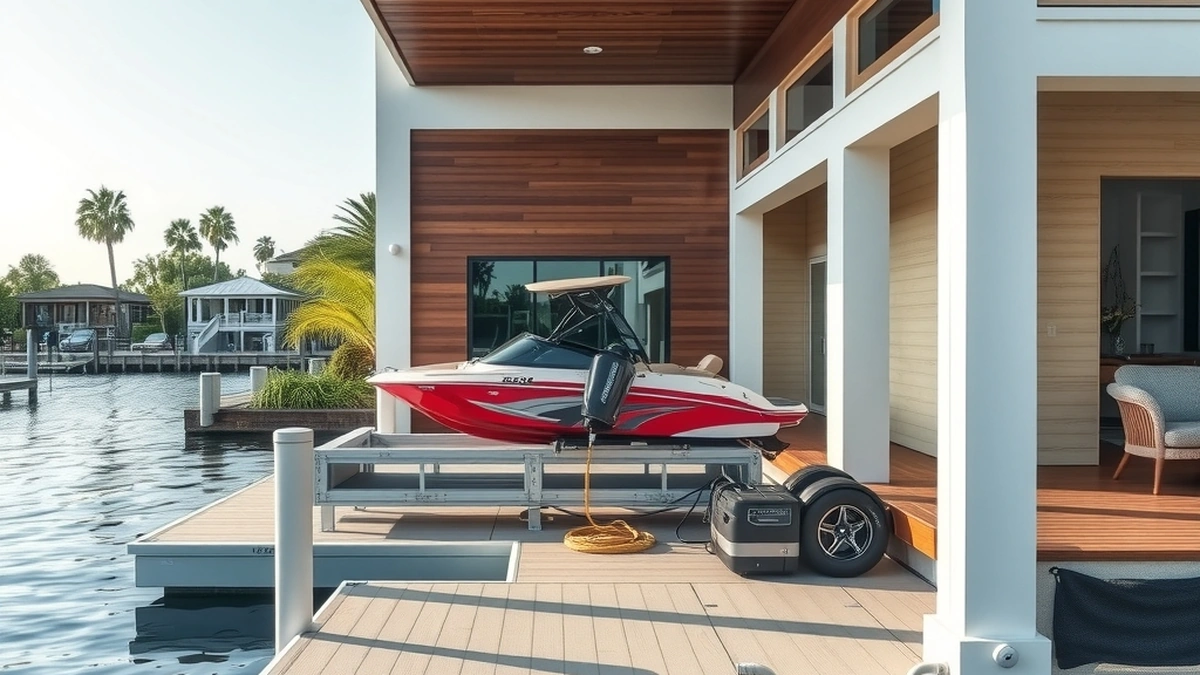
A PWC lift costs $1,500-$5,000 and stores one personal watercraft out of water. A floating dock costs $15,000-$60,000 and serves multiple boats but leaves the PWC in the water.
- PWC lift price range
- $1,500-$5,000
- Floating dock construction range
- $15,000-$60,000
- Typical installation cost
- $1,000-$3,000
- Best for
- Single PWC owners wanting hull protection
- Best for
- Multi-boat access and social docking
Some links on this page are affiliate links.If you buy through them we may earn a commission at no extra cost to you. We do not accept payment for rankings. Read the full disclosure.
A PWC lift stores one personal watercraft out of the water for $1,500-$5,000, while a floating dock costs $15,000-$60,000 and keeps the craft in the water. The lift wins on hull protection and price; the dock wins on multi-boat access and shoreline flexibility. This guide compares capacity, cost, installation, and maintenance so you can match the option to your waterfront.
How a PWC Lift Works
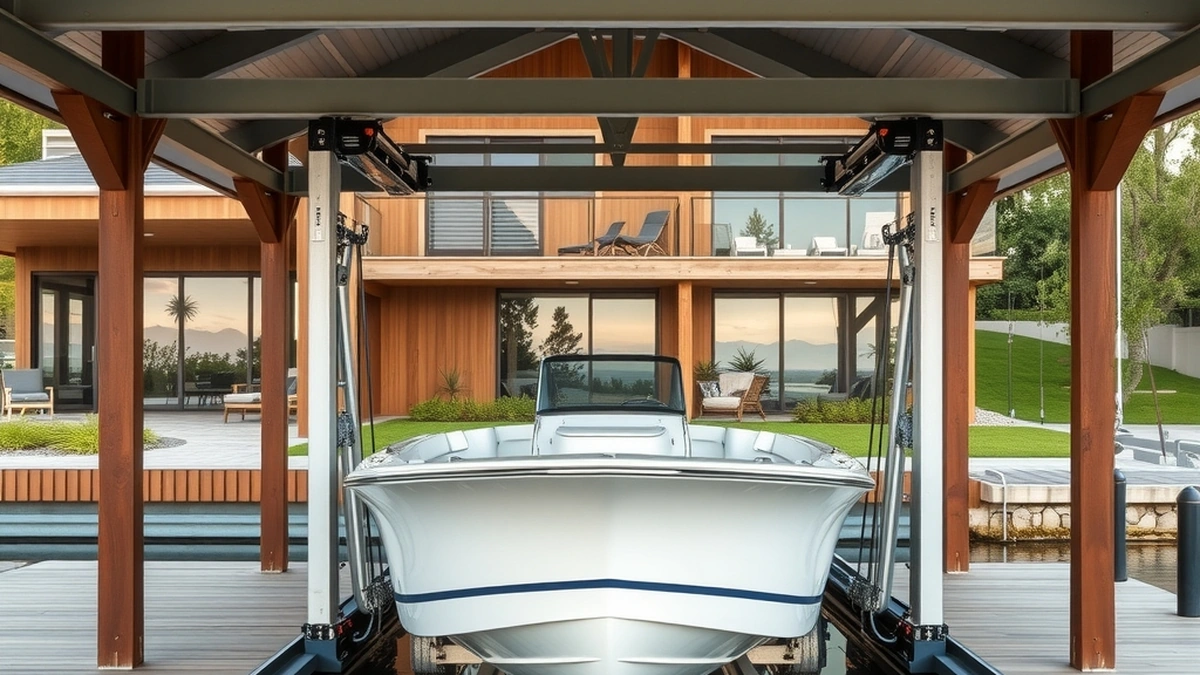
A PWC lift is a dedicated cradle or elevator frame that raises a jet ski or similar personal watercraft above the waterline. Most residential models are rated for 1,500 to 2,500 pounds, which covers the majority of single-rider and two-rider PWCs. The unit mounts to a dock, seawall, or pilings, and uses a manual winch, electric motor, or hydraulic drive to raise and lower the craft.
Keeping a PWC out of the water prevents hull blistering, reduces marine growth, and protects the gel coat from UV and wave abrasion. It also makes boarding faster because the craft sits at dock level instead of bobbing in the water. The tradeoff is that a standard PWC lift serves only one craft, so households with multiple PWCs need multiple lifts or a larger system.
How a Floating Dock Works
A floating dock is a buoyant platform anchored to the shoreline or seabed. It rises and falls with tide or water-level changes, providing consistent boarding height. Construction costs range from $15,000 to $60,000 depending on size, decking, and anchoring. A floating dock can accommodate several boats at once, making it useful for families or properties with mixed watercraft.
The downside for PWC owners is that the craft remains in the water. Without an add-on lift or drive-on port, the PWC sits against the dock or on a floating port, exposed to wakes, floating debris, and hull contact with the dock edge. If your primary goal is hull protection, a floating dock alone does not provide it.
Cost Comparison
Price is usually the deciding factor. Below are estimated installed cost ranges for each path.
| Item | Estimated Cost |
|---|---|
| PWC lift (unit only) | $1,500-$5,000 |
| PWC lift installation | $1,000-$3,000 |
| Total PWC lift installed | $2,500-$8,000 |
| Floating dock construction | $15,000-$60,000 |
| Floating dock installation | Often included in construction estimate |
For example, a $3,000 PWC lift plus $2,000 installation totals $5,000. A modest floating dock at $25,000 costs five times as much before you add any PWC-specific accessory. If you later add a drive-on PWC port to the dock, expect additional material and labor on top of the dock construction price.
These figures are estimates. Actual pricing depends on local labor rates, site access, water depth, and whether you need electrical service for an electric lift. For broader lift pricing context, see our guide on how much does boat lift cost.
Capacity and Load Math
Capacity matters for safety and longevity. A typical two-seater PWC weighs 700 to 900 pounds dry. Add fuel, gear, and a trailer tongue if applicable, and the loaded weight can reach 1,200 pounds. A PWC lift rated at 1,500 pounds handles that load with a reasonable margin.
If you own a larger performance PWC weighing 1,100 pounds dry, plus 100 pounds of gear and 60 pounds of fuel, the total is 1,260 pounds. A 1,500-pound lift still works, but you are closer to the limit. In that case, stepping up to a 2,000- or 2,500-pound model reduces wear on the lift mechanism.
Floating docks are rated by distributed load per square foot rather than a single point capacity. A dock rated for 40 pounds per square foot can hold significant weight spread across the deck, but a concentrated PWC load at one corner still requires proper framing and flotation. Always verify the dock’s rated capacity before mooring multiple boats alongside a PWC.
Installation Requirements
PWC lift installation typically costs $1,000-$3,000. The installer must assess piling condition, dock framing, or seawall structure to confirm it can support the lift and dynamic loads during raising and lowering. Electric lifts require a GFCI-protected circuit run to the dock, which adds trenching or conduit costs if power is not already present.
Floating dock installation is more involved. It requires anchoring, gangway construction, and often permitting from local or state waterway authorities. Because the dock sits in navigable water, you may need approvals that a small PWC lift mounted to an existing dock does not trigger. For more on the installation process, see our overview of boat lift installation.
Water depth also affects both options. A PWC lift needs enough depth to float the craft onto the cradle, usually 18 to 24 inches minimum depending on the model. A floating dock needs sufficient depth to keep the bottom from grounding at low tide, which varies by draft and local water-level swings.
Maintenance and Longevity
PWC lifts require routine inspection of cables, bunks, and drive components. Manual winches need lubrication; electric motors need connection checks; hydraulic units need fluid level and seal inspections. Saltwater environments accelerate corrosion, so rinsing metal parts and replacing anodes on schedule extends service life. If problems develop, our boat lift repair guide covers common failure points.
Floating docks need float inspection, fastener checks, and deck cleaning. Composite or wood decking may require sealing or replacement over time. Anchors and chains can loosen with storm exposure and should be checked seasonally. Both options benefit from regular maintenance, and our boat lift maintenance article outlines a seasonal checklist applicable to lift and dock hardware.
Neither option is maintenance-free. A PWC lift has more moving parts but a smaller structure to inspect. A floating dock has fewer mechanical parts but a larger surface exposed to weather and marine organisms.
Choosing Based on Your Situation
Choose a PWC lift if you own one personal watercraft, want it stored out of the water, and already have a dock or seawall to mount it to. The total installed cost of $2,500-$8,000 is far below a floating dock, and the hull protection justifies the expense for many owners.
Choose a floating dock if you need access for multiple boats, want a social gathering platform, or your shoreline lacks a fixed dock structure. Accept that the PWC will remain in the water unless you budget for an additional lift or port. The $15,000-$60,000 construction range buys versatility, not hull protection.
Some owners use both: a floating dock for general access and a PWC lift mounted to it for the personal watercraft. That combination delivers multi-boat access plus dry storage, but it also combines the cost and maintenance of both systems.
For help narrowing the broader lift category, see our best boat lift roundup, and for dock-versus-lift context at the boat level, see boat lift vs boat dock.
Frequently asked questions
What is a PWC lift?
A PWC lift is a cradle or elevator-style platform that raises a personal watercraft out of the water, typically rated between 1,500 and 2,500 pounds.
How much does a PWC lift cost?
A PWC lift costs $1,500-$5,000, with installation adding $1,000-$3,000 depending on site conditions and mounting type.
How much does a floating dock cost?
Floating dock construction runs $15,000-$60,000, depending on size, decking material, and anchoring system.
Can a floating dock hold a PWC out of water?
No. A standard floating dock keeps the PWC in the water unless you add a separate lift or drive-on port to the dock structure.
Which option protects the hull better?
A PWC lift protects the hull better by removing the craft from water, reducing blistering, osmosis, and marine growth.
Do I need a permit for either option?
Permit requirements vary by locality and waterway jurisdiction; check with your local building or marine authority before installation.
Sources
Some links are affiliate links.If you buy through them we may earn a commission at no extra cost to you. We do not accept payment for rankings. Read the full disclosure.