Best Boat Lift: What Actually Matters
Capacity, water depth, and lift type matter more than brand. A practical guide to choosing the right boat lift for your boat and dock.
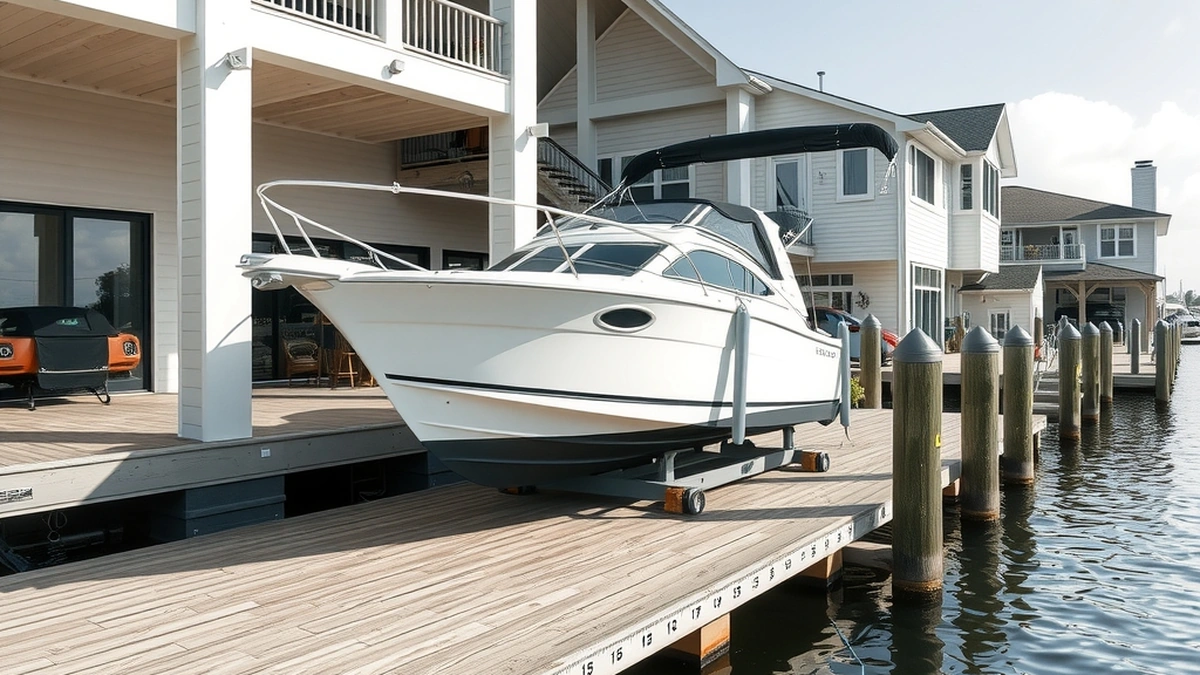
Match the lift to your boat's weight and your water depth first, then choose cradle, elevator, or hydraulic based on your budget and shoreline.
- Priority #1
- Boat weight and capacity
- Priority #2
- Water depth at the dock
- Priority #3
- Lift type and drive mechanism
- Typical install
- $1,000-$3,000
Some links on this page are affiliate links.If you buy through them we may earn a commission at no extra cost to you. We do not accept payment for rankings. Read the full disclosure.
The best boat lift is the one that matches your boat’s weight and your site’s water depth. Brand comes second. Capacity and water depth determine whether a lift will work at all; everything else is feature preference.
Start with the boat. Do not use the manufacturer’s dry weight alone. Add fuel, water, batteries, gear, and any equipment stored aboard. A 4,000 lb cradle lift typically costs $5,000-$12,000. If your fully loaded boat weighs 3,800 lbs, that lift works on paper but leaves almost no margin. A better rule is to size for at least 10-15 percent above your calculated wet weight. For example, if your boat and gear total 4,200 lbs, look at a lift rated for 5,000 lbs or more rather than one capped at 4,000 lbs.
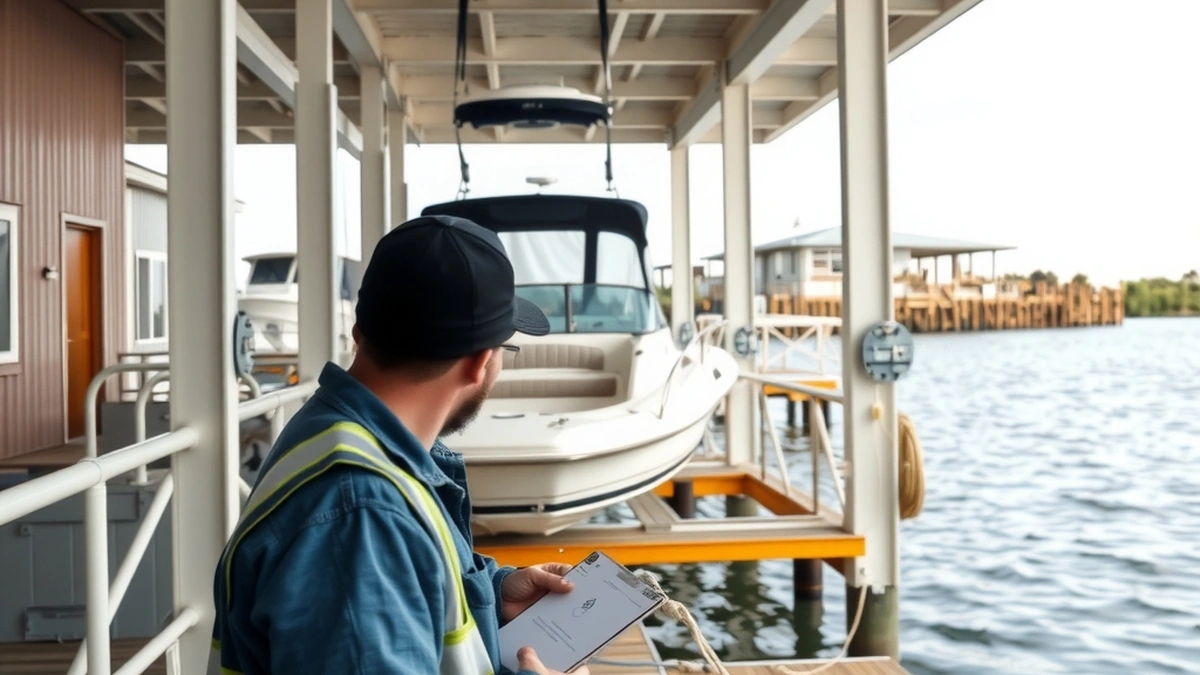
Water depth is the second filter. Measure at low tide, not high tide. You need enough depth under the keel to float the boat onto the cradle or into the elevator, and enough clearance above the boat for the lift mechanism and canopy if you want one. If your low-tide depth is only two feet, many elevator lifts will not fit. A cradle lift or a shallow-water drive-on unit may be the only practical options. If you do not have a dock yet, dock construction can run $15,000-$60,000 depending on materials, pilings, and shoreline conditions.
Lift Types and Where They Fit
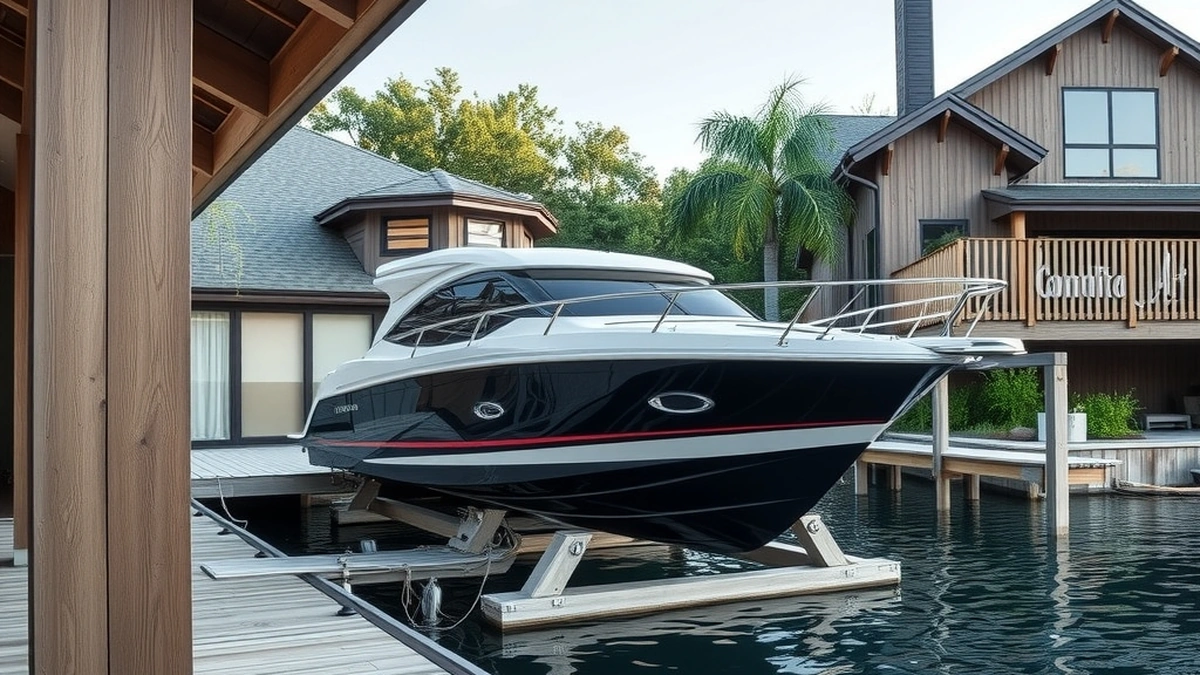
Cradle lifts use a frame that slides under the hull. They are common for runabouts, bowriders, and mid-size cruisers. A 4,000 lb cradle lift falls in the $5,000-$12,000 range. Installation typically adds $1,000-$3,000. Cradle lifts work well on fixed docks and pilings, and they are often the most affordable path for boats under 5,000 lbs.
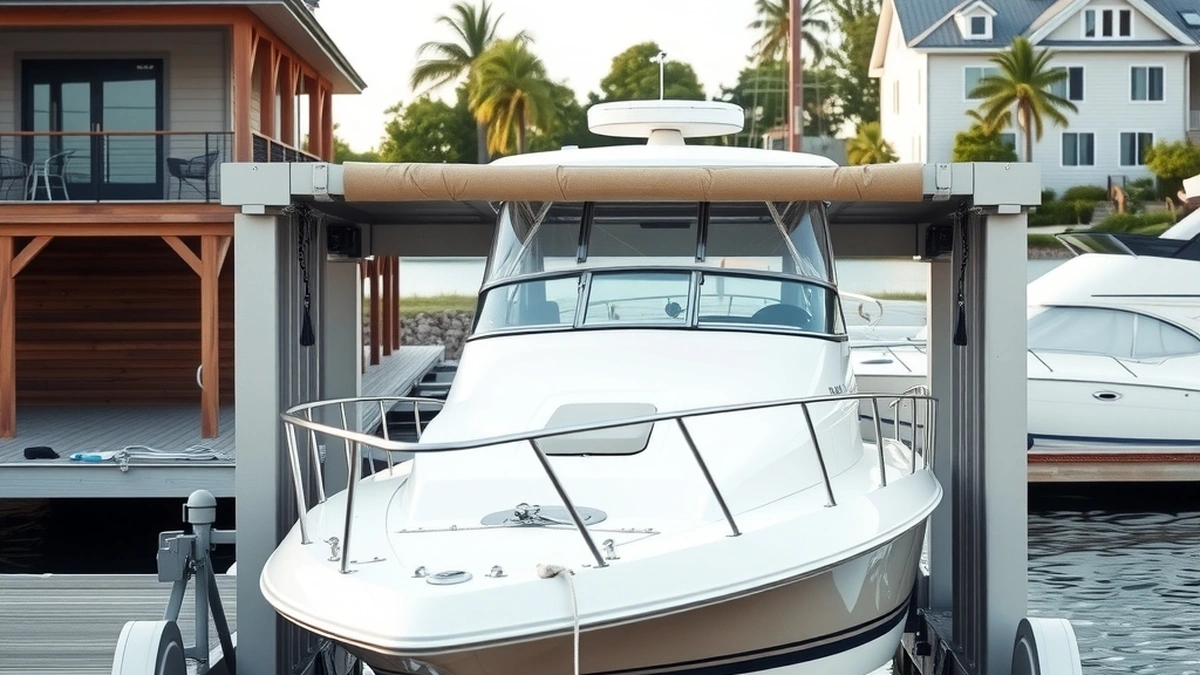
Elevator lifts raise the boat vertically on a platform. They suit larger boats and deeper water. A 10,000 lb elevator lift generally costs $12,000-$25,000. Because they lift straight up, they need less horizontal space than some cradle designs, but they require more vertical clearance and deeper water at the dock face.
Hydraulic lifts use a hydraulic drive to raise and lower the boat. They are often found on larger vessels and premium installations. Hydraulic lift pricing typically spans $15,000-$35,000. The smooth operation and higher capacities come at a price premium over cable-driven cradle or elevator models.
PWC lifts are small cradle or drive-on units for jet skis and small runabouts. PWC lift pricing usually runs $1,500-$5,000. They are not interchangeable with full-size boat lifts; do not try to adapt a PWC lift for a 20-foot bowrider.
Capacity Math in Practice
Suppose you own a 23-foot bowrider with a dry weight of 3,900 lbs. You add 400 lbs of fuel and water, 200 lbs of gear, and four people averaging 180 lbs each, which is 720 lbs. Your total wet weight is 5,220 lbs. A 5,000 lb lift is undersized. You should move up to a 6,000 lb rated lift, which likely puts you in a higher price tier than the 4,000 lb cradle range.
If you are looking at a 10,000 lb elevator lift for a larger cruiser, remember that the lift rating must cover the boat plus everything on board. Do not size to the boat’s brochure weight. Size to the number you would see on a scale at the ramp.
Water Depth and Shoreline Conditions
Measure depth at the lowest tide of the year. Note the bottom type—sand, muck, rock—and whether the shoreline drops off steeply or shelves gradually. These details determine whether you can mount pilings, need a freestanding lift, or must build a dock first.
If you are comparing a boat lift to a dock-only setup, review the trade-offs in our boat lift vs boat dock guide. A dock alone keeps the boat tied up but exposed to waves and hull damage. A lift gets the hull out of the water, which reduces blistering and marine growth, but it adds cost and maintenance.
Installation and Long-Term Costs
Professional installation usually costs $1,000-$3,000. That range assumes an existing dock in good condition. If pilings need reinforcement or the lift requires electrical work, the cost moves toward the top of the range or beyond. For a full picture of what a lift costs over time, see our breakdown of boat lift cost.
You will also want to plan for upkeep. Cables, bearings, motors, and switches wear out. Regular inspection and lubrication extend service life. Our boat lift maintenance guide covers seasonal checks, and our boat lift repair page explains common failure points. If you are considering doing the work yourself, our DIY boat lift article outlines what is realistic for a homeowner versus what should stay with a professional.
What Brand Should You Choose
Once capacity, depth, and lift type are settled, brand becomes a tie-breaker. Look for a warranty that covers the frame, motor, and cables for a meaningful period. Check whether local dealers stock parts and whether service technicians are available in your area. A lift with a strong local support network is usually a better purchase than a cheaper lift with no nearby service.
Avoid making the decision based on showroom appearance or marketing language. A lift that is rated for your boat’s actual weight and installed at the correct depth will outperform a premium-brand lift that is undersized or poorly sited.
Bottom Line
The best boat lift is sized to your boat’s wet weight, matched to your low-tide water depth, and installed on a structure that can support it. Capacity and water depth come first. Brand comes second. Everything else is optional.
If you want to estimate the full project cost, including installation and possible dock work, use our boat lift cost per square foot calculator as a starting point. For expected service life, see how long a boat lift lasts to plan for replacement parts and eventual upgrades.
Next, compare how much does boat lift cost, boat lift installation, boat lift repair before you commit.
Frequently asked questions
What matters most when buying a boat lift?
Capacity and water depth matter more than brand. Match the lift to your boat's wet weight and the depth where you dock.
How do I size a boat lift?
Add your boat's dry weight, fuel, water, gear, and trailer if applicable, then choose a lift rated above that total.
What does a 4,000 lb cradle lift cost?
A 4,000 lb cradle lift typically costs $5,000-$12,000, not including installation.
How much does boat lift installation cost?
Professional installation usually runs $1,000-$3,000, depending on site conditions and lift type.
Do I need a dock before installing a lift?
Most lifts mount to an existing dock or pilings. Dock construction, if needed, can cost $15,000-$60,000.
Which lift type is best for shallow water?
A cradle lift or shallow-water elevator often works best; measure depth at low tide before deciding.
Sources
Some links are affiliate links.If you buy through them we may earn a commission at no extra cost to you. We do not accept payment for rankings. Read the full disclosure.