Floating Dock Reviews: What to Know Before Buying
Compare floating dock types, capacities, and costs to find the right dock for your boat and water depth.
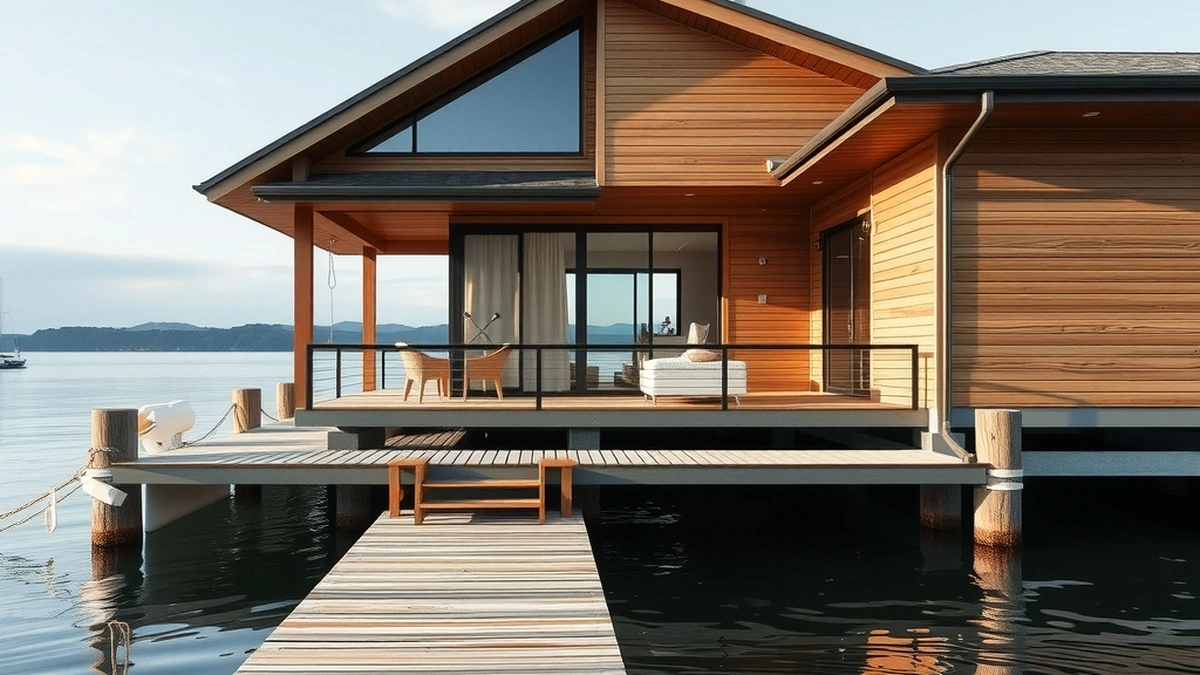
Floating docks suit changing water levels and typically cost less than fixed construction, but capacity and water depth must come before brand.
- Best for
- Changing water levels, seasonal use
- Typical capacity
- 2,000-10,000+ lbs by size and float type
- Price range
- $2,000-$25,000+ installed (estimate)
- Water depth need
- Minimal; floats adjust with tide or level
Some links on this page are affiliate links.If you buy through them we may earn a commission at no extra cost to you. We do not accept payment for rankings. Read the full disclosure.
Floating dock reviews come down to two questions: how much weight the dock must hold, and how much the water level changes where you live. Brand matters less than float volume, frame material, and mooring setup. If you match capacity and water depth first, the right dock usually becomes clear.
What a Floating Dock Is
A floating dock is a platform held up by sealed floats, pontoons, or barrels rather than fixed pilings. Because it rides on the surface, it rises and falls with tides, rain, or drawdowns. That makes it useful on reservoirs, lakes with seasonal levels, and tidal areas where a fixed dock would sit too high or too low for parts of the year.
The trade-off is movement. A floating dock shifts with waves and wake, so boarding can feel less stable than on a fixed pier. It also depends on mooring lines or piling guides to keep it from drifting. For boats that need a very steady platform, such as when loading heavy gear or passengers with limited mobility, a fixed dock or a boat lift may be the better starting point. You can compare the two approaches in our guide to boat lift vs boat dock.
Capacity Comes Before Brand
Dock capacity is determined by float displacement, not by the logo on the frame. A common rule of thumb is that one cubic foot of enclosed float volume displaces about 62.4 pounds of fresh water. In salt water, the figure is roughly 64 pounds per cubic foot.
If a dock uses four floats rated at 500 pounds each in fresh water, the theoretical buoyancy is 2,000 pounds. That does not mean you should load it to 2,000 pounds. A safe working load usually leaves a margin, so a dock with 2,000 pounds of buoyancy might be rated for 1,000 to 1,500 pounds of people, boat, and gear.
For example, if you plan to tie up a 3,500-pound boat and expect 500 pounds of passengers and equipment, you need at least 4,000 pounds of safe capacity. Applying a 50 percent safety margin means looking for roughly 6,000 pounds of buoyancy. That arithmetic matters more than whether the decking is composite, aluminum, or wood.
Types of Floating Docks
Most floating docks fall into a few general categories. Reviews often group them by frame and float material rather than by manufacturer.
Polyethylene docks use molded plastic floats with plastic or composite decking. They resist rot and require little painting, but they can flex underfoot and may feel bouncy with heavier boats. These are common for personal watercraft and small runabouts.
Aluminum frame docks with foam-filled or sealed aluminum floats offer stronger framing and longer life in salt water. They cost more upfront but often need less maintenance over time. Wood frame docks with plastic or barrel floats are less common now because of rot and upkeep, though some owners still build them for cost reasons.
PWC floating docks are smaller platforms designed for jet skis and small boats. They usually range from 4 to 8 feet wide and 8 to 16 feet long. Capacity often falls between 1,000 and 3,000 pounds depending on float count. A full-size boat dock for a 20- to 24-foot runabout might run 8 to 12 feet wide by 20 to 40 feet long and carry several thousand pounds.
Cost Estimates and Arithmetic
Floating dock prices vary widely by size, material, and whether installation is included. A small PWC floating dock kit might start around $2,000 to $5,000. A mid-size aluminum or composite floating dock for a runabout could run $8,000 to $20,000. Large multi-boat systems with gangways, cleats, and electrical service can exceed $25,000. These are estimates, not quotes.
Installation adds to the total. If a dock costs $12,000 and professional installation runs $1,500, the delivered cost is $13,500. If the same dock needs a gangway at $2,000 and mooring hardware at $800, the total reaches $16,300 before permits or site work.
For context, fixed dock construction often costs more because of pilings and site preparation. A cradle lift rated for 4,000 pounds typically lists from $5,000 to $12,000, while an elevator lift for 10,000 pounds can range from $12,000 to $25,000. Hydraulic lifts may run $15,000 to $35,000, and PWC lifts usually fall between $1,500 and $5,000. Installation for lifts commonly adds $1,000 to $3,000. A floating dock can be less expensive than fixed dock construction, which often ranges from $15,000 to $60,000 depending on length and materials.
If you are weighing a lift against a dock, our pages on how much does a boat lift cost and boat lift installation cover those figures in more detail.
Water Depth and Site Conditions
Floating docks need less fixed depth than piling docks because they rise and fall, but depth still matters at the shoreline. You need enough water at the lowest expected level to float the dock without it resting on the bottom. If the water drops two feet in a dry season, the dock must still clear the lakebed or riverbed.
Mooring depth also affects hardware. In deep water, you may need longer mooring lines or piling guides. In shallow water, the dock can ground during low tide, which strains floats and fasteners. Measure the high and low water marks across a full season before choosing dock size and mooring style.
Shoreline slope matters too. A steep bank may need a gangway or ramp to connect land to dock. A gentle slope might allow a direct step-on design. Wind and wake exposure determine whether you need piling guides, stiff arms, or heavier mooring lines.
Maintenance and Longevity
Floating docks need regular inspection. Floats should be checked for leaks, waterlogging, or UV damage. Fasteners can loosen with constant movement, so bolts and brackets should be tightened seasonally. Decking may need cleaning to prevent algae and mildew buildup, especially in shaded or humid climates.
Salt water accelerates corrosion on aluminum and steel parts, so rinsing and inspecting hardware matters more in coastal locations. Foam-filled floats generally do not sink if punctured, but they can absorb water over years and lose buoyancy. Sealed plastic floats are easier to inspect but can crack from impact or freezing.
If you already own a dock and need help with upkeep, our boat lift maintenance and boat lift repair pages cover related inspection routines that apply to dock hardware as well.
Buying Checklist
Before comparing brands, confirm these items:
- Measure the boat’s weight, beam, and length, then add passengers and gear.
- Calculate required buoyancy with a safety margin of at least 50 percent.
- Record high and low water levels at your site over one full season.
- Check shoreline slope and decide if you need a gangway or ramp.
- Choose float and frame material based on fresh or salt water exposure.
- Compare total cost, including dock, delivery, installation, and mooring hardware.
- Verify local permit requirements before ordering.
Capacity and water depth should drive the decision. Brand, color, and decking style come second. A dock that fits your water level and carries your boat safely will outperform a fancier dock that sits too high in low water or bottoms out under load.
Frequently asked questions
What is a floating dock?
A floating dock is a platform supported by airtight floats or barrels that rises and falls with the water level instead of sitting on fixed pilings.
How much weight can a floating dock hold?
Capacity depends on float volume, frame material, and dock size; small docks may hold 2,000-4,000 lbs while larger models exceed 10,000 lbs.
Do floating docks work in deep water?
Yes, because they are not anchored to the bottom by fixed legs, though water depth still affects mooring and swing room.
Can I install a floating dock myself?
Many small kits are DIY-friendly, but larger docks, electrical hookups, or difficult shorelines often justify professional installation.
How do floating docks compare to fixed docks?
Floating docks adapt to changing water levels and usually cost less than fixed construction, while fixed docks offer more stability in high current.
What maintenance do floating docks need?
Inspect floats, fasteners, and decking seasonally, check mooring lines, and clean marine growth to extend service life.
Sources
Some links are affiliate links.If you buy through them we may earn a commission at no extra cost to you. We do not accept payment for rankings. Read the full disclosure.