Capacity Exceeded: What a Fix Costs
Repairing or replacing an overloaded boat lift ranges from minor reinforcement to a full new unit. Here are the cost ranges and load math.
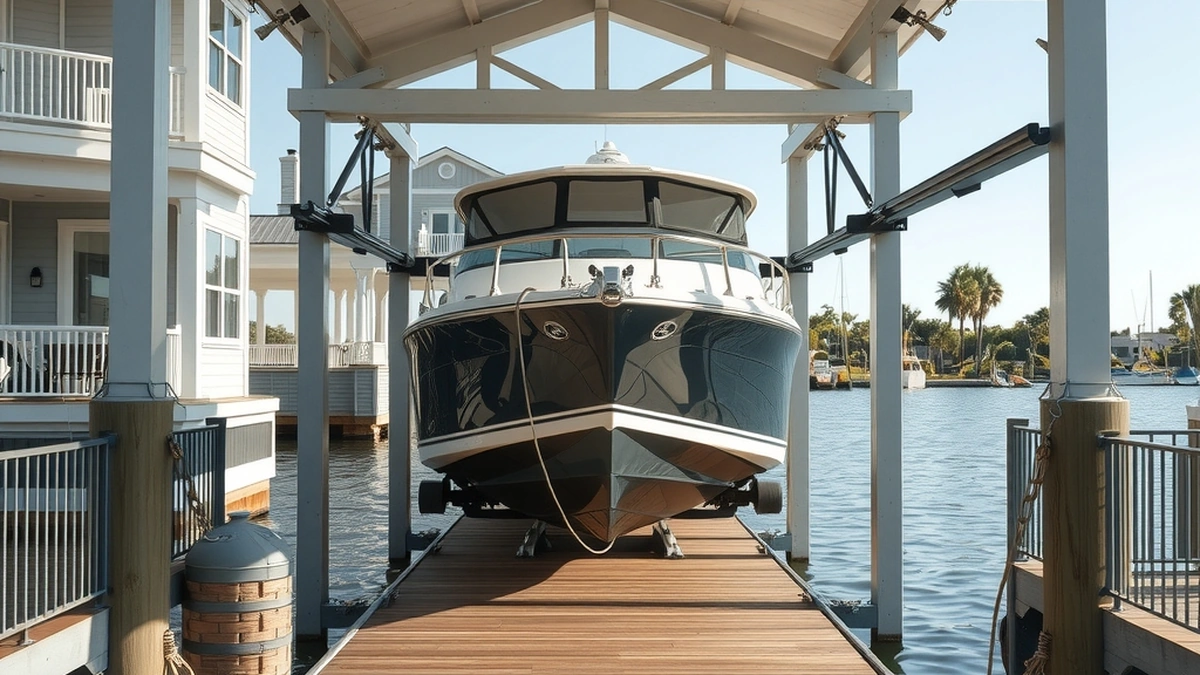
Fixing an overloaded boat lift typically costs between $1,000 and $35,000, depending on whether you reinforce the existing unit or install a larger one.
- Minor reinforcement
- $1,000 - $3,000
- New cradle lift (4,000 lb)
- $5,000 - $12,000
- New elevator lift (10,000 lb)
- $12,000 - $25,000
- New hydraulic lift
- $15,000 - $35,000
- Installation
- $1,000 - $3,000
Some links on this page are affiliate links.If you buy through them we may earn a commission at no extra cost to you. We do not accept payment for rankings. Read the full disclosure.
Exceeding your boat lift’s rated capacity is a costly mistake. The fix usually means either reinforcing the existing structure or replacing the lift with a larger model. Costs range from roughly $1,000 for minor reinforcement to $35,000 or more for a new hydraulic lift plus installation.
Why Capacity Matters
Every boat lift carries a maximum weight rating. That number is not a suggestion. It is the limit at which the frame, cables, motor, and cradle are engineered to operate safely. When you go over it, metal fatigues, cables fray, and motors burn out. A boat that weighs 6,000 pounds dry can easily reach 7,500 pounds once you add fuel, water, batteries, coolers, and gear. Putting that load on a 5,000-pound lift puts you 50 percent over capacity, which is enough to cause structural failure.
The first step after an overload event is to stop using the lift. Then calculate your actual load. Weigh the boat on a trailer scale if possible, or use the manufacturer’s dry weight and add 10 to 15 percent for fluids and equipment. If your total is above the lift’s rating, you need a fix.
Option 1: Reinforce the Existing Lift
If the overload was minor and the lift shows no visible damage, a reinforcement might be enough. This could mean replacing cables, adding bracing, or upgrading the motor. Expect to pay roughly $1,000 to $3,000 for parts and labor, depending on the extent of the work.
Reinforcement only makes sense if the frame is still straight and the original design can handle the loads with better components. If the cradle is bent or the beams are stressed, reinforcement is not a safe repair. In that case, replacement is the only responsible option.
Option 2: Replace with a Cradle Lift
A cradle lift rated for 4,000 pounds costs approximately $5,000 to $12,000 for the unit. This style works well for smaller runabouts and fishing boats. If your boat and gear total 3,500 pounds, a 4,000-pound cradle leaves little margin. You may want to size up even if the math appears to fit.
Installation adds another $1,000 to $3,000. So a full cradle-lift replacement project typically lands between $6,000 and $15,000.
Option 3: Replace with an Elevator Lift
For mid-size boats around 8,000 to 10,000 pounds fully loaded, an elevator lift is a common step up. The unit itself ranges from $12,000 to $25,000. With installation, the total project cost is roughly $13,000 to $28,000.
Elevator lifts use a vertical drive system that can handle heavier loads with less sway than some cradle designs. They are often chosen when water depth fluctuates or when the owner wants more clearance under the hull.
Option 4: Replace with a Hydraulic Lift
Hydraulic lifts are built for the heaviest recreational boats. A new hydraulic lift costs $15,000 to $35,000 before installation. Add $1,000 to $3,000 for professional setup, and the total project can reach $38,000.
This is the most expensive path, but it is also the most durable for large cabin cruisers and offshore boats. If you routinely carry fuel, water, and gear for extended trips, the hydraulic rating gives you real headroom rather than a tight margin.
PWC Lifts as a Secondary Option
If you also lift a personal watercraft, a dedicated PWC lift costs $1,500 to $5,000. Some owners add a PWC lift next to the main boat lift rather than upgrading the primary lift to handle both loads. This keeps each lift within its rated capacity and avoids overloading a single cradle.
Load Math Example
Here is how to check whether your lift is overloaded:
- Boat dry weight: 4,200 lbs
- Fuel (50 gallons at 6 lbs per gallon): 300 lbs
- Water, gear, batteries, and safety equipment: 500 lbs
- Total estimated load: 5,000 lbs
If your lift is rated for 4,500 pounds, you are 500 pounds over capacity. That is about an 11 percent overload. Over time, that extra weight stretches cables and stresses welds. The safe fix is to move to a lift rated at 6,000 pounds or higher, which gives you a 20 percent safety margin.
When the Dock Is Part of the Problem
Sometimes the lift is fine, but the dock cannot support the new equipment. A heavier lift may require piling upgrades or a wider slip. Dock construction costs $15,000 to $60,000 depending on size, materials, and site conditions. If you are replacing a lift because of capacity, have the dock inspected at the same time. It is cheaper to fix pilings while the lift is already out of the water.
Installation and Hidden Costs
Professional installation runs $1,000 to $3,000. That price covers setting the lift, connecting power, and testing operation. It does not always include electrical panel upgrades, new pilings, or removing the old lift. Ask for an itemized quote before signing off.
If you are doing the work yourself, review our guide on DIY boat lift installation to understand what is involved. For most homeowners, professional installation is worth the cost because improper setup voids warranties and creates safety risks.
Maintenance After the Fix
Once you have the right lift in place, regular maintenance keeps it within safe limits. Inspect cables monthly, lubricate moving parts seasonally, and check the cradle for corrosion. Our boat lift maintenance guide covers a seasonal checklist. If you notice unusual noises or slow lifting, schedule service before the next outing.
Choosing the Right Replacement
Capacity should drive your decision, not brand or appearance. Start with your boat’s true loaded weight, then add a 20 percent safety margin. If that number lands near 4,000 pounds, a cradle lift is appropriate. Near 10,000 pounds, look at elevator lifts. Above that, hydraulic lifts are the standard.
For help comparing models, see our best boat lift overview. If you are also deciding between a lift and a dock setup, our boat lift vs boat dock article breaks down the trade-offs.
Bottom Line
Fixing an overloaded boat lift costs between $1,000 for minor reinforcement and $35,000 for a new hydraulic lift plus installation. Most owners land somewhere in the middle, around $6,000 to $28,000 depending on boat size and lift type. The cheapest fix is buying the right capacity the first time. Use our boat lift cost guide to estimate your project before you order.
If your current lift has already been overloaded, have it inspected before the next launch. A bent frame or frayed cable can fail without warning, and the cost of a damaged boat is always higher than the cost of a properly sized lift.
Frequently asked questions
What happens if I exceed lift capacity?
Exceeding rated capacity can bend the cradle, snap cables, or fail the motor, risking damage to your boat and creating a safety hazard.
Can I reinforce an overloaded lift?
Minor reinforcement may work for slight overloads, but structural changes should be evaluated by a professional before use.
How do I calculate total lift load?
Add boat weight, fuel, water, gear, and any passengers typically aboard, then compare the total to the lift's rated capacity.
Does installation cost extra?
Yes, professional installation typically runs $1,000 to $3,000 depending on site conditions and lift type.
Is a PWC lift cheaper to replace?
Yes, a PWC lift generally costs $1,500 to $5,000, far less than a full-size boat lift.
Should I upgrade my dock at the same time?
If your dock is undersized or aging, combining a new lift with dock construction can cost $15,000 to $60,000.
Sources
Some links are affiliate links.If you buy through them we may earn a commission at no extra cost to you. We do not accept payment for rankings. Read the full disclosure.