Boat House Cost
What a boat house costs to build, how the structure splits into dock, roof and lift, and why depth and permits decide the final number.
A boat house typically runs $15,000 to $60,000 for the dock structure, plus $5,000 to $25,000 for the lift it shelters and a roof package on top. Depth at low water, piling count and permit conditions move the total more than the roof material does.
- Dock structure
- $15,000 - $60,000
- Lift inside
- $5,000 - $25,000
- Installation
- $1,000 - $3,000
- Permit
- Required in most waterfront areas
- Main cost driver
- Piling count and water depth
Some links on this page are affiliate links.If you buy through them we may earn a commission at no extra cost to you. We do not accept payment for rankings. Read the full disclosure.
A boat house costs $15,000 to $60,000 for the dock structure, plus $5,000 to $25,000 for the lift it shelters, with the roof and any walls inside that structure figure. Depth at low water, the number of pilings and the permit conditions move the price more than the roofing material does.
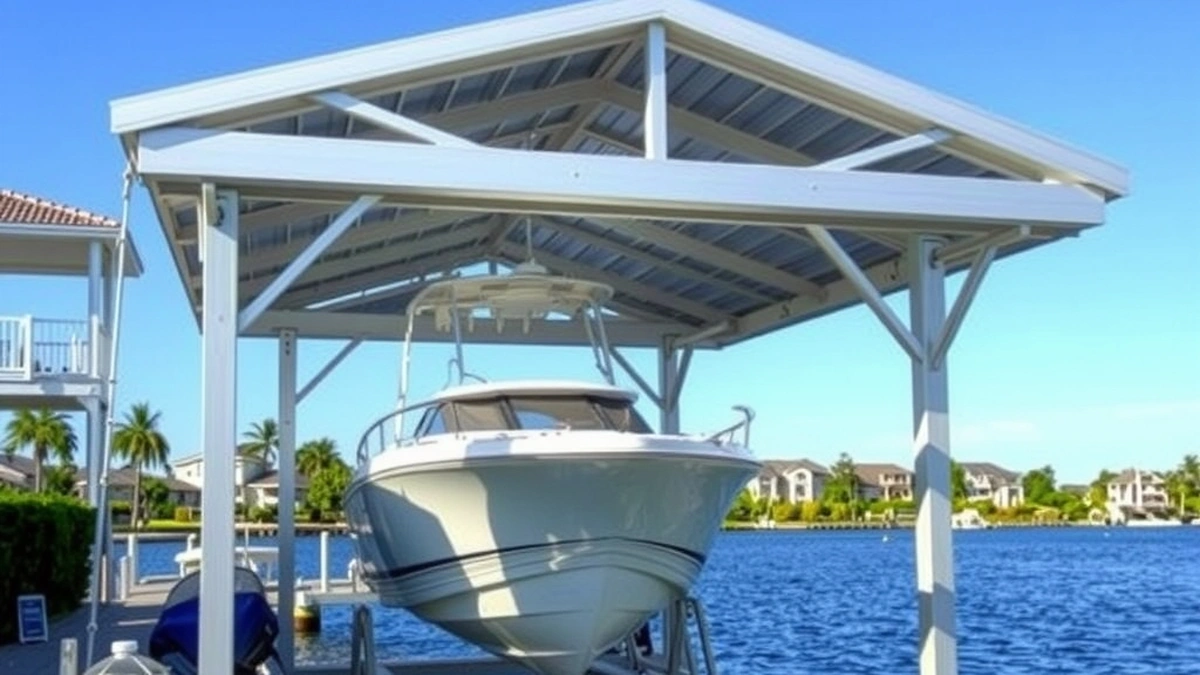
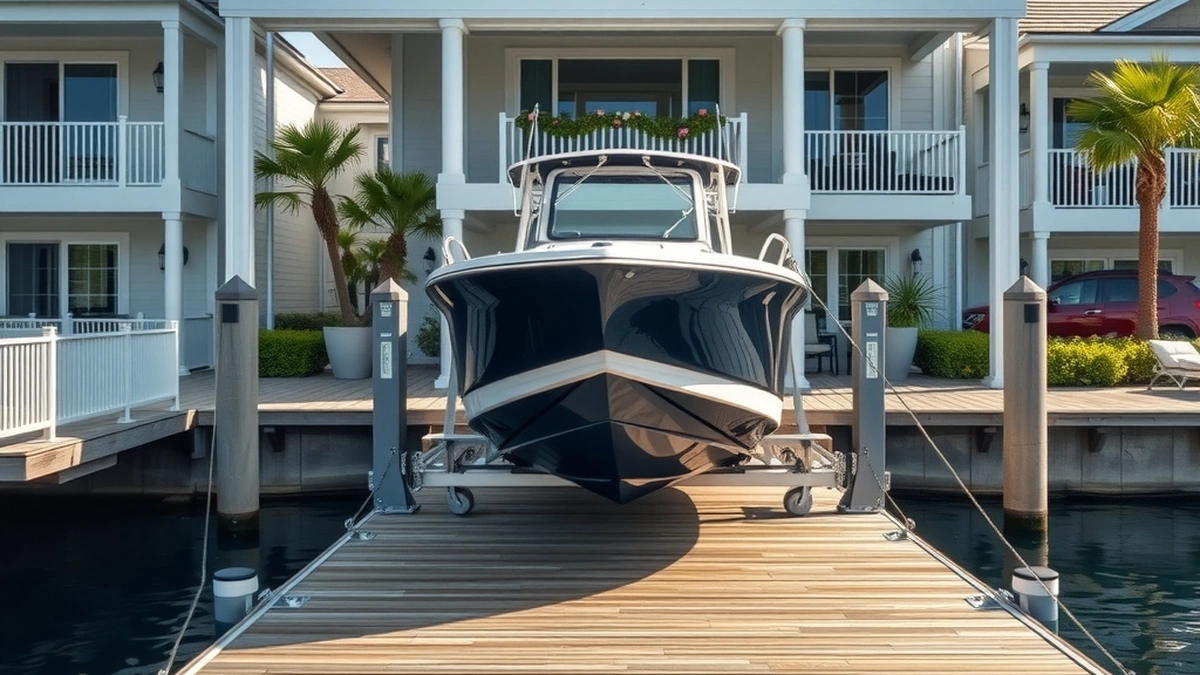
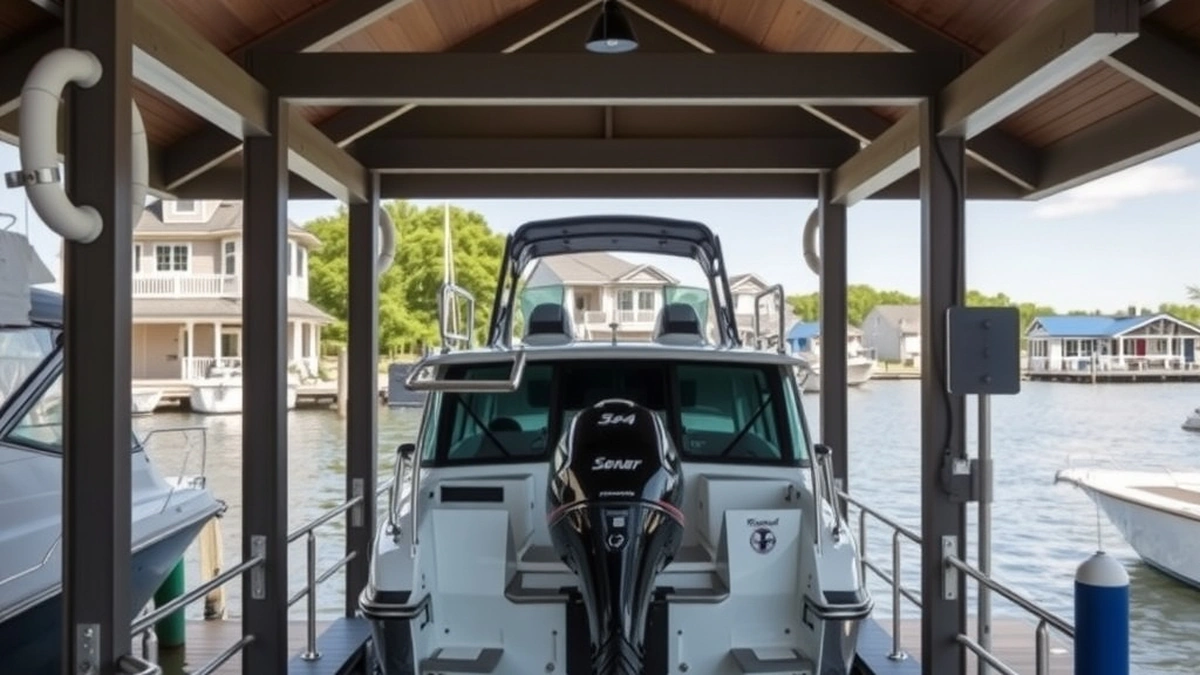
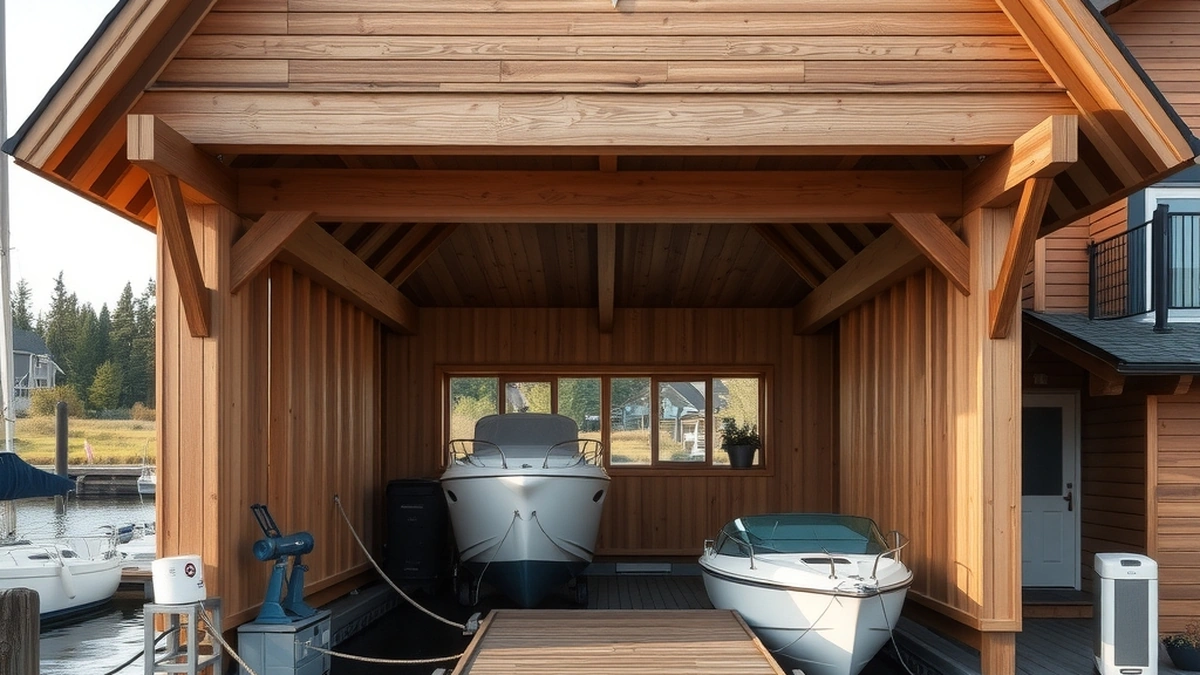
A boat house is a covered waterfront structure built over a berth, with pilings, a deck, a roof and sometimes partial walls, designed to shelter a boat and usually a lift. It is not a canopy over an existing lift, and it is not a floating dock with a roof bolted on, though both get called the same thing in conversation.
The Three Cost Layers
Almost every boat house quote breaks into three parts: the dock structure, the lift and the roof package. The structure is the expensive layer, because it includes pilings, framing and decking.
| Layer | Typical range | What it includes |
|---|---|---|
| Dock structure | $15,000 - $60,000 | Pilings, framing, deck, access walkway |
| Lift | $5,000 - $25,000 | Cradle, elevator or hydraulic unit |
| Lift installation | $1,000 - $3,000 | Set, align, connect, load test |
| Roof package | Inside the structure range | Trusses, sheathing, roofing, fascia |
The dock construction figure is the canonical range, and the lift figures follow the same ranges as any other lift. A boat house is a bundle, not a product with a single price.
Worked Examples
These are estimates built from the canonical ranges, not quoted prices.
Small covered berth for a runabout. Structure at the low end $15,000, plus a 4,000 lb cradle lift at $8,000 and installation at $1,500. Total $24,500. That assumes a simple roof, four to six pilings and a site that needs no dredging.
Mid-size boat house with an elevator lift. Structure at $35,000, plus a 10,000 lb elevator lift at $18,000 and installation at $2,000. Total $55,000. Roof span, piling depth and a walkway are inside the structure number.
Large boat house with a hydraulic lift. Structure at $60,000, plus a hydraulic lift at $25,000 and installation at $2,500. Total $87,500. At this scale the roof and the piling count dominate, and engineering review is part of the project.
Add permits to each. A waterfront permit can be a few hundred dollars or several thousand, and it can also impose conditions, such as limits on roof area or requirements for a specific piling type, that change the build.
Boat House vs Covered Lift vs Open Dock
The three options are often confused, and the price gap is large.
| Option | Cost basis | Protection | Permit burden |
|---|---|---|---|
| Boat house | $15,000 - $60,000 structure plus lift | Full roof, some weather protection | Highest, often restricted |
| Covered lift canopy | Canopy cost plus lift | Roof over the boat only | Moderate |
| Open dock with lift | Lift plus dock repair | No overhead cover | Lowest |
A canopy over a lift costs a fraction of a boat house and delivers most of the sun and rain protection. A boat house adds walls, storage and a finished structure, and it adds permitting complexity that a canopy usually avoids.
If shade is the goal, price the canopy first. Our guide to boat lift canopy cost covers that option, and dock construction cost covers the open structure.
What Drives the Price
Piling count is the first driver. A wider berth needs more piles, and each pile is driven to depth, so soft bottoms and deep water add cost.
Depth at low water is the second. A site that is too shallow for the boat to float onto the lift needs dredging, and dredging is a permit-heavy operation of its own. Our guide to shallow water explains how to measure before designing.
Roof span is the third. A clear span over a wide berth needs heavier trusses than a narrow one, and the difference is structural rather than cosmetic.
Finally, ice and wave exposure. A structure in a freeze zone or on open water needs heavier bracing, and that is an engineering decision, not a catalog option.
Permits and Waterfront Rules
Waterfront construction is regulated at several levels. A local building permit is the baseline. A state environmental or natural resources agency often reviews structures over tidally influenced water. Federal involvement appears when navigable waters or protected species are in play.
Some water bodies cap the amount of new overwater coverage, which can rule out a boat house entirely and leave a canopy as the only option. Ask before you design, not after you buy.
Our guide to permit missing prevention covers the checks in order. A structure built without the right authorization can be ordered removed, and removal costs more than the permit.
Planning Sequence in Five Steps
- Measure depth at low water across the full berth, not just at the dock end.
- Ask the local authority what overwater coverage is allowed on your water body.
- Weigh the boat loaded, then choose a lift class above that figure.
- Get a structural opinion on the piling plan before the roof is designed.
- Price the structure, lift, installation and permits as four separate lines.
Step five keeps the comparison honest. A single lump sum hides whether the roof is shingled or sheeted, and whether the piling count is four or eight.
What the Structure Has to Carry
A boat house is not a shed over water. It carries its own dead load, wind and snow load, and the lift’s point loads plus the boat. A 10,000 lb lift with a loaded boat can put well over 12,000 lb into a small number of piles.
That is why the piling plan comes before the roof design and why a builder’s or engineer’s opinion is worth paying for. For the lift side, read boat lift cost and boat lift installation cost.
The summary: budget $15,000 to $60,000 for the structure, $5,000 to $25,000 for the lift, and $1,000 to $3,000 to install it, then confirm the permit before ordering anything. Never size a lift to the dry hull weight, and never mount a lift on pilings that have not been checked for capacity.
Frequently asked questions
How much does a boat house cost?
A covered boat house typically runs $15,000 to $60,000 for the structure, with the lift at $5,000 to $25,000 depending on capacity, and permits and electrical on top.
Is a boat house the same as a covered boat lift?
No. A boat house is a built structure with pilings, a roof and often walls. A covered lift is a canopy frame over an existing lift, and it costs far less.
Do I need a permit for a boat house?
Almost always. Waterfront structures usually need a local building permit plus a state or federal authorization, and some water bodies restrict new coverage entirely.
How deep does the water need to be?
Deep enough at low water for the boat to float on and off the lift, typically several feet under the hull. Shallow sites need dredging or a different design.
Can a boat house include a lift?
Yes, and most do. The lift is priced separately from the structure, and the structure has to be designed to carry the lift's load plus the boat.
How long does a boat house take to build?
Permitting is often the long pole at one to three months, with construction typically taking several weeks once the pilings are driven.
Sources
Some links are affiliate links.If you buy through them we may earn a commission at no extra cost to you. We do not accept payment for rankings. Read the full disclosure.