Shallow Water: Warning Signs for Boat Lifts
Learn how to spot shallow water warning signs before they damage your boat lift, hull, or dock.
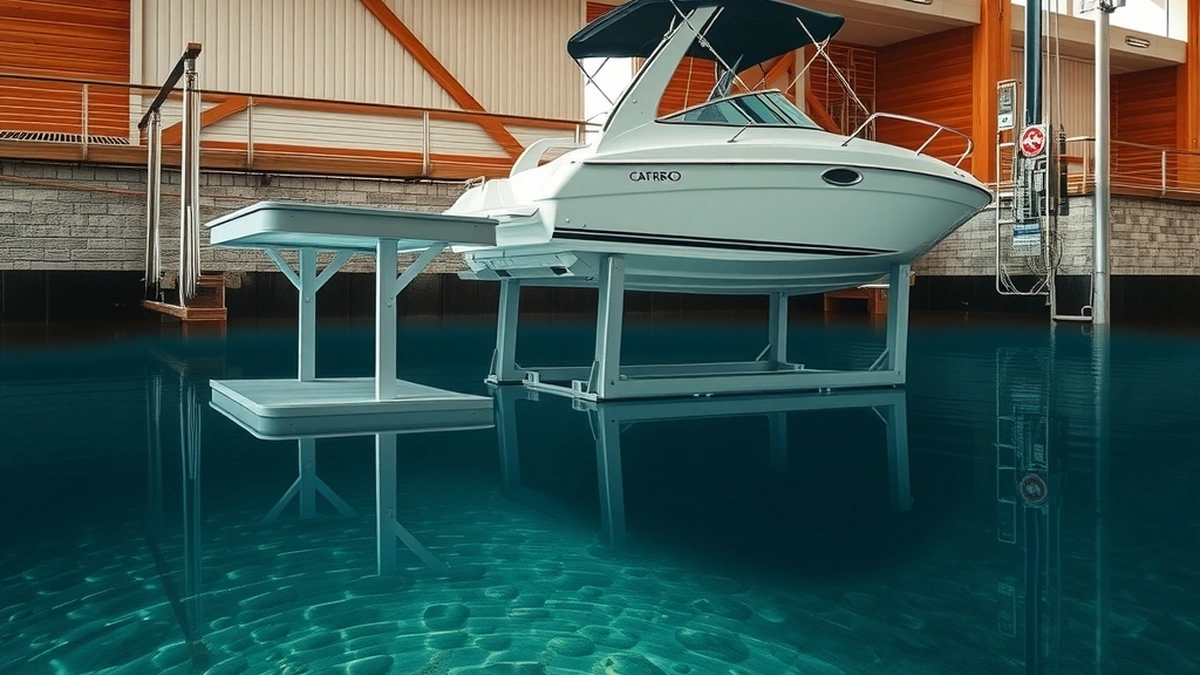
Shallow water warning signs include visible bottom, propeller wash, and frequent grounding; measure depth at low tide before sizing a lift.
- Minimum safe depth
- 18-24 inches below keel at low tide
- Common cradle lift cost
- $5,000-$12,000
- Installation cost
- $1,000-$3,000
Some links on this page are affiliate links.If you buy through them we may earn a commission at no extra cost to you. We do not accept payment for rankings. Read the full disclosure.
Shallow water is one of the most common reasons boat lifts fail before their time. You can spot it by looking for visible bottom near the dock, propeller wash that stirs up sediment, or a boat that rests on the mud at low tide. If you ignore these signs, the lift, hull, and dock can all take damage.
What Counts as Shallow Water
Shallow water is not a single number. It depends on your boat’s draft, your local tide range, and the type of lift you plan to install. A general rule is to keep at least 18 to 24 inches of water beneath the keel at the lowest expected tide. Less than that means the boat may bottom out on the cradle or the lake floor.
Measure at low tide, not high tide. A slip that looks deep enough in July may leave a boat stranded by October. Use a weighted line or a depth finder, drop it at the exact spot where the lift will sit, and record the depth from surface to bottom. Subtract your boat’s draft to find the true clearance.
Visual Warning Signs at the Dock
You do not need special equipment to notice the first clues. Look for these signs during a site visit:
- Bottom visible within a few feet of the dock edge
- Water that turns cloudy when the boat moves
- Propeller scars or disturbed sediment near the slip
- Boat hull sitting lower in the water than expected at low tide
- Dock pilings with barnacle or algae lines far above the current water level
- Mud or sand buildup directly under where a cradle would rest
If you see more than one of these, treat the site as shallow until a depth measurement proves otherwise.
Tidal and Seasonal Changes
Tides and seasonal rain can change depth by several feet. In coastal areas, a 3-foot tide swing is common. That means a lift installed at high tide could hang over dry ground at low tide. In inland lakes, drought can drop water levels by 12 to 24 inches over a summer.
Check depth at the lowest point of the year, not the day you visit. If your site loses 2 feet of depth seasonally, a fixed elevator lift may not work without adjustment. A hydraulic lift offers more range but costs $15,000-$35,000, while a cradle lift for a 4,000 lb boat runs $5,000-$12,000. Installation adds $1,000-$3,000 either way.
Load and Capacity Risks in Shallow Water
Shallow water changes how weight transfers through a lift. When a boat floats freely, buoyancy carries part of the load. When the hull touches bottom or sits low on a cradle in thin water, more weight bears on the lift structure and the lake bed.
Example math for a 4,000 lb boat:
- Boat weight: 4,000 lb
- Cradle and hardware estimate: 800-1,200 lb
- Total lift load estimate: 4,800-5,200 lb
A cradle lift rated at 4,000 lb may be overloaded once you add fuel, gear, and water. If the bottom is soft mud, that 5,000 lb can concentrate on a small footprint and cause the lift to tilt or sink unevenly. Pads or pilings spread the load, but they add to dock construction cost, which ranges from $15,000-$60,000 depending on size and materials.
For a 10,000 lb boat, an elevator lift costs $12,000-$25,000. Add installation at $1,000-$3,000, and the total project can reach $28,000 before any dock work. Knowing the depth first prevents buying a lift that cannot reach the water.
Matching the Lift to the Depth
Different lifts handle shallow water differently. A cradle lift needs enough water to float the boat onto the bunks. An elevator lift can work in less depth but still needs clearance beneath the platform. A PWC lift costs $1,500-$5,000 and suits small craft in thin water, but it will not carry a 20-foot runabout.
If depth is marginal, consider these steps:
- Measure at lowest tide.
- Add 24 inches of clearance to your boat’s draft.
- Compare that number to the lift’s minimum operating depth.
- Budget for installation at $1,000-$3,000.
- Review dock condition before mounting anything.
A lift in the wrong depth will strain cables, bend frames, and shorten the life of the boat. It is cheaper to measure twice than to replace a lift once.
When to Inspect or Repair
If you already have a lift in shallow water, inspect it regularly. Look for frayed cables, bent cradle arms, or pilings that have shifted. A boat that bottoms out puts shock loads on the winch and frame that normal use does not.
Minor issues such as cable replacement or weld repair fall under boat lift repair. Recurring grounding or structural tilt may mean the site is too shallow for the current lift. In that case, moving to a deeper slip or changing lift types costs more upfront but protects the boat over time.
Routine care also matters. Flush saltwater systems, check motor mounts, and inspect bunks for rot. A maintenance schedule catches wear before shallow water turns it into a failure. For help choosing equipment, see the best boat lift guide, or compare a lift against a fixed dock at boat lift vs boat dock. If you are doing the work yourself, the DIY boat lift article covers permitting and site prep basics.
Shallow water gives clear warnings if you know where to look. Measure at low tide, respect your boat’s draft, and size the lift to the water you actually have, not the water you wish you had.
Next, compare how much does boat lift cost, boat lift installation, boat lift repair before you commit.
Frequently asked questions
What is shallow water for a boat lift?
Shallow water means there is not enough depth to float the boat off the cradle or keep the propeller submerged at low tide, typically under 18 to 24 inches beneath the keel.
How do I check water depth?
Use a weighted line or depth finder at the lowest tide of the year, measure from the bottom to the surface, and subtract your boat's draft.
Can a boat lift sit in mud?
Yes, but soft mud can shift under load; a 4,000 lb cradle lift plus boat can exceed 8,000 lb total, so pilings or pads may be needed.
Does tide affect lift choice?
Yes; if depth varies by 3 feet between high and low tide, a hydraulic lift may suit better than a fixed cradle, though it costs $15,000-$35,000.
What happens if I ignore shallow signs?
The boat can rest on the bottom, strain lift cables, foul the propeller, and damage the hull or dock during storms.
Should I repair or replace a lift in shallow water?
Inspect cables and welds first; minor fixes fall under boat lift repair, while recurring bottoming out may mean moving to a deeper slip or different lift.
Sources
Some links are affiliate links.If you buy through them we may earn a commission at no extra cost to you. We do not accept payment for rankings. Read the full disclosure.