Shallow Water: Repair Options for Boat Lifts
Repair options for boat lifts in shallow water, including cradle, elevator, hydraulic, and PWC lifts with cost ranges and installation guidance.
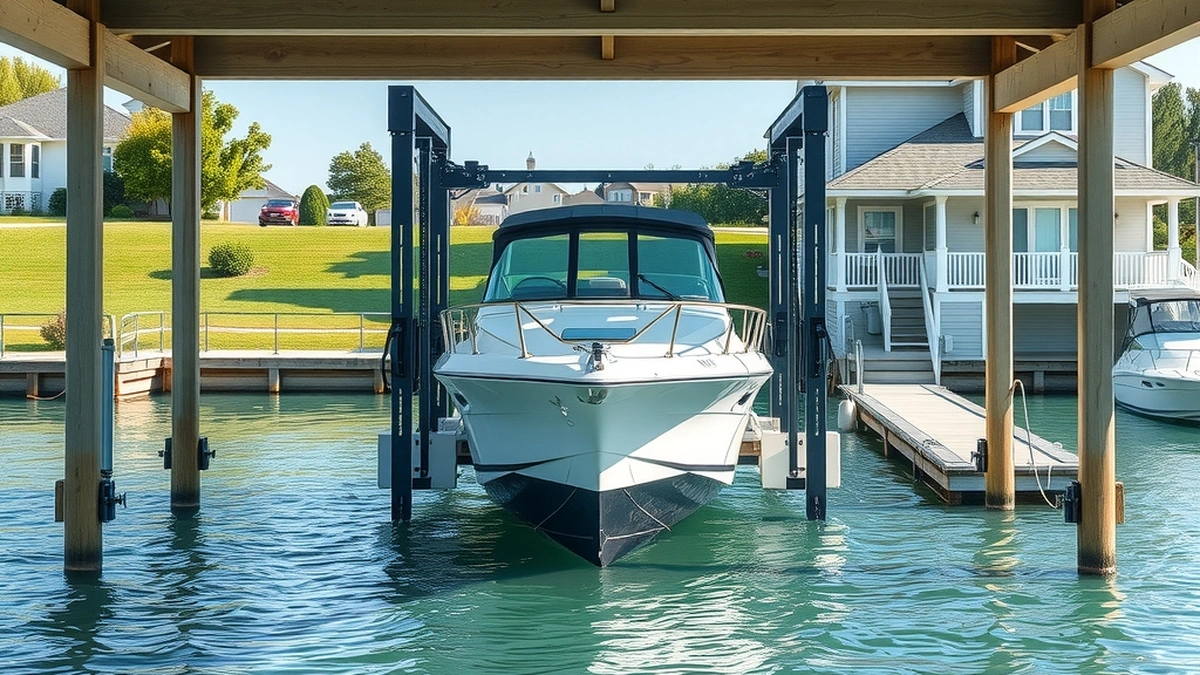
In shallow water, repair or replace your lift with a cradle, elevator, hydraulic, or PWC lift sized to your boat weight and water depth, with professional installation typically adding $1,000-$3,000.
- Best for shallow water
- Cradle and elevator lifts
- Typical lift cost
- $1,500-$35,000
- Installation cost
- $1,000-$3,000
- Dock construction
- $15,000-$60,000
Some links on this page are affiliate links.If you buy through them we may earn a commission at no extra cost to you. We do not accept payment for rankings. Read the full disclosure.
Shallow water limits which boat lifts can be installed and repaired safely. If your lift is damaged or no longer fits the depth at your dock, your repair options depend on your boat’s weight, the water depth at low tide, and whether your existing dock can support a replacement. This guide covers the main lift types that work in shallow water, what they cost, and how to size them for your boat.
Assess Your Water Depth First
Measure the depth at the lowest tide of the year, not at high tide. A lift that fits in July may sit on the bottom in October. Subtract your boat’s draft from the available depth to see how much clearance remains for cradle beams, elevator rails, or hydraulic cylinders. If you have less than 18 to 24 inches of usable depth beneath the hull, your options narrow significantly.
Boat weight matters just as much as depth. A 4,000 lb boat needs a lift rated for at least 4,000 lbs, and you should add a margin for fuel, gear, and water. For example, a boat weighing 3,800 lbs with 400 lbs of fuel and equipment totals 4,200 lbs, so a 4,000 lb rated lift is undersized. Moving up to the next capacity tier prevents cable strain and structural failure.
Cradle Lifts for Shallow Water
Cradle lifts support the hull on padded beams and are often the most practical choice in shallow water. They sit low in the water and do not require deep pilings or tall towers. A 4,000 lb cradle lift typically costs between $5,000 and $12,000, depending on materials and whether it includes a canopy or motorized drive.
If you are repairing an existing cradle lift, common fixes include replacing bunks, cables, winches, or corroded fasteners. A full replacement may make more sense if the frame is rusted through or the beams no longer match your hull shape. Cradle lifts work well for runboats, bowriders, and smaller cruisers in protected coves where wave action is minimal.
Elevator Lifts for Deeper Slips
Elevator lifts use vertical rails and a platform that raises the boat straight up. They require more vertical clearance than cradle lifts but can work in moderate shallow water if the bottom is firm enough to anchor the rails. A 10,000 lb elevator lift typically costs between $12,000 and $25,000.
Repairing an elevator lift often means servicing the motor, gearbox, or rail guides. If the rails are bent or the platform is corroded, replacement parts can be expensive. Because elevator lifts lift the boat higher out of the water, they offer better protection from fluctuating water levels, but they cost more than cradle systems and need stronger dock support.
Hydraulic Lifts
Hydraulic lifts use fluid-powered cylinders to raise and lower the boat. They are powerful and smooth but are the most expensive category, typically ranging from $15,000 to $35,000. In shallow water, hydraulic lifts can be difficult to install because the cylinders need vertical room to extend and retract.
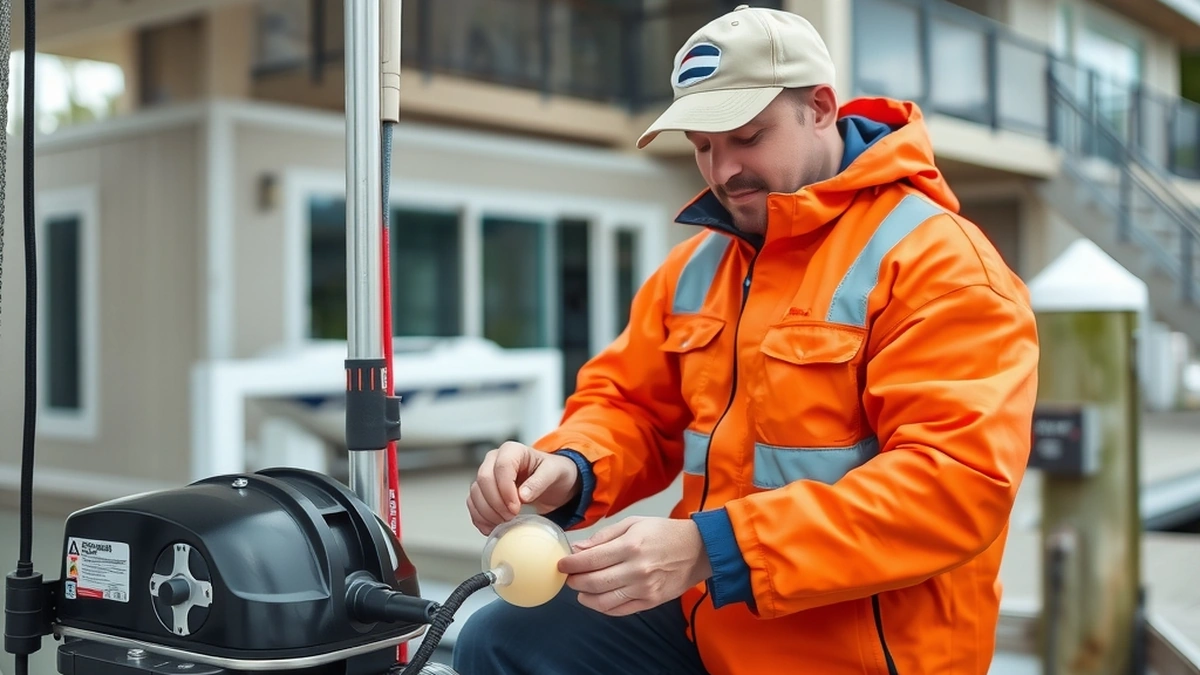
Hydraulic repairs usually involve seals, hoses, pumps, or fluid leaks. If a cylinder is scored or the pump has failed, professional service is recommended. Hydraulic systems are best suited for heavier boats and deeper slips where budget allows for the higher equipment and maintenance costs.
PWC Lifts
Personal watercraft lifts are smaller, lighter, and often the most affordable option for shallow water. A PWC lift typically costs between $1,500 and $5,000. Because PWCs draw very little water, these lifts can operate in just a few inches of depth.
Repairs on PWC lifts usually involve replacing rollers, cables, or winch straps. If the frame is intact, a repair is often cheaper than buying new. PWC lifts are not suitable for boats over roughly 1,500 lbs, so check your craft’s weight before choosing this option.
Cost Arithmetic and Load Sizing
When budgeting a repair or replacement, add the lift price to installation and any dock work. For example, a 4,000 lb cradle lift at the midpoint of its range costs about $8,500. Adding professional installation at $2,000 brings the total to roughly $10,500. If you also need dock reinforcement or a new dock section, dock construction can range from $15,000 to $60,000 depending on size and materials.
For load sizing, add your boat’s dry weight to fuel, water, and gear. A 3,500 lb boat with 200 lbs of fuel and 300 lbs of gear totals 4,000 lbs. A lift rated for exactly 4,000 lbs leaves no margin, so a 5,000 or 6,000 lb rated lift is safer. Overloading a lift voids warranties and increases the risk of cable failure or structural collapse.
Installation and Dock Compatibility
Installation usually costs between $1,000 and $3,000, but the price rises if the site requires piling work, electrical hookup, or difficult access. Your dock must be structurally sound enough to hold the lift and the boat’s weight. A cradle lift imposes point loads where the beams rest on the dock, while an elevator lift transfers weight through vertical rails.
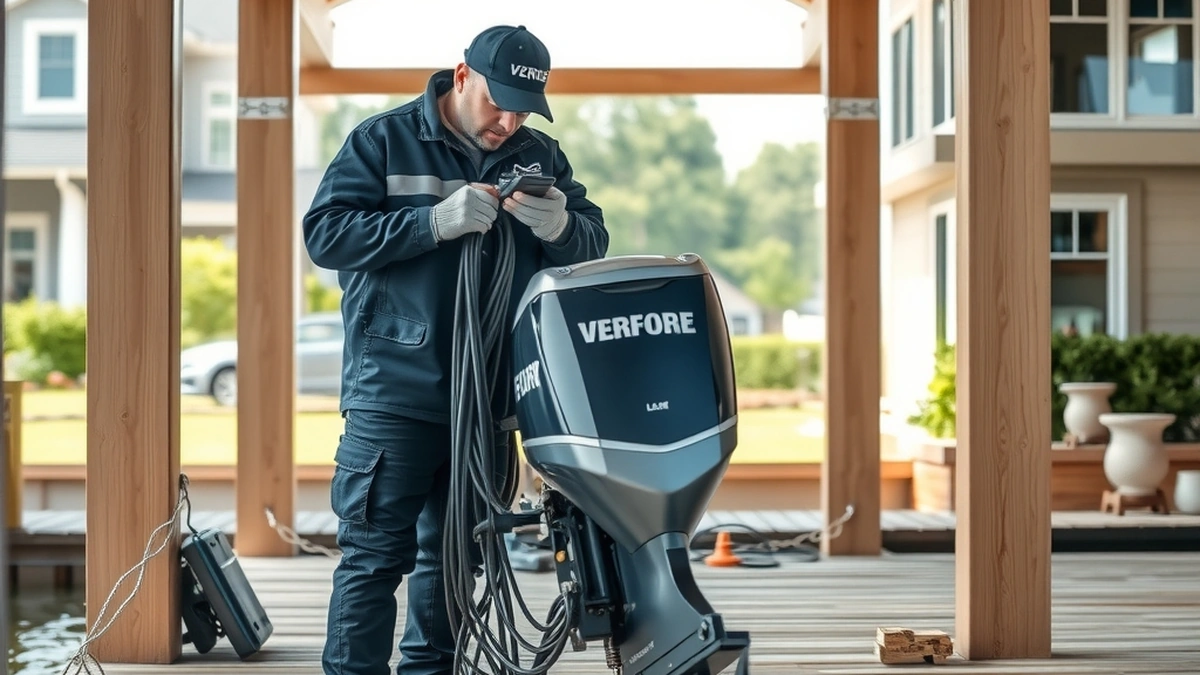
If your dock is old, rotting, or undersized, repair the dock before installing the lift. Otherwise, the new lift may shift, tilt, or sink into the dock over time. For help evaluating whether to repair or replace the lift itself, see our guide on boat lift repair. For ongoing care after installation, review boat lift maintenance to extend the life of cables, bunks, and motors.
When to Replace Instead of Repair
Repair makes sense when the frame is sound and only wear items are failing. Replace the lift when the frame is compromised, the capacity no longer matches your boat, or repair costs approach half the price of a new unit. In shallow water, replacing with a cradle or elevator lift sized to your low-tide depth often provides a more lasting fix than patching an outdated system.
If you are also considering a dock, compare the long-term value of a lift versus a fixed dock structure using our overview of boat lift vs boat dock. For broader pricing context, see how much does boat lift cost and boat lift installation.
Frequently asked questions
What lift works in shallow water?
Cradle lifts and elevator lifts are commonly used in shallow water because they require minimal depth beneath the hull compared to other lift styles.
How much does a 4,000 lb cradle lift cost?
A 4,000 lb cradle lift typically costs between $5,000 and $12,000, not including installation or site preparation.
How much does installation add?
Professional installation generally ranges from $1,000 to $3,000 depending on site access, water conditions, and lift complexity.
Can I use a PWC lift in shallow water?
Yes, PWC lifts are compact and often suitable for shallow water, with prices typically ranging from $1,500 to $5,000.
Do I need a new dock for a lift repair?
Not always, but if the existing dock cannot support the lift, dock construction can cost $15,000 to $60,000 depending on size and materials.
Where can I find boat lift repair guidance?
Review general boat lift maintenance and repair resources to understand routine upkeep, common failure points, and when to call a professional.
Sources
Some links are affiliate links.If you buy through them we may earn a commission at no extra cost to you. We do not accept payment for rankings. Read the full disclosure.