Power Unavailable: Warning Signs for Boat Lift Owners
Recognize electrical warning signs on boat lifts before power loss leaves your vessel stranded at the dock.
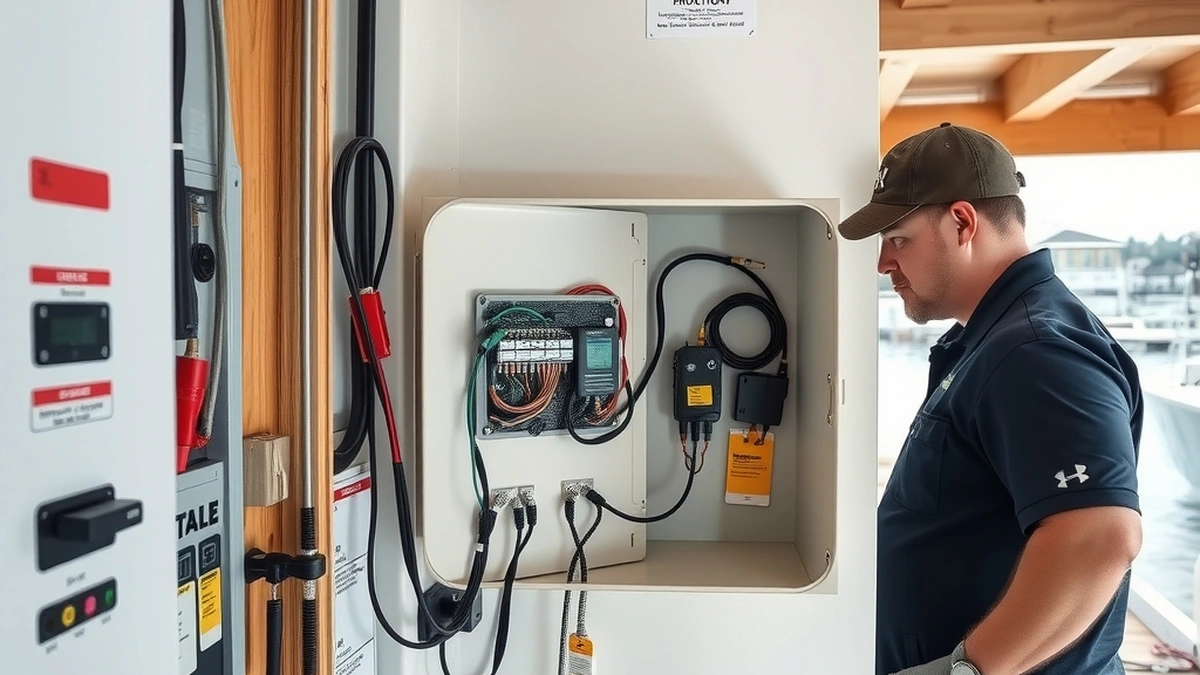
Flickering motors, tripped breakers, burning smells, and slow lift operation are clear warning signs that boat lift power is failing and needs immediate inspection.
- Common warning signs
- Flickering lights, tripped GFCI, burning odor, slow motor
- Typical repair range
- $150–$800 estimate
- Safety first
- Shut off power at the breaker before inspecting
Some links on this page are affiliate links.If you buy through them we may earn a commission at no extra cost to you. We do not accept payment for rankings. Read the full disclosure.
Power unavailable on a boat lift means the motor is not receiving the electricity it needs to raise or lower your vessel. The problem usually starts with small warning signs before the lift stops completely. Catching those signs early can prevent a stranded boat, a damaged motor, or a dangerous electrical fault at the dock.
This guide covers the most common warning signs of power loss, what causes them, and when to call a professional. Capacity and water depth determine which lift you own, but electrical maintenance applies to every type, from a cradle lift to a hydraulic lift.
Warning Signs That Power Is Failing
Boat lift power problems rarely appear without notice. Watch for these indicators:
- Motor hums but does not lift. The motor receives some power but cannot start under load. This often points to a failing start capacitor, low voltage, or poor wiring connections.
- Lift operates slower than normal. Voltage drop from corroded terminals, undersized wiring, or a weak power supply can reduce motor speed. A 4,000 lb cradle lift that normally raises a boat in 60 seconds should not take 90 seconds or more.
- Breaker trips or GFCI pops repeatedly. A one-time trip can happen. Repeated tripping means a short, ground fault, or overloaded circuit. Do not keep resetting it.
- Flickering lights or controls. If dock lights dim when the lift starts, the circuit may be undersized or the connection loose.
- Burning smell or discolored outlets. Overheating wires, melted insulation, or arcing at a breaker produce a distinct odor. Treat this as an urgent safety issue.
- Intermittent operation. The lift works sometimes and not others, often worsening in humid or rainy weather. Salt air corrosion on terminals is a likely culprit.
Common Causes of Power Loss
Electrical failures on boat lifts usually fall into a few categories:
- Tripped breaker or GFCI. Moisture inside a junction box or a worn motor can trip protection devices. This is the first thing to check, but not the only thing.
- Corroded wiring and terminals. Salt spray oxidizes copper and aluminum connections, increasing resistance. Higher resistance creates heat and reduces voltage at the motor.
- Failed capacitor. Boat lift motors use start capacitors to begin lifting under load. A bad capacitor often causes humming without movement.
- Loose connections. Vibration from regular lift operation can loosen wires in the control panel or at the disconnect switch.
- Undersized circuit. Running a lift on a circuit shared with dock lights, fish cleaners, or other appliances can cause voltage drops and nuisance tripping.
Safety First: What to Do When Power Is Unavailable
Before inspecting anything, shut off power to the lift at the main breaker. Water and electricity near a dock create a serious shock hazard. Follow these steps:
- Turn off the breaker supplying the boat lift.
- Unplug the lift if it uses a corded connection, or confirm the disconnect is open.
- Do not touch wires, terminals, or the motor housing until power is confirmed off with a tester.
- If you see standing water around the control panel or lift motor, do not attempt repairs. Call a licensed electrician.
If the breaker trips again immediately after resetting, leave it off. Repeated resetting can damage wiring or start a fire. This is the point to schedule service through a boat lift repair provider or a marine electrician.
Cost Context for Electrical Repairs and Replacement
Electrical repair costs vary by lift type, accessibility, and local labor rates. These figures are estimates based on typical US market ranges:
| Item | Estimated Cost (USD) |
|---|---|
| GFCI breaker replacement | $100–$250 |
| Motor capacitor replacement | $150–$350 |
| Wiring repair or conduit replacement | $250–$800 |
| New control panel installation | $400–$1,200 |
| Full lift electrical rewire | $600–$1,500 |
If the lift itself is beyond repair, replacement costs depend on capacity and type. A cradle lift rated for 4,000 lbs typically costs $5,000–$12,000. An elevator lift for 10,000 lbs ranges from $12,000–$25,000. Hydraulic lifts run $15,000–$35,000, while PWC lifts cost $1,500–$5,000. Installation typically adds $1,000–$3,000. Dock construction, if needed, ranges from $15,000–$60,000.
These numbers are estimates, not quotes. Always get an itemized bid before authorizing work.
When to Repair vs. Replace
Repair makes sense when:
- The lift structure, cables, and cradle are in good condition.
- The issue is isolated to a breaker, GFCI, capacitor, or wiring section.
- The lift is less than 8–10 years old and has been maintained regularly.
Replacement should be considered when:
- The motor has burned out from repeated low-voltage operation.
- The control panel is obsolete and parts are unavailable.
- Corrosion has compromised the frame or electrical enclosure.
- Repair costs approach 40–50% of a new lift price.
For example, spending $800 on electrical repairs for a 12-year-old lift may not be wise if a new 4,000 lb cradle lift costs $5,000–$12,000 installed. A newer model also brings updated electrical protections and better corrosion resistance.
Prevention Through Maintenance
Regular maintenance is the cheapest way to avoid power unavailable events. Inspect the lift every season and after major storms:
- Check breaker and GFCI operation monthly during boating season.
- Look for white or green corrosion on terminals and clean or replace as needed.
- Ensure the control panel gasket seals tightly against moisture.
- Keep vegetation and debris away from the disconnect switch.
- Schedule a professional inspection every 1–2 years, especially for lifts in saltwater environments.
Boat lift maintenance extends the life of electrical components and helps you spot warning signs before the lift stops working.
Internal Resources
If you are comparing lift types before a replacement, see our breakdown of how much does a boat lift cost. For electrical work involving new circuits or panel upgrades, review boat lift installation requirements. If you already have a lift with power issues, boat lift repair covers troubleshooting and service options. Routine care is detailed in boat lift maintenance. For broader dock planning, read boat lift vs boat dock.
Power loss on a boat lift is rarely sudden. Flickering controls, slow operation, tripped breakers, and burning smells are all warnings that deserve attention. Shut off power, inspect safely, and call a professional when the problem repeats. Addressing electrical issues early protects your boat, your dock, and your investment.
Frequently asked questions
What does "power unavailable" mean on a boat lift?
It means the lift motor is not receiving electricity, usually from a tripped breaker, GFCI fault, loose wiring, or a failed motor capacitor.
Can I reset a tripped breaker myself?
Yes, but if it trips again immediately, stop and call an electrician; repeated tripping indicates a short or overload that can cause fire or shock.
How do I know if the problem is the motor or the power supply?
Test the outlet with another device, check breaker and GFCI status, and listen for humming; a humming motor with no movement often points to power or capacitor issues.
Is saltwater corrosion a common cause of power loss?
Yes, salt air and spray corrode terminals, breakers, and wiring connections, increasing resistance and causing intermittent or complete power loss.
Should I run my boat lift on an extension cord?
No, extension cords are not a permanent solution and can overheat, voltage drop, or create a shock hazard near water; use a dedicated circuit.
When should I call a professional for lift power issues?
Call a licensed electrician or boat lift technician if breakers trip repeatedly, you smell burning, see corroded wiring, or the lift will not operate after resetting.
Sources
Some links are affiliate links.If you buy through them we may earn a commission at no extra cost to you. We do not accept payment for rankings. Read the full disclosure.