Jet ski lift cost
Jet ski lift cost: practical numbers, costs, and trade-offs, written independently.
Jet ski lift cost: practical numbers, costs, and trade-offs, written independently. The guide below shows the numbers and the trade-offs.
- Typical range
- Varies by system and site
- First step
- Measure the space and confirm the load
- Professional help
- Recommended for structural or electrical work
Some links on this page are affiliate links.If you buy through them we may earn a commission at no extra cost to you. We do not accept payment for rankings. Read the full disclosure.
A jet ski lift costs $1,500–$5,000 for the equipment, and professional installation adds $1,000–$3,000, so a typical installed project runs $2,500–$8,000. The wide spread comes from the mounting method and the drive: a simple floating cradle sits at the bottom of the range, while a pile-mounted or hydraulic unit with a full platform sits at the top. Nothing about a personal watercraft needs a $30,000 boat lift, and nothing about a $1,500 lift makes it suitable for a 900 lb craft.
What a Jet Ski Lift Costs Installed
Start with the two canonical numbers. Equipment is $1,500–$5,000. Installation is $1,000–$3,000. Add them at both ends: $1,500 + $1,000 = $2,500, and $5,000 + $3,000 = $8,000.
A realistic mid-project looks like this: lift $3,200 + installation $2,000 = $5,200. Add a permit if your jurisdiction requires one and an electrician if the model is powered. Those are separate line items, and they are the ones that turn a $5,200 estimate into a $6,500 invoice.
Types and Where They Sit in the Range
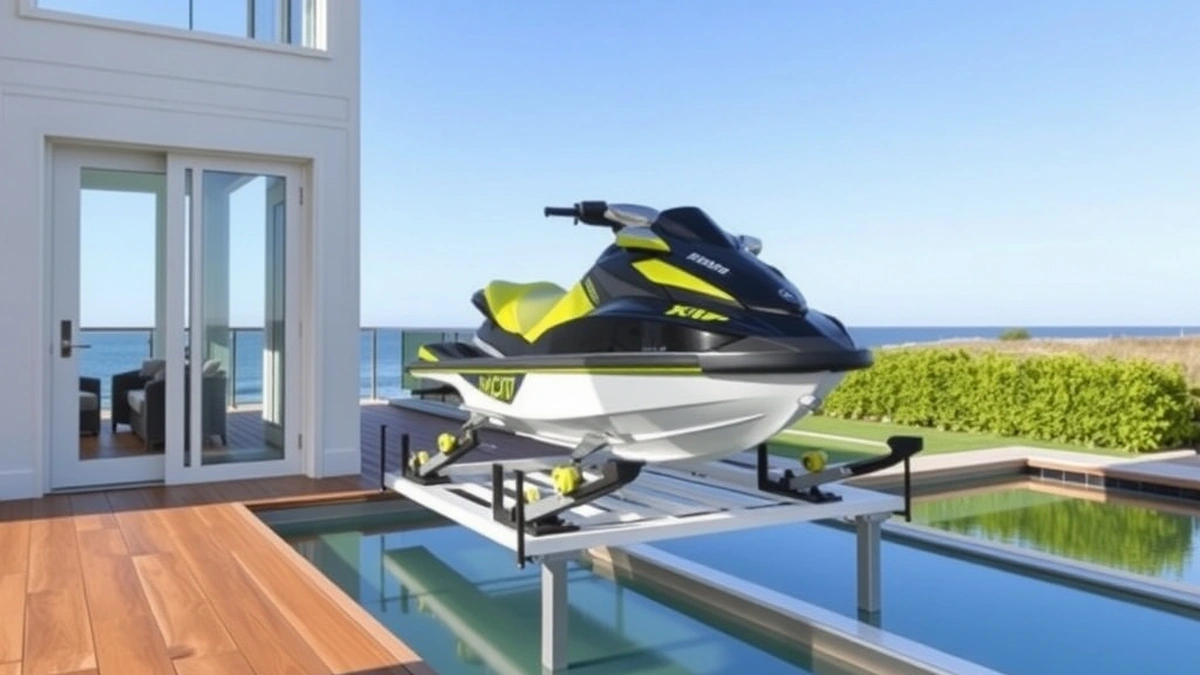
A jet ski lift is a small-capacity lift, usually rated for one or two personal watercraft, that holds the craft clear of the water at a dock.
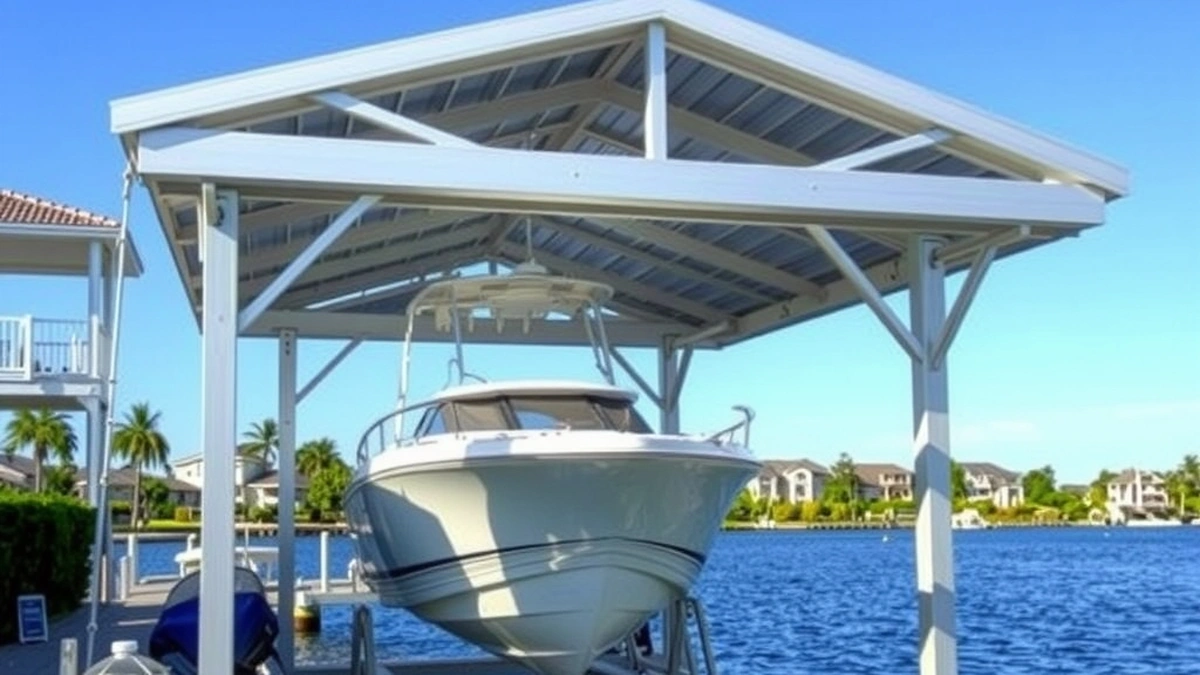
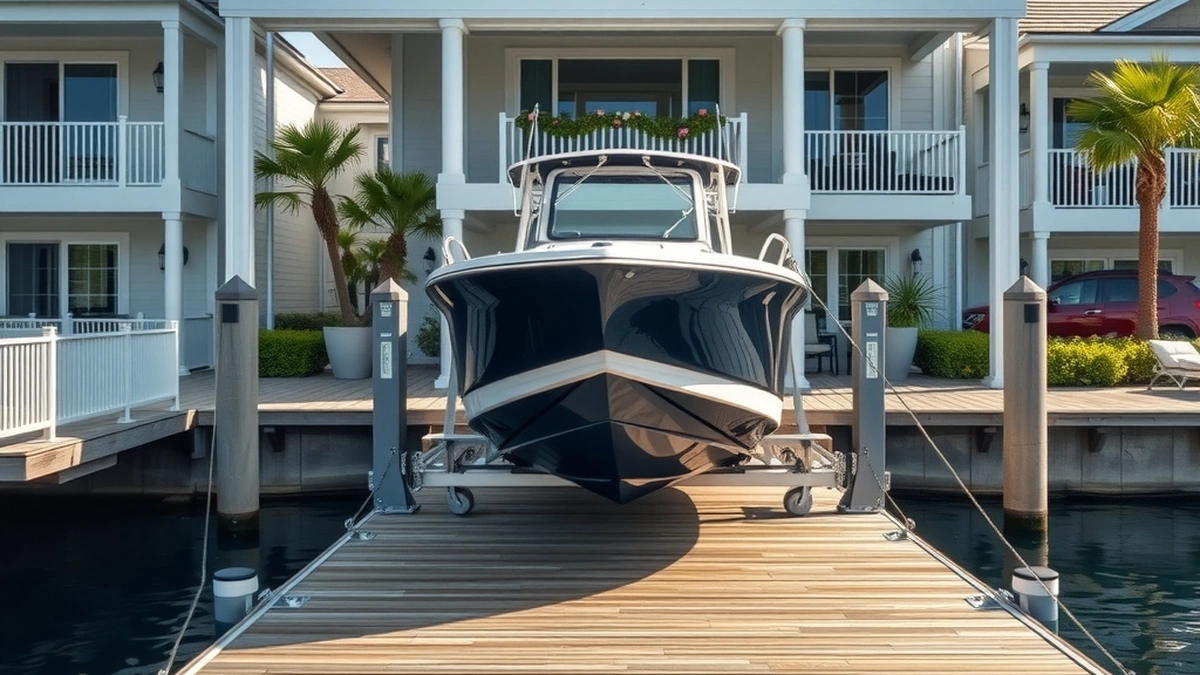
PWC lifts differ mainly in how they hold the craft and how they raise it. A floating cradle uses the waterline and buoyancy. A pile-mounted frame lifts the craft on a cradle between two pilings. A davit or small crane hoists it on slings. A hydraulic PWC lift uses a small cylinder and platform.
| Type | How it holds the craft | Cost position (USD) |
|---|---|---|
| Floating cradle | Buoyant bunks, no power | Low end of $1,500–$5,000 |
| Pile-mounted manual | Cradle between pilings, hand winch | Middle of $1,500–$5,000 |
| Pile-mounted powered | Cradle with electric winch | Upper middle of $1,500–$5,000 |
| Hydraulic platform | Small cylinder and platform | Top of $1,500–$5,000 |
The table positions each type inside the same canonical range rather than inventing a separate price band for each. Ask a dealer for the model’s rated capacity before comparing prices, because a lift rated for 800 lb and one rated for 1,500 lb are not the same product at the same price.
Installation Cost by Mounting Method
Floating cradles are the cheapest to install because there is no structure to build and no power to run. They are set in place, anchored if needed, and adjusted at the waterline. That is why a floating cradle can land near $2,500 all in.
Pile-mounted lifts cost more because the pilings have to exist, be plumb, and be spaced to the lift’s frame. If the pilings are already there, installation is mostly mounting and alignment. If they are not, driving them is separate work and can push the project toward the top of the $1,000–$3,000 installation range.
Powered and hydraulic units add electrical work: a dedicated circuit, ground-fault protection, and wiring rated for a wet location. That is licensed electrician work. On a dock with no power, the circuit can cost more than the lift’s installation labor.
What Moves the Price
Four things. Capacity first: a two-place lift rated for two craft costs more than a single. Drive second: manual is cheaper than powered, and powered is cheaper than hydraulic. Site third: existing pilings and nearby power keep the number down. Accessories fourth: canopies, guides, boarding steps and remote controls all add.
There is also a false economy to watch. A lift rated below the craft’s loaded weight is not a bargain; it is an overloaded machine. A typical personal watercraft runs a few hundred pounds dry, but fuel, gear and water in the hull add up, and the lift’s rating has to cover the total with margin.
Jet Ski Lift vs Boat Lift Cost
A PWC lift at $1,500–$5,000 is a different class of equipment from a boat lift. A 4,000 lb cradle lift is $5,000–$12,000, a 10,000 lb elevator lift is $12,000–$25,000, and a hydraulic boat lift is $15,000–$35,000. Installation is $1,000–$3,000 for any of them.
The comparison is not a markup story; it is a capacity story. A 4,000 lb cradle lift carries roughly four to eight times the load of a PWC lift, with heavier frames, larger drums and bigger foundations. If you own a jet ski only, paying for boat-lift capacity wastes money. If you own both, one boat lift with a PWC attachment may cost less than two separate structures, and that is worth pricing before you buy.
New vs Used
Used PWC lifts are common because people change craft. A used unit at $1,200 plus $1,500 installation is $2,700, which sits below a new mid-range project. The catch is condition: check the frame for cracks and heavy corrosion, the winch for smooth operation, the bunks for rot, and the capacity plate for a legible rating.
A lift with no capacity plate is an unknown. Do not put a craft on it until the rating is confirmed by the manufacturer or a qualified technician. That is not caution for its own sake; an overloaded lift can fail at the weld or the winch and drop the craft onto the dock or into the water.
Five Steps to a Real Budget
- Weigh the craft loaded, including fuel and gear, and add 20 percent for margin.
- Choose the mounting method your shoreline supports: float, existing pilings, or new pilings.
- Confirm whether the model is manual or powered, and price the electrical run if powered.
- Ask the local authority whether a permit is required for the structure or the circuit.
- Get two or three itemized quotes covering equipment, installation, pilings and electrical.
Running Costs and What to Skip
Ongoing costs are modest: an annual inspection, hardware checks, bunk or carpet replacement when worn, and a wash-down after saltwater use. Budget a couple of hundred dollars a year as a planning estimate, more if the lift is powered and sits in salt water.
Skip the accessories that do not solve a problem. A canopy makes sense if sun damage is real; a remote control makes sense if the lift is used daily. Neither changes the capacity, and capacity is the only specification that decides whether the lift is safe for the craft. For the maintenance routine, see PWC lift maintenance; for the wider purchase picture, PWC lift cost and boat lift cost put the numbers in context. If you are weighing designs, PWC lift vs cradle lift and boat lift vs boat dock cover the alternatives.
The number to remember is $2,500–$8,000 installed, with the equipment at $1,500–$5,000 and the rest in mounting, power and permits.
Frequently asked questions
What is the most important measurement?
Start with the ceiling or clearance number; it decides which systems can fit.
What does a typical project cost?
Costs vary by system and site access; the guide shows the line items and a planning range.
Can I install this myself?
Some tasks are DIY-friendly, but structural, electrical, and load-bearing work should be done by a licensed professional.
How long does installation take?
A simple setup is a weekend; a full build with electrical or structural work can take several weeks.
What should I check before buying?
Confirm dimensions, load ratings, and the manufacturer's installation requirements for your exact model.
Where can I find local help?
Ask a licensed contractor or installer who has worked with the same system and can inspect your site.
Sources
Some links are affiliate links.If you buy through them we may earn a commission at no extra cost to you. We do not accept payment for rankings. Read the full disclosure.