Is a Boat Lift Worth It?
When a boat lift pays for itself, what it costs installed, and the site conditions that make it the wrong purchase for your dock.
A boat lift is worth it when the boat stays in the water year-round, the hull is expensive to repair, and the dock has the depth and structure to carry it. Installed cost runs $6,000 to $38,000 depending on type, so the case rests on hull protection and resale.
- Cradle lift, 4,000 lb
- $5,000 - $12,000
- Elevator lift, 10,000 lb
- $12,000 - $25,000
- Hydraulic lift
- $15,000 - $35,000
- Installation
- $1,000 - $3,000
- PWC lift
- $1,500 - $5,000
Some links on this page are affiliate links.If you buy through them we may earn a commission at no extra cost to you. We do not accept payment for rankings. Read the full disclosure.
A boat lift is worth it when the boat sits in the water for the season, the hull is expensive to repair, and the dock has the depth and structure to carry the load. It is not worth it for a trailered boat, a mooring-only site, or a dock that cannot take the point load. The decision is a site question before it is a money question.
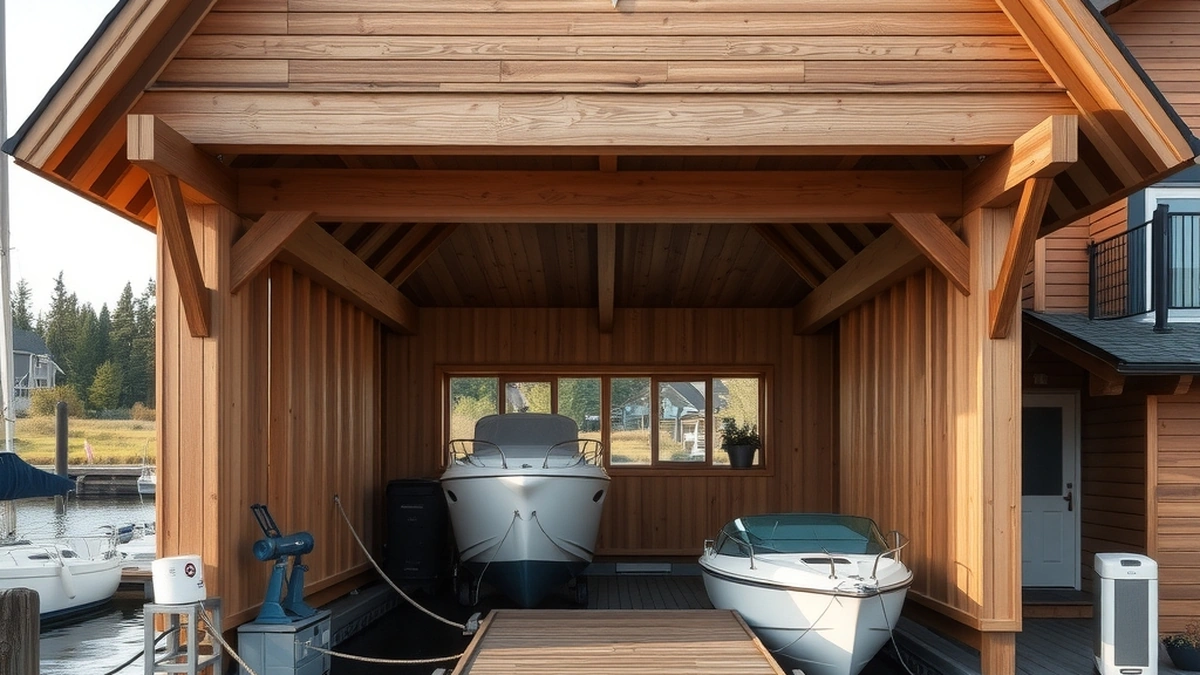
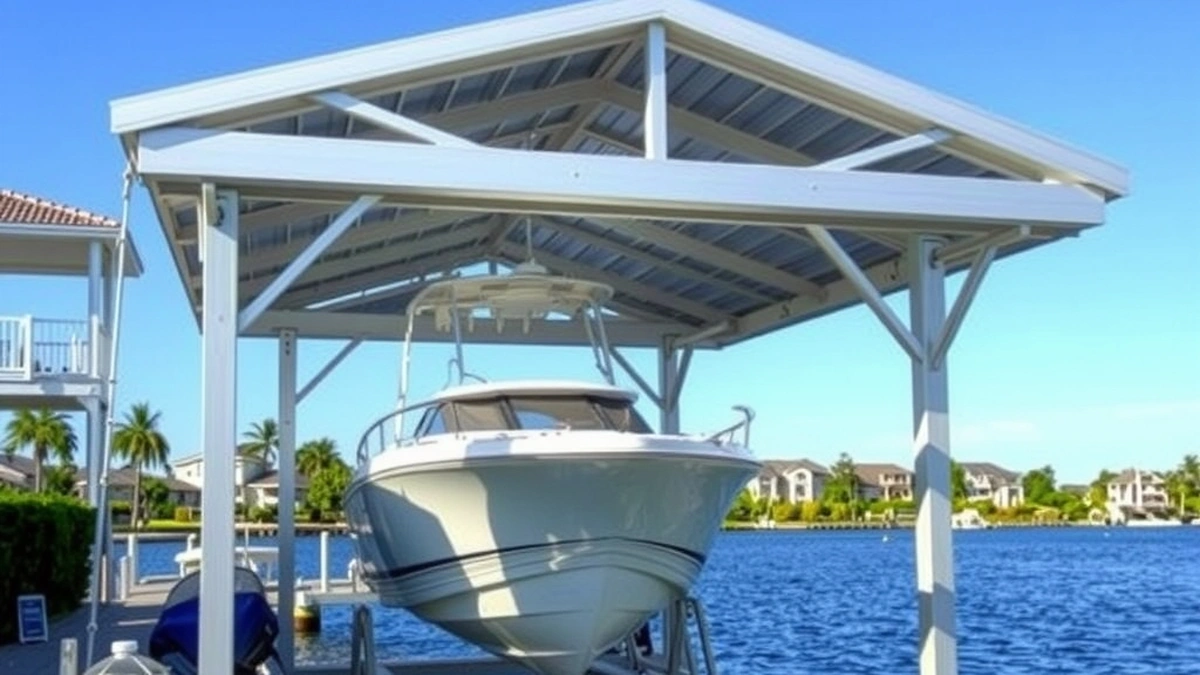
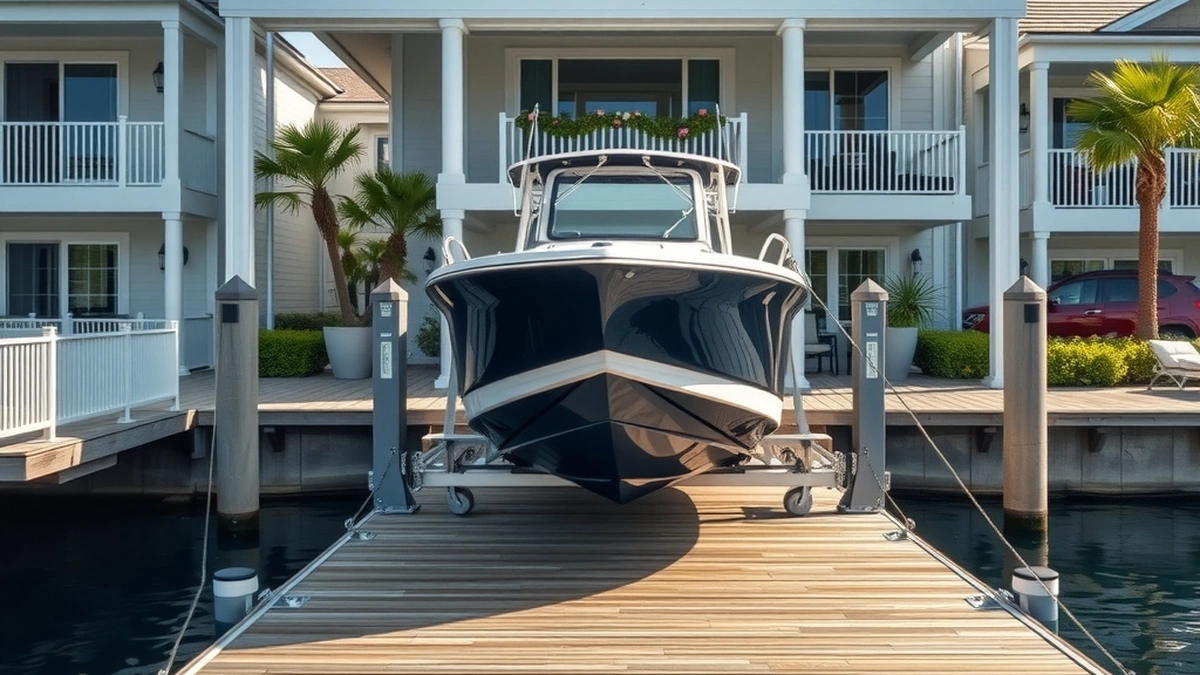
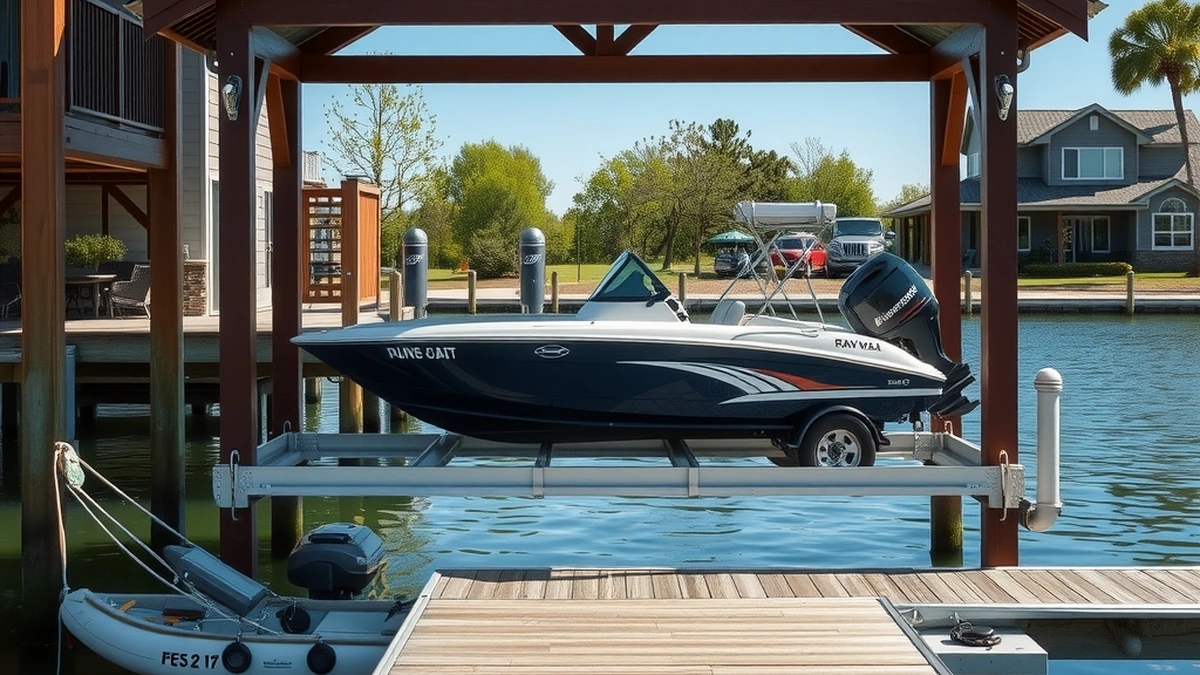
A boat lift is a mechanical platform or cradle that raises a hull clear of the water and holds it there, so the boat is not sitting in water, growth and wave action between uses. Capacity, water depth and dock structure decide which type fits, not the brand on the frame.
The Installed Numbers
Equipment ranges are the starting point, and installation is a separate line. The canonical figures are a 4,000 lb cradle lift at $5,000 to $12,000, a 10,000 lb elevator lift at $12,000 to $25,000, a hydraulic lift at $15,000 to $35,000 and a PWC lift at $1,500 to $5,000. Installation runs $1,000 to $3,000.
| Type | Capacity | Equipment | Installed total |
|---|---|---|---|
| Cradle lift | 4,000 lb | $5,000 - $12,000 | $6,000 - $15,000 |
| Elevator lift | 10,000 lb | $12,000 - $25,000 | $13,000 - $28,000 |
| Hydraulic lift | Varies | $15,000 - $35,000 | $16,000 - $38,000 |
| PWC lift | 1,000 - 1,500 lb | $1,500 - $5,000 | $2,500 - $8,000 |
The arithmetic is addition: $5,000 + $1,000 = $6,000 at the bottom of the cradle range, and $12,000 + $3,000 = $15,000 at the top. The same method gives $13,000 to $28,000 for the elevator lift and $16,000 to $38,000 for the hydraulic.
What the Lift Actually Protects
A hull that sits in warm, still water grows algae and barnacles, and gelcoat can absorb water over time. Bottom paint slows that, but it does not stop it. A lift takes the hull out of the water between uses, which reduces growth, reduces the frequency of bottom cleaning, and keeps the hull out of the way of wave slap and storm surge.
That protection is the return on the purchase. A bottom job, a gelcoat repair or an insurance claim after a storm costs more than a cradle lift, and each one is a real invoice rather than a hypothetical.
There is a daily-use benefit too: boarding from a raised platform is easier than climbing into a boat that is bobbing, and the hull does not sit against a dock fender.
The Payback Arithmetic
Payback depends on what you would otherwise spend. The comparison below uses clearly labeled assumptions, not quoted prices.
| Cost item | Annual estimate |
|---|---|
| Bottom cleaning and paint | $600 - $1,200 |
| Haul-out and storage | $1,500 - $3,500 |
| Hull repairs from sitting in water | $0 - $2,000 |
| Lift service and power | $300 - $500 |
Assume the lift replaces a haul-out plus one bottom job: $2,000 to $4,000 a year. A $10,000 installed cradle lift divided by $3,000 a year is a payback of just over three years, before any resale value. If you would not have paid for a haul-out, the payback does not exist, and the lift is a convenience purchase rather than a financial one.
That is the honest framing. For many owners the lift is justified by use and hull condition, not by a spreadsheet. Our guide to boat lift cost covers the equipment side in more detail.
When It Is Not Worth It
Four situations argue against a lift.
- The boat is trailered. If the boat leaves the water on a trailer every trip, the lift solves a problem you do not have.
- The site is too shallow. The platform has to drop far enough for the hull to float on at low water. If it cannot, the fix is dredging or a different design, and both change the budget.
- The dock cannot take the load. A lift plus a loaded boat can put well over the boat’s weight into the pilings. If the dock is at the end of its life, the money goes into the dock first.
- The boat is near the end of its life. Spending $13,000 to protect a hull worth $8,000 is a hobby decision, not a financial one.
Shallow water is the most common deal-breaker. Our guide to shallow water warning signs covers what to measure before buying anything.
Capacity Decides the Type
A lift must be rated above the loaded boat weight, not the dry hull weight. Fuel, water, gear and people add up quickly, and a lift running at its limit wears faster and is unsafe.
A 3,000 lb boat with 400 lb of fuel and gear needs a lift rated above 3,400 lb, which puts it in the 4,000 lb class. A 7,000 lb boat needs the 10,000 lb class, which is where elevator and hydraulic lifts enter the conversation. Buying a lift at exactly the boat’s dry weight is the mistake that shortens its life and voids the warranty.
A Decision Sequence
- Measure depth at low water at the intended lift location.
- Weigh the boat loaded, or use the manufacturer’s dry weight plus fuel and gear.
- Ask a dock builder whether the existing structure can carry the lift and boat.
- Get installed quotes for the smallest lift class that clears the loaded weight.
- Price annual service and power before signing, so the ten-year figure is visible.
Step five is the one buyers skip. A lift that costs $400 a year to service costs $4,000 over a decade, and that belongs in the comparison.
What the Total Includes
Beyond equipment and installation, budget for a permit, an electrician if power is not at the pier, and any piling work. Our guide to boat lift installation cost itemizes those, and how long does a boat lift last explains what service life to expect.
The short answer: worth it for a boat that lives in the water at a dock that can carry the load. Not worth it for a trailered boat, a shallow site, or a dock that needs replacing first. Never operate a lift beyond its rated capacity, and never put a boat on a lift with no capacity plate.
Frequently asked questions
Is a boat lift worth the money?
It usually is for a boat kept in the water year-round, because lifting the hull out of the water limits growth, osmosis and storm damage, and those repairs cost more than the lift.
How much does a boat lift cost installed?
A 4,000 lb cradle lift is $5,000 to $12,000 plus $1,000 to $3,000 installation, so $6,000 to $15,000 installed. Larger lifts run higher.
How long does a boat lift last?
A well-maintained aluminum or galvanized lift commonly serves 15 to 25 years, with cables, sheaves and motors replaced along the way.
Does a boat lift increase home value?
It can add appeal for waterfront buyers, but the lift is usually valued as part of the dock package rather than as a standalone premium.
Can a boat lift be installed in shallow water?
Only if the depth at low water lets the platform or cradle drop far enough. Shallow sites may need dredging or a different lift design, which changes the budget.
What maintenance does a boat lift need?
Annual inspection of cables, sheaves, fasteners and the drive, plus rinsing after saltwater use and lubrication at the manufacturer's intervals.
Sources
Some links are affiliate links.If you buy through them we may earn a commission at no extra cost to you. We do not accept payment for rankings. Read the full disclosure.