Hydraulic vs Floating dock
Hydraulic vs Floating dock: practical numbers, costs, and trade-offs, written independently.

Hydraulic vs Floating dock: practical numbers, costs, and trade-offs, written independently. The guide below shows the numbers and the trade-offs.
- Typical range
- Varies by system and site
- First step
- Measure the space and confirm the load
- Professional help
- Recommended for structural or electrical work
Some links on this page are affiliate links.If you buy through them we may earn a commission at no extra cost to you. We do not accept payment for rankings. Read the full disclosure.
A hydraulic lift and a floating dock are not competing products. A hydraulic lift raises the hull out of the water; a floating dock gives you a stable walking surface that rises and falls with the tide. A hydraulic lift costs $15,000–$35,000 plus $1,000–$3,000 installation, while dock construction runs $15,000–$60,000, so the honest answer is usually that you need to decide which problem you are solving before you compare prices.
Two Different Jobs
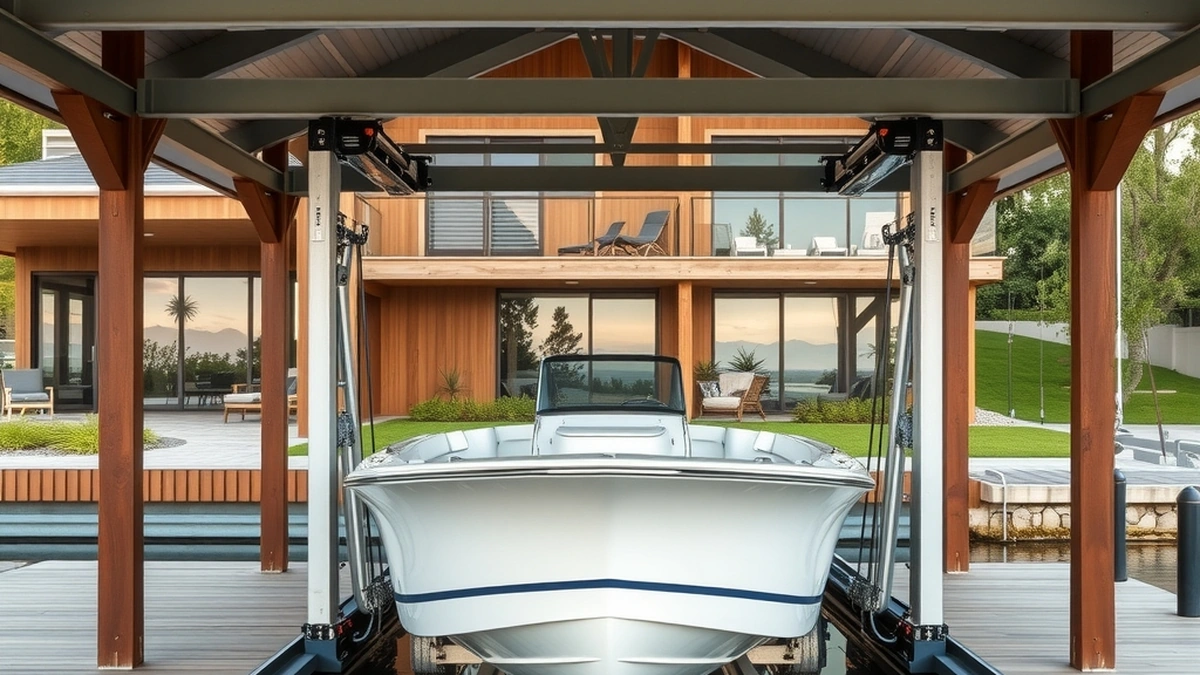
A hydraulic boat lift is a machine: pump, cylinders, hoses and a platform or arms that lift a boat clear of the water for storage. Its job is to keep the hull dry, avoid bottom growth, and eliminate the wear of sitting in the water.
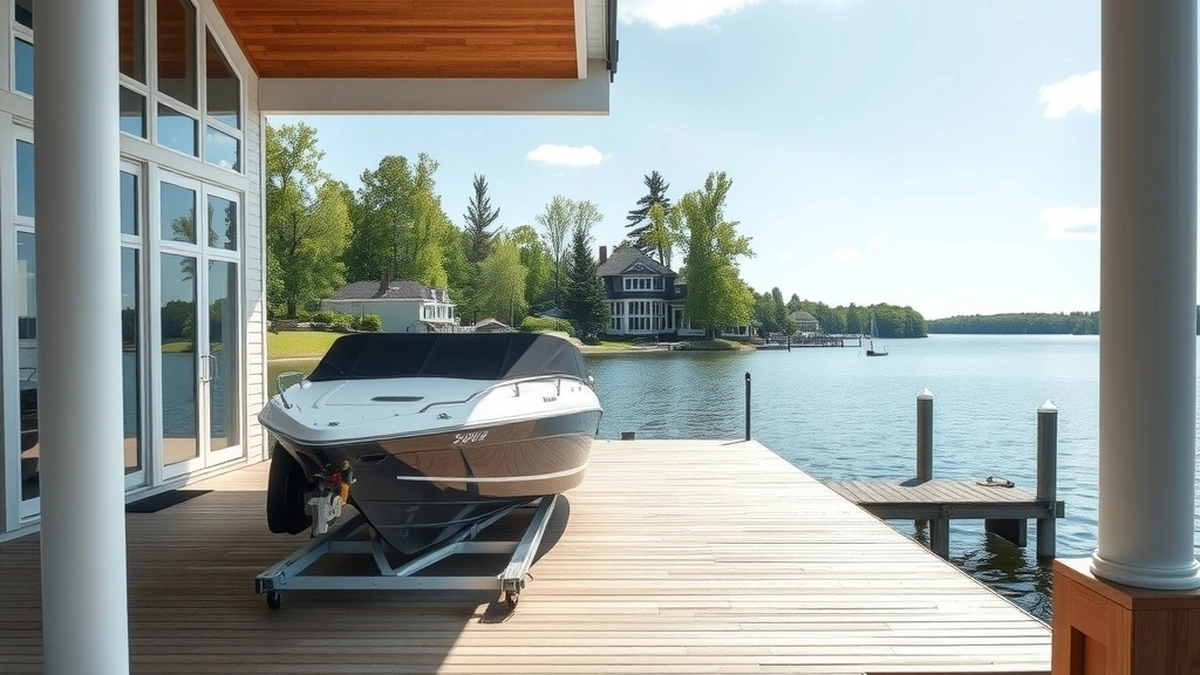
A floating dock is a structure: a deck on floats, anchored or pile-guided, that stays at water level as the tide moves. Its job is access, mooring and a place to stand. A boat tied to a floating dock still sits in the water.
That distinction decides most of the comparison. If the requirement is “keep the hull out of the water,” a floating dock alone does not meet it. If the requirement is “a safe place to board and tie up,” a lift alone does not meet it either.
What Each One Costs
The hydraulic lift figures are the canonical ones for this site: $15,000–$35,000 for the equipment, plus $1,000–$3,000 for installation. A mid-range example is $22,000 + $2,500 = $24,500 installed.
Dock construction is $15,000–$60,000 depending on length, width, decking, flotation and anchoring. A small floating dock at the low end plus a lift at the low end gives $15,000 + $16,000 = $31,000 for the pair, before any electrical work. At the high end, $60,000 + $38,000 = $98,000. Those are estimates for planning, not quotes.
| Item | What it does | Estimated cost (USD) |
|---|---|---|
| Hydraulic lift | Raises hull clear of water | $15,000–$35,000 + $1,000–$3,000 install |
| Floating dock | Deck at water level, tidal movement | $15,000–$60,000 |
| Both together | Access plus dry storage | $31,000–$98,000 combined |
| Lift on existing fixed dock | Dry storage without new structure | $16,000–$38,000 |
The combined row is addition, not a package discount: $15,000 + $16,000 = $31,000 at the low end and $60,000 + $38,000 = $98,000 at the high end.
Boat Protection, Compared
A lift wins on hull condition. The boat is out of the water, so no bottom paint wear from sitting wet, no algae or zebra mussel growth on the running gear, and no gelcoat staining at the waterline. It also wins on storm preparation, because a boat on a lift is above the surge rather than riding it.
A floating dock wins on access and on tidal range. Stepping aboard is easy at any water level, and the structure tolerates a large tide without adjustment. It also wins on initial cost when no lift is involved.
The trade-off is what each one does not do. A floating dock leaves the hull wet and exposed to growth and to fender rubbing. A lift does nothing for boarding comfort unless there is a dock beside it.
Depth, Tide and Shoreline
Hydraulic lifts need enough water at low tide for the boat to float on and off, plus clearance for the mechanism. A site that dries out at low water is a poor fit for a hydraulic lift unless the design accounts for it.
Floating docks need enough depth for their floats and enough anchor or pile guidance for the tidal range and current. They work across a wide depth band because the deck moves with the water.
Shoreline rules apply to both. New structures near the water usually need a permit, and some jurisdictions limit dock length, height or the number of pilings. Confirm the local rules before designing either one, because a permit condition can rule out a layout that looked fine on paper.
Combining a Floating Dock With a Hydraulic Lift
The common solution on tidal water is a floating dock with a lift mounted to it or beside it. That gives you boarding access at any tide plus dry storage, at the cost of doing both projects.
The engineering question is load. A lift carrying a boat puts a large point load into a floating structure, and the floats, frame and connections have to be sized for it. A dock built for walking and tying up is not automatically rated for a 10,000 lb lift and its boat. Ask the dock builder and the lift installer to confirm the combined load in writing, and expect bracing or additional flotation.
Power is the second question. A lift needs a circuit at the water, and running one to a floating dock means a flexible connection that tolerates movement. That is electrician work, not a homeowner extension cord.
Maintenance and Storm Exposure
A hydraulic lift asks for fluid checks, hose and seal inspection, and cylinder attention. A floating dock asks for float inspection, hardware checks, decking repair and anchor or pile maintenance. Both need a seasonal review and both suffer from corrosion in saltwater.
Storms hit them differently. A lift holds a boat above normal surge but presents a large surface to wind. A floating dock rides the surge but can be torn from its anchors if the loads exceed the design. Neither is a hurricane plan on its own; the local practice may be to haul the boat and secure or remove the dock.
Which One Your Water Needs
Choose the lift first if the goal is hull protection and you already have a dock that can carry it. Choose the dock first if you have no safe access and the boat can stay in the water. Choose both if you are starting from a bare shoreline and need access and dry storage, and budget for the combined load design.
If the shoreline already has a sound fixed dock, adding a hydraulic lift at $16,000–$38,000 installed is usually the smaller project. If there is no dock at all, the dock is the bigger number at $15,000–$60,000, and the lift becomes the second decision.
Decide in Four Steps
- Write down the actual requirement: dry storage, boarding access, or both.
- Measure low-water depth and tidal range at the site.
- Ask the local authority what permits apply to a new structure and to a lift.
- Get quotes that separate dock, lift, electrical and piling work, then compare totals.
For the lift side of the budget, hydraulic cost breaks the equipment numbers down, and hydraulic installation covers the site work. On the dock side, floating dock cost and floating dock installation go deeper. If you are comparing storage approaches rather than structures, boat lift vs boat dock frames the same question from the other direction.
The decision is not hydraulic versus floating. It is whether you are buying a machine, a structure, or both, and the budget follows that answer.
Frequently asked questions
What is the most important measurement?
Start with the ceiling or clearance number; it decides which systems can fit.
What does a typical project cost?
Costs vary by system and site access; the guide shows the line items and a planning range.
Can I install this myself?
Some tasks are DIY-friendly, but structural, electrical, and load-bearing work should be done by a licensed professional.
How long does installation take?
A simple setup is a weekend; a full build with electrical or structural work can take several weeks.
What should I check before buying?
Confirm dimensions, load ratings, and the manufacturer's installation requirements for your exact model.
Where can I find local help?
Ask a licensed contractor or installer who has worked with the same system and can inspect your site.
Sources
Some links are affiliate links.If you buy through them we may earn a commission at no extra cost to you. We do not accept payment for rankings. Read the full disclosure.