Floating Dock Cost: What It Really Costs
Learn how much a floating dock costs, from cradle lifts to hydraulic systems, with US pricing and installation estimates.
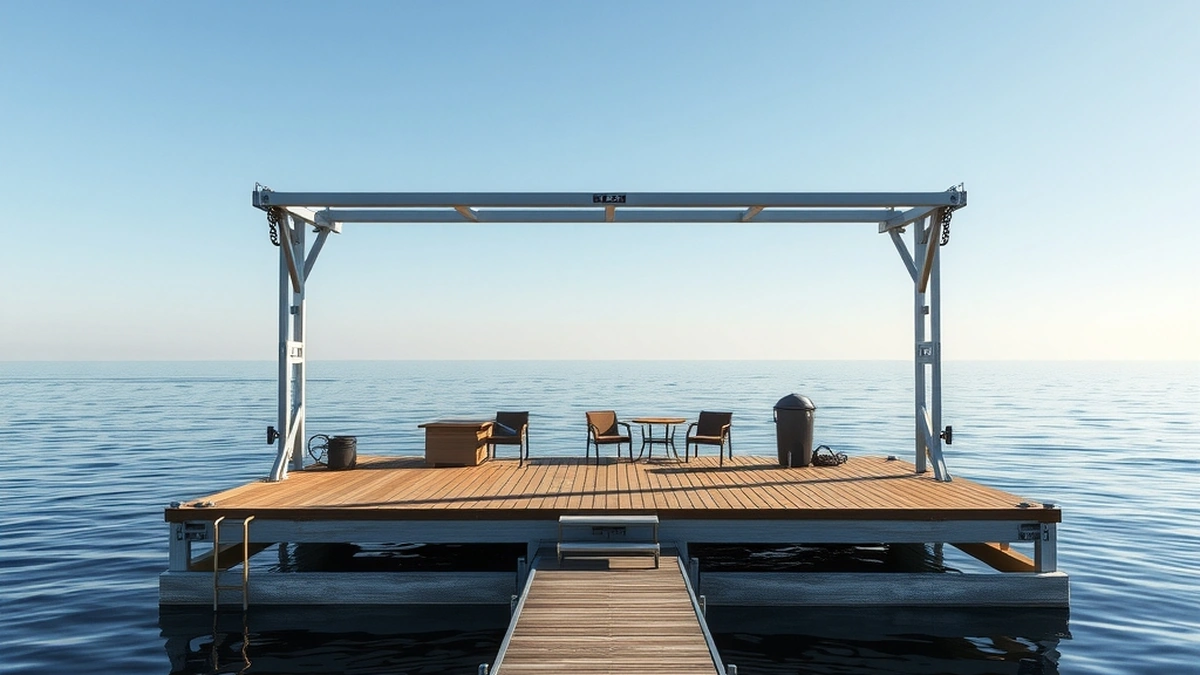
A standard floating dock with a 4,000 lb capacity cradle lift costs between $5,000 and $12,000, and installation adds another $1,000 to $3,000.
- Typical range
- Varies by system and site
- First step
- Measure the space and confirm the load
- Professional help
- Recommended for structural or electrical work
Some links on this page are affiliate links.If you buy through them we may earn a commission at no extra cost to you. We do not accept payment for rankings. Read the full disclosure.
Floating Dock Cost: What It Really Costs
When planning a floating dock, the primary factors you must evaluate are the required weight capacity and the available water depth. These two elements dictate the structural requirements before a single brand is even considered. Brand selection comes second; while manufacturers may price similar capacity systems differently based on proprietary engineering, the underlying physics of your site remain the same. A basic floating dock setup with a 4,000 lb capacity cradle lift typically costs between $5,000 and $12,000, and installation adds another $1,000 to $3,000. Understanding these baseline numbers helps you budget accurately without overpaying for features you do not need.
Capacity and Depth First, Brands Second
The weight capacity of your lift must exceed the heaviest vessel you plan to store, plus the live load of equipment and people on the dock. For instance, a standard aluminum jon boat weighs roughly 1,500 pounds, while a heavier steel-hulled sailboat can weigh 4,000 pounds or more. If your water depth is less than four feet at mean low water, you cannot use a deep-draft cradle lift, which requires a minimum clearance of six feet. In these shallow scenarios, you must prioritize a shallower lift system or accept that the dock itself must bear the full weight of the vessel. Because capacity and depth constrain the physical footprint, they take precedence over brand name recognition or aesthetic trim.
Core Cost Breakdown by Lift Type
The lift mechanism is the largest variable in your floating dock budget. Below is an estimate breakdown of common lift types, showing how capacity directly influences price.
| Lift Type | Approximate Capacity | Estimated Cost (USD) |
|---|---|---|
| PWC Lift | 1,000 lb | $1,500–$5,000 |
| Cradle Lift | 4,000 lb | $5,000–$12,000 |
| Elevator Lift | 10,000 lb | $12,000–$25,000 |
| Hydraulic Lift | Variable | $15,000–$35,000 |
Notice the arithmetic progression: moving from a 1,000 lb PWC lift to a 4,000 lb cradle lift roughly triples the cost, and the 10,000 lb elevator lift costs nearly double the lowest end of the cradle lift range. Hydraulic lifts, which use fluid power to raise and lower the platform, carry the highest per-unit cost due to complex actuation hardware, but they are necessary for heavy vessels in deeper water where mechanical linkages would otherwise require excessive vertical space.
Dock Construction and Material Expenses
The floating platform itself—comprising pilings, ballast, and decking—represents the next major expense. Dock construction costs range from $15,000 to $60,000 depending heavily on the material chosen for the pilings. Concrete pilings offer superior longevity and stability against lateral loads but come at the higher end of the range. Steel or aluminum pilings are lighter and faster to drive but require more frequent maintenance to prevent corrosion. When calculating your total project cost, remember that the dock structure and the lift mechanism operate together; a weak dock frame will stress the lift brackets, potentially increasing maintenance costs later.
Installation Costs and Labor
Professional installation is a mandatory step that adds $1,000 to $3,000 to your overall budget. This fee covers site surveys, permit applications, driving the pilings into the substrate, and leveling the entire floating structure. Local labor rates vary significantly across the United States; waterfront properties in coastal regions often incur higher installation fees than inland lakes due to specialized marine labor availability. Skipping professional installation to save on this $1,000 to $3,000 range is rarely advisable, as improper anchoring can lead to catastrophic dock failure during storm surges. For detailed guidance on what the installation process entails, visit our guide on boat lift installation.
Choosing Between a Lift and a Dock
It is essential to distinguish between a lift and a floating dock. A lift raises your boat completely out of the water, protecting the hull from barnacles and wave damage, whereas a floating dock merely provides a platform at water level. If your primary goal is to keep the hull submerged and in pristine condition, you need a lift. However, if you simply want a stable mooring point for a small craft or a place to tie off lines, a basic floating dock may suffice. Deciding between the two depends entirely on whether you prioritize hull preservation over simple access. If you are unsure which option suits your needs, our comparison article on best boat lift can help clarify the distinctions.
Factors That Shift Your Estimate
Several environmental and site-specific variables can shift your final estimate outside the standard ranges. Wave action, current speeds, and the type of seabed (sand versus clay) determine how deeply pilings must be driven and how much ballast is needed to keep the dock stable. Areas with high wind exposure may require reinforced wind posts, adding to the dock construction cost. Furthermore, if your lot has a steep drop-off requiring concrete seawalls, those structural additions will drastically increase the overall budget. Always run the numbers based on your specific water depth and soil conditions rather than generic regional averages.
Planning Your Budget
To put these numbers into perspective, consider a straightforward example. A 4,000 lb cradle lift costs an estimated $8,000 on the low end. Installation adds an estimated $2,000. Meanwhile, a simple dock construction project with aluminum pilings might cost around $20,000. The combined total for this basic floating dock setup would be approximately $30,000. This calculation demonstrates why capacity and depth must be addressed first; choosing an unnecessarily heavy lift or ignoring a restrictive water depth will inflate your budget without providing proportional benefits. By prioritizing your site’s physical constraints, you can make informed purchasing decisions that keep your floating dock within a realistic financial scope.
Next, compare how much does boat lift cost, boat lift installation, boat lift repair before you commit.
Frequently asked questions
How much does a floating dock cost?
Expect to pay between $5,000 and $12,000 for a basic cradle lift system, plus $1,000 to $3,000 for installation.
Are floating docks more expensive than traditional docks?
Yes, because they require specialized engineering for buoyancy and load-bearing, which drives up the dock construction cost.
What factors affect floating dock pricing?
Water depth, required weight capacity, material choices, and local labor rates all impact the final estimate.
Can I install a floating dock myself?
While possible, professional installation is recommended to ensure proper water depth alignment and structural integrity.
What is the difference between a lift and a floating dock?
A lift raises your boat out of the water to protect it, whereas a floating dock just provides a floating platform at water level.
How do I choose the right capacity for my floating dock?
Match the lift capacity to the weight of your heaviest vessel, plus the weight of stored gear on the dock itself.
Sources
Some links are affiliate links.If you buy through them we may earn a commission at no extra cost to you. We do not accept payment for rankings. Read the full disclosure.