Seawall Repair Cost Guide for Waterfront Owners
Learn what seawall repair costs, what drives pricing, and how to budget for marine bulkhead repairs before installing a boat lift or dock.
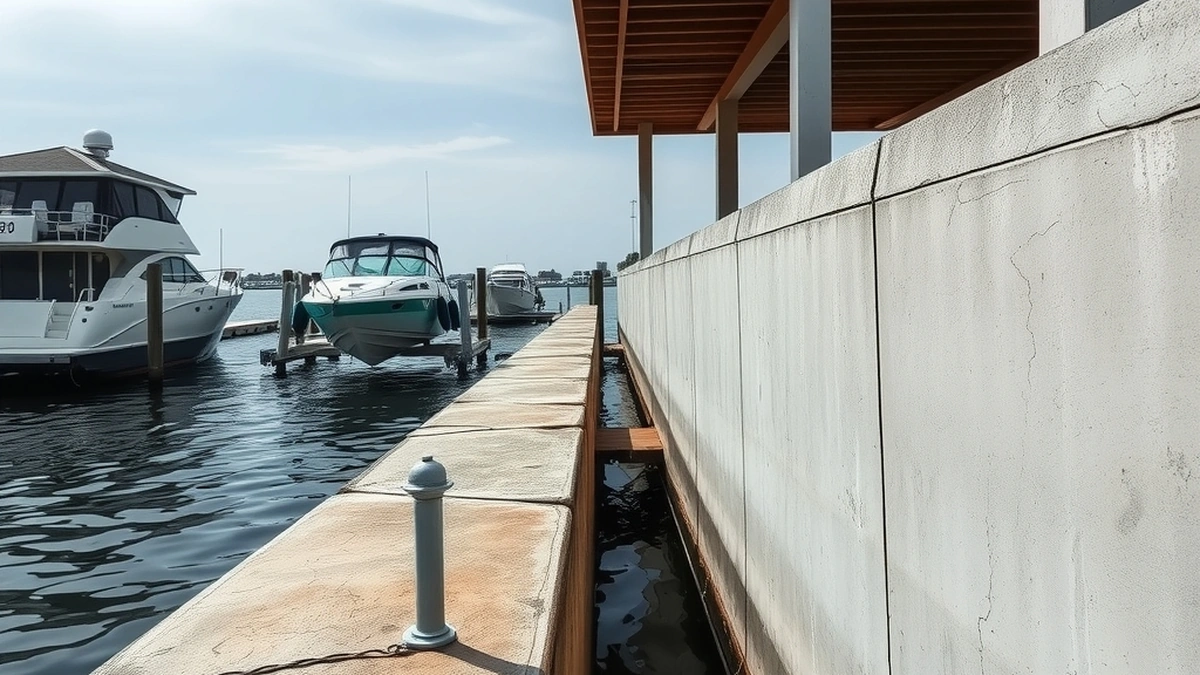
Seawall repair typically costs between $150 and $600 per linear foot, with most residential projects landing between $3,000 and $15,000 depending on material, damage, and access.
- Typical cost per linear foot
- $150 - $600
- Average residential project
- $3,000 - $15,000
- Major replacement per foot
- $600 - $1,200+
- Common materials
- Concrete, vinyl, steel, wood
Some links on this page are affiliate links.If you buy through them we may earn a commission at no extra cost to you. We do not accept payment for rankings. Read the full disclosure.
Seawall repair cost depends on the material, the extent of the damage, and how much of the wall needs replacement. Most residential projects fall between $3,000 and $15,000, while full replacements can run much higher. Before you invest in a boat lift or dock, the seawall must be structurally sound enough to support the weight and access required for marine equipment.
What Seawall Repair Typically Costs
Repair pricing is usually quoted per linear foot. For common residential materials like concrete, vinyl, or treated timber, expect estimates in the range of $150 to $600 per linear foot. A 30-foot seawall therefore costs roughly $4,500 to $18,000 to repair, not including permits, engineering, or site restoration.
Major structural work or full replacement can push costs to $600 to $1,200 or more per linear foot. On a 50-foot wall, that math works out to $30,000 to $60,000 just for the seawall, before you add a boat lift, dock, or shoreline landscaping.
These figures are estimates. Actual pricing varies by region, contractor availability, tide conditions, and whether heavy equipment can reach the wall from land or must work from a barge.
Cost Drivers That Matter
Several factors move the price up or down:
- Material type: Concrete and steel repairs generally cost more than vinyl or wood because they require specialized forming, pouring, or welding.
- Damage scope: Surface crack injection is far less expensive than replacing failed tie-backs, anchors, or the wall toe.
- Access: If a crane or excavator cannot reach the site from the property, marine access adds mobilization and barge fees.
- Permitting and engineering: Waterfront work often requires local permits and sometimes a structural engineer’s sign-off, which adds soft costs to the project.
- Tide and water depth: Repairs below the waterline may require cofferdams, dewatering, or dive crews, all of which increase labor hours.
Seawall Repair vs. Replacement
Not every crack means full replacement. Minor surface spalling or small cracks can often be patched or injected for a few hundred to a few thousand dollars. However, leaning walls, large voids behind the wall, or corroded steel reinforcement usually signal that replacement is the safer long-term choice.
If you plan to install a boat lift soon, a compromised seawall is a problem. Shore-mounted lifts and piling-supported docks transfer significant load to the shoreline. A 4,000 lb cradle lift typically costs $5,000 to $12,000 for the unit alone, with installation adding $1,000 to $3,000. Installing that equipment beside a failing seawall risks damage to both the lift and the wall. Repairing the seawall first protects the lift investment.
How Seawall Condition Affects Boat Lift and Dock Costs
Boat Lift Lab evaluates capacity and water depth before brand, and the same priority applies to seawalls. A solid seawall gives you a stable edge for docking and lift access. If the wall is failing, you may need to delay or modify your dock plans.
Dock construction itself ranges widely, from $15,000 to $60,000 depending on size, materials, and whether you need pilings or a floating system. Pairing a new dock with a seawall repair is common, but the two should be sequenced properly. Repair the seawall, let it cure and settle, then install the dock or lift to avoid shifting or damage.
For reference, other lift categories include elevator-style 10,000 lb lifts at $12,000 to $25,000, hydraulic lifts at $15,000 to $35,000, and PWC lifts at $1,500 to $5,000. Installation for any of these generally falls between $1,000 and $3,000. None of those numbers include seawall work, so budget the wall separately.
Sample Budget Scenarios
Here are three illustrative examples to show how the arithmetic adds up. These are estimates, not quotes.
Scenario 1: Minor concrete patching
- 20 linear feet of surface repair
- $200 per linear foot
- Total: 20 × $200 = $4,000
- Permit and inspection: approximately $500
- Estimated total: $4,500
Scenario 2: Mid-level vinyl seawall repair
- 40 linear feet
- $350 per linear foot
- Total: 40 × $350 = $14,000
- Tie-back replacement for two sections: approximately $2,000
- Permit and engineering: approximately $1,000
- Estimated total: $17,000
Scenario 3: Full concrete replacement
- 50 linear feet
- $850 per linear foot
- Total: 50 × $850 = $42,500
- Demolition and disposal: approximately $5,000
- Permit and engineering: approximately $2,500
- Estimated total: $50,000
Your actual numbers will differ based on local labor rates and site conditions. Always request an itemized quote that separates materials, labor, equipment, permits, and contingency.
When to Repair Before Installing a Lift
If your seawall shows signs of bowing, large cracks, sinkholes behind the wall, or water leaking through joints, schedule repair before lift installation. A boat lift adds concentrated weight at the shoreline, and a weak wall can shift under that load. Likewise, if you are planning dock construction, complete seawall work first so the dock is not built on a moving edge.
Routine maintenance also matters. Inspect the wall annually for new cracks, vegetation growth at the waterline, and signs of soil loss behind the cap. Early intervention keeps repair costs closer to the low end of the range.
For more on lift selection and installation, see our guides on boat lift cost, boat lift installation, and boat lift repair. If you are weighing whether a lift or dock makes more sense for your property, our comparison of boat lift versus boat dock can help you decide.
Getting an Accurate Quote
Contact at least two marine contractors with waterfront experience. Ask whether their quote includes demolition, disposal, permits, engineering, and a warranty on workmanship. Request references from nearby seawall projects, and confirm they are familiar with local shoreline regulations. Because waterfront permits can take weeks or months to approve, start the conversation well before you want the work finished.
Seawall repair is a foundational waterfront expense. Getting it right protects your dock, your boat lift, and your property value over the long term.
Next, compare how much does boat lift cost, boat lift installation, boat lift repair before you commit.
Frequently asked questions
What is the average seawall repair cost?
Most homeowners pay between $150 and $600 per linear foot for repairs, putting a typical 30-foot residential seawall in the $4,500 to $18,000 range before permits and site prep.
Does seawall material affect repair cost?
Yes. Concrete and steel repairs usually cost more than vinyl or timber because they require heavier equipment, specialized labor, and more extensive surface preparation.
Can I repair a seawall myself?
Minor patching may be possible for handy owners, but structural repairs, tie-back replacement, and toe work generally require licensed marine contractors and permits.
How does seawall condition affect boat lift installation?
A failing seawall cannot safely support lift pilings or shore-mounted equipment, so repairs should be completed before scheduling boat lift installation.
Do I need a permit for seawall repair?
Most waterfront jurisdictions require permits for seawall work, especially below the ordinary high water line, so check with local authorities before starting.
How long does a seawall repair last?
A properly repaired concrete or vinyl seawall can last 15 to 30 years, while timber repairs may need attention sooner depending on marine borer exposure and rot.
Sources
Some links are affiliate links.If you buy through them we may earn a commission at no extra cost to you. We do not accept payment for rankings. Read the full disclosure.