Power Unavailable: Repair Options for Boat Lifts
What to do when your boat lift loses power, from breaker resets to wiring repairs and cost estimates.
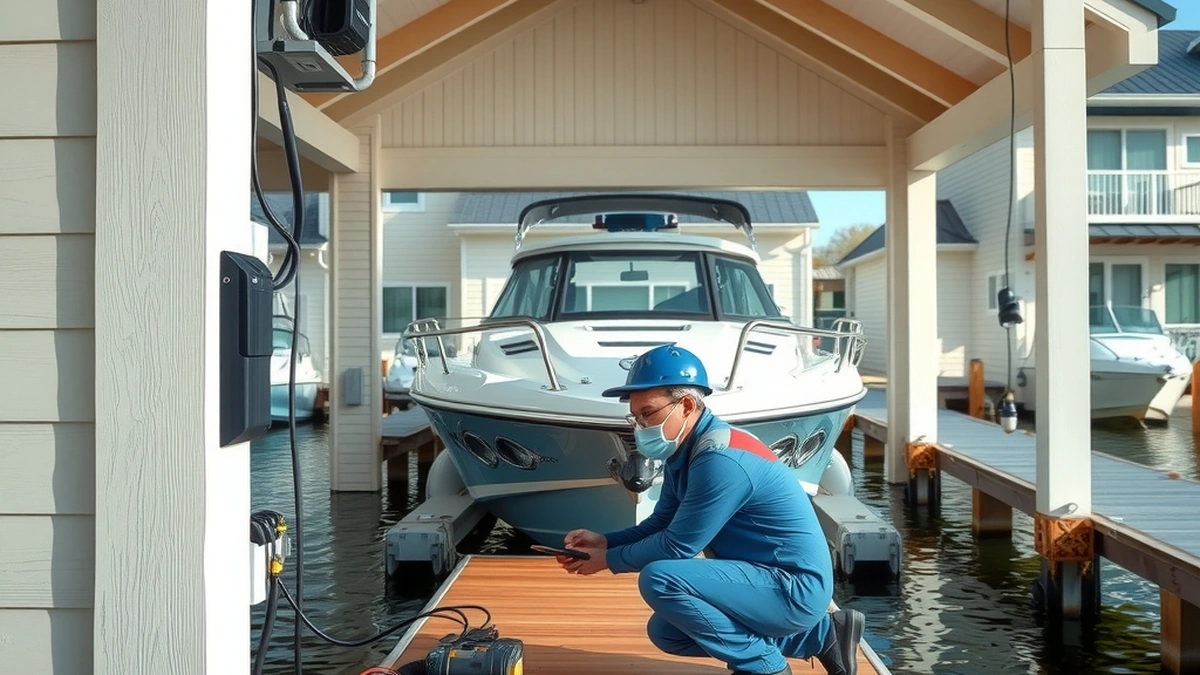
Check the breaker, GFCI, and wiring first. Most power failures cost $150–$900 to repair, while full electrical panel or service upgrades run higher.
- Common cause
- Tripped breaker or GFCI outlet
- Typical repair range
- $150–$1,200
- New lift circuit install
- $500–$2,000
- When to call an electrician
- Burning smell, buzzing, or repeated trips
Some links on this page are affiliate links.If you buy through them we may earn a commission at no extra cost to you. We do not accept payment for rankings. Read the full disclosure.
When a boat lift stops responding, the first question is usually whether power is reaching the motor. Start by checking the breaker panel, the GFCI outlet, and the disconnect switch at the dock. If none of those have tripped, the issue is likely a loose connection, corroded wire, or failed component inside the lift’s electrical box. This guide covers how to diagnose power loss, what repairs typically cost, and when to replace rather than repair.
Check the Breaker and GFCI First
Most no-power calls end at the electrical panel. Locate the breaker labeled for the boat lift or dock. If it has moved to the middle or off position, switch it fully to off, then back to on. Many breakers do not reset unless they are pushed firmly to the off position first.
Next, find the GFCI outlet protecting the lift circuit. It may be mounted on a dock pedestal, the side of the house, or inside a weatherproof enclosure. Press the test button, then the reset button. If the outlet will not reset or trips again immediately, leave it off and contact an electrician. Repeated tripping usually means a ground fault or short in the lift motor, cable, or wiring.
These checks cost nothing and take a few minutes. If power returns, run the lift through one full cycle while watching the breaker. If it holds, the issue was likely a momentary trip.
Inspect Wiring and Connections
Dock wiring faces sun, moisture, vibration, and temperature swings. Over time, wire insulation can crack, terminals can loosen, and corrosion can build up inside junction boxes. Turn off power at the breaker before opening any electrical enclosure.
Look for:
- Burned or melted wire insulation
- Loose screws on breakers, outlets, or motor terminals
- Green or white corrosion on copper wire and connectors
- Water inside the lift control box or junction box
- Chewed or damaged cable running from the dock to the lift
Tightening a loose terminal or replacing a short section of wire is a minor repair. Replacing a run of underground or underwater cable is more involved and should be done by an electrician familiar with marine-rated wire and conduit requirements.
Estimate Repair Costs
Repair prices vary by location, accessibility, and whether the work requires new wiring or just a component swap. The figures below are estimates, not quotes.
| Repair type | Estimated cost |
|---|---|
| Breaker reset or GFCI replacement | $150–$350 |
| Wire repair or terminal replacement | $250–$600 |
| New dedicated lift circuit | $500–$2,000 |
| Control box or relay replacement | $300–$900 |
| New motor installation | $600–$1,800 |
For example, if an electrician replaces a GFCI outlet and one corroded junction box, materials might cost $80–$150 and labor might run two to three hours at $90–$150 per hour, for a total around $350–$600. If the lift needs a new underground circuit from the house panel to the dock, trench work, conduit, wire, and panel space can push the total toward $1,500–$2,500.
Compare repair cost against replacement cost. A new 4,000 lb cradle lift typically ranges from $5,000 to $12,000, while installation runs roughly $1,000 to $3,000. A 10,000 lb elevator lift can cost $12,000 to $25,000 before installation. If your lift is older and the electrical repair approaches $1,000 or more, replacing the lift may be the better long-term value. You can explore general pricing at /how-much-does-boat-lift-cost/.
Decide Between Repair and Replacement
Age is the biggest factor. A lift motor that is five to seven years old and showing signs of wear—slow operation, unusual noise, or intermittent power—is often a candidate for replacement rather than repair. If the rest of the lift structure, cables, and cradle are in good condition, replacing just the motor or control box makes sense.
Consider replacement when:
- The lift is more than 10–12 years old
- Repair costs exceed half the price of a comparable new lift
- The frame or cables show significant corrosion or wear
- You need a higher capacity than the current lift provides
A new lift also brings a fresh warranty and updated electrical components. If you are already planning a dock project, coordinate lift selection with dock construction. Dock construction often runs $15,000 to $60,000 depending on size, materials, and site conditions, so combining electrical and structural work can reduce mobilization costs. More on that relationship is available at /boat-lift-vs-boat-dock/.
Electrical Safety on the Dock
Water and electricity are a dangerous combination. If you smell burning plastic, hear buzzing from the panel, or see scorch marks around an outlet, turn off the breaker and call an electrician. Do not attempt to diagnose live wiring while standing on a wet dock.
Outdoor and marine electrical work should use GFCI protection, weatherproof enclosures, and corrosion-rated hardware. Conduit and wire must be rated for the environment, and buried cable should be at the depth required by local code. A licensed electrician can confirm that the installation meets applicable safety standards.
If you are comfortable with basic electrical work, resetting a breaker or replacing a GFCI outlet is within reach for many homeowners. Anything involving the main panel, new circuits, or underground wiring belongs to a professional. General guidance on lift upkeep is available at /boat-lift-maintenance/.
When Power Loss Points to the Motor
Sometimes power reaches the lift but the motor will not run. This can look like a power problem but is actually a motor failure. Signs include a humming sound without movement, a breaker that trips as soon as the lift button is pressed, or a motor that runs hot and shuts off.
Use a multimeter to check for voltage at the motor leads only if you are qualified to do so. If voltage is present but the motor does not turn, the motor capacitor or windings may have failed. Replacing a capacitor is relatively inexpensive; replacing a motor is more costly but still cheaper than a new lift in many cases.
If you choose motor replacement, match the horsepower, voltage, and phase to the original specifications. A lift rated for 4,000 pounds does not need the same motor as a 10,000 pound elevator lift. Mismatched motors can overload the electrical circuit or fail to lift the boat safely.
Plan for Future Reliability
After restoring power, add the lift to a seasonal maintenance routine. Inspect wire connections annually, keep the control box lid closed and latched, and clear debris from around the dock pedestal. If the lift sits in a saltwater environment, check for corrosion more frequently.
Consider installing a dedicated circuit if the lift currently shares power with dock lights, a fish cleaner, or other equipment. A dedicated circuit reduces nuisance tripping and makes it easier to isolate problems when they occur. If you are installing a new lift or moving an existing one, factor electrical work into the overall budget alongside the lift price and installation cost. More details on professional installation are at /boat-lift-installation/.
Power loss at a boat lift is usually fixable without replacing the entire system. Start with the breaker and GFCI, inspect for corrosion or loose wires, and compare repair estimates against the cost of a new lift. When in doubt, especially around water, hire a licensed electrician to make the repair safely.
Next, compare how much does boat lift cost, boat lift installation, boat lift repair before you commit.
Frequently asked questions
Why does my boat lift have no power?
Start with the breaker panel and GFCI outlet. A tripped breaker, loose wire, or failed GFCI are the most common causes and are usually easy to verify.
Can I reset a boat lift breaker myself?
Yes. Turn the breaker fully off, then back on. If it trips again immediately, stop and call an electrician; repeated tripping indicates a short or overload.
How much does boat lift electrical repair cost?
Minor repairs such as replacing a GFCI or reconnecting wire typically run $150–$500. New wiring, panel work, or a dedicated circuit can cost $500–$2,000 or more.
Do boat lifts need a dedicated circuit?
Most lift manufacturers recommend a dedicated circuit sized to the motor’s draw. Sharing a circuit with other dock equipment often causes nuisance tripping.
Should I repair or replace the lift motor?
If the motor is under 5–7 years old and repair costs less than half the price of a new motor, repair is usually sensible. Older motors often warrant replacement.
Who should handle boat lift wiring repairs?
A licensed electrician familiar with marine and outdoor wiring. Water and electricity near a dock require code-compliant materials and proper grounding.
Sources
Some links are affiliate links.If you buy through them we may earn a commission at no extra cost to you. We do not accept payment for rankings. Read the full disclosure.