Piling Replacement Cost Guide for Boat Lifts
What piling replacement costs for boat lifts and docks, including materials, labor, and how lift capacity affects piling selection.
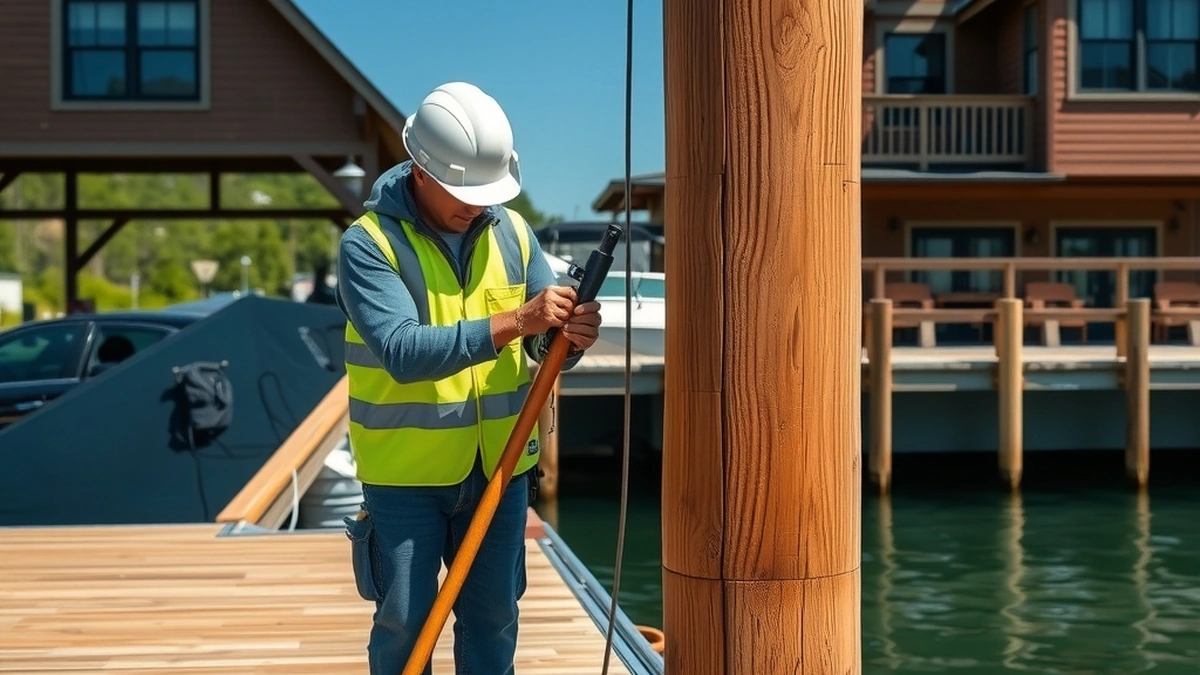
Piling replacement cost typically runs $300 to $1,200 per piling installed, with most residential boat lift and dock projects needing four to eight pilings.
- Cost per piling (installed)
- $300 - $1,200
- Typical project (4-8 pilings)
- $1,200 - $9,600
- Material only (per linear foot)
- $15 - $60
- Labor and equipment
- $150 - $500 per piling
Some links on this page are affiliate links.If you buy through them we may earn a commission at no extra cost to you. We do not accept payment for rankings. Read the full disclosure.
Piling replacement cost typically ranges from $300 to $1,200 per piling installed. Most residential boat lift and dock projects require four to eight pilings, putting total project cost between roughly $1,200 and $9,600. The final number depends on piling material, embedment depth, site access, and whether an existing boat lift must be removed during the work.
What Drives Piling Replacement Cost
Piling replacement is priced per piling, not per square foot of dock. Contractors quote material, labor, and mobilization separately, so the same piling can cost very different amounts at two nearby sites.
Material is the largest variable. Pressure-treated timber pilings are the most common and least expensive option. Concrete pilings cost more per linear foot but resist marine borers and rot better in saltwater. Steel pilings, often used for heavier commercial docks or high-capacity boat lifts, fall between timber and concrete in price but require corrosion protection.
Labor and equipment make up a substantial share of the bill. Driving a piling requires a barge-mounted or shore-mounted pile driver, a crane, and a crew. If the contractor must work from a boat in open water, mobilization costs rise. Removing an old piling can cost nearly as much as installing a new one, especially if the existing piling is broken off below the mudline.
Site conditions also matter. Soft muck may require longer pilings or jetting to reach stable soil. Rocky bottoms can slow installation and wear out equipment. Tight sites next to existing docks or seawalls may require hand excavation or smaller equipment, which increases labor hours.
Typical Cost Ranges by Material
These figures are estimates. Actual quotes vary by region, contractor availability, and project complexity.
| Piling Type | Material Cost (per linear foot) | Installed Cost (per piling) |
|---|---|---|
| Pressure-treated timber | $15 - $35 | $300 - $800 |
| Concrete | $25 - $60 | $600 - $1,200 |
| Steel pipe | $20 - $50 | $500 - $1,000 |
A standard residential piling is 12 to 20 feet long, with 8 to 12 feet above the waterline and the remainder embedded below the mudline. For an eight-piling dock using treated timber at $500 installed per piling, the math looks like this:
8 pilings × $500 = $4,000
If the same project uses concrete at $900 installed per piling:
8 pilings × $900 = $7,200
Those totals do not include removing old pilings, which can add $150 to $400 per piling if the contractor must extract or cut off existing stubs.
How Boat Lift Capacity Affects Piling Selection
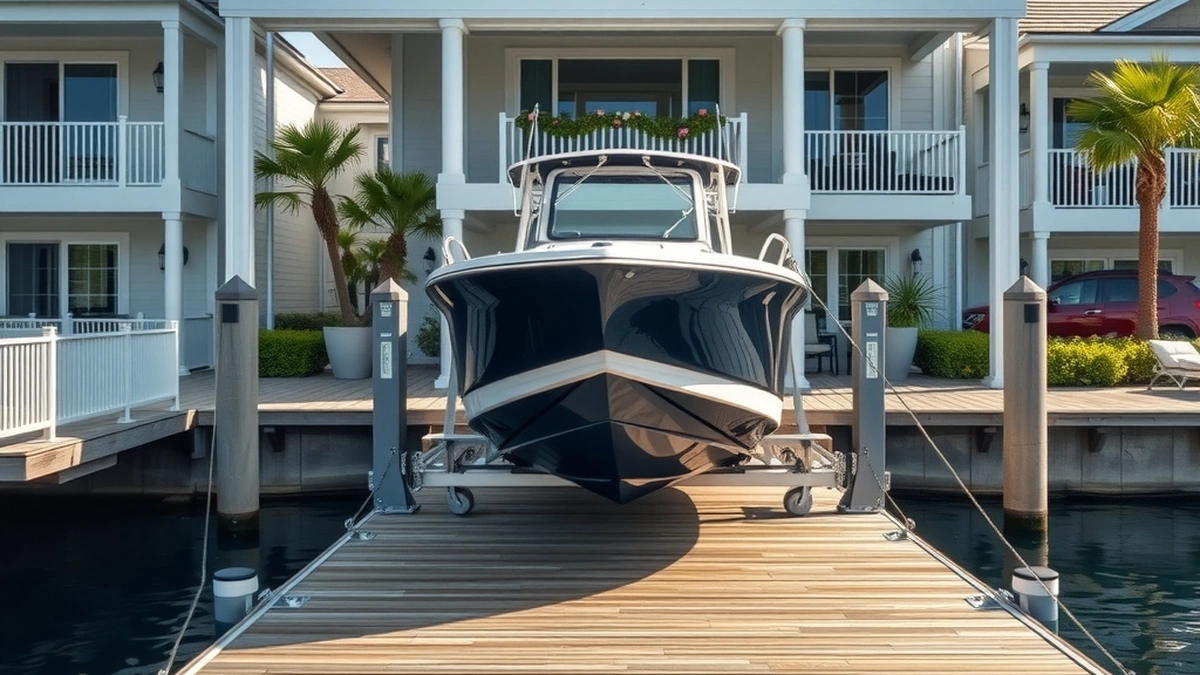
Capacity comes first at Boat Lift Lab, and piling size must match the lift and boat weight. A 4,000 lb cradle lift typically retails for $5,000 to $12,000, while a 10,000 lb elevator lift runs $12,000 to $25,000. Heavier lifts impose greater lateral and vertical loads on pilings, so the pilings must be larger in diameter and driven deeper.
For example, a 4,000 lb lift with a 4,000 lb boat creates 8,000 lb of static load, plus wave and wind forces. Four pilings sharing that load carry roughly 2,000 lb each under ideal conditions, but real-world sway and uneven weight distribution mean each piling should be sized for significantly more. A 10,000 lb elevator lift plus a 10,000 lb boat doubles the demand, often calling for 12-inch or larger diameter pilings rather than the 8- to 10-inch pilings common for lighter lifts.
If you are replacing pilings under an existing lift, check the lift’s weight rating and the boat’s actual weight before ordering materials. Undersized pilings can lean or fail under a fully loaded lift, creating a safety risk and potential damage to the boat. For more on matching lift capacity to your vessel, see our boat lift cost overview.
Water Depth and Embedment Requirements
Water depth determines piling length, and embedment determines stability. Pilings must extend far enough above the waterline to accommodate tide range and wave action, and deep enough below the bottom to resist lateral movement from boat wakes and wind.
In a location with a 3-foot tide range, a piling might need 4 to 5 feet above the water at low tide to keep the boat lift clear of the dock structure. If the water is 6 feet deep at low tide and the contractor embeds the piling 10 feet below the mudline, the total piling length is roughly 20 to 21 feet.
Embedment depth depends on soil type. Sandy bottoms may allow shorter embedment, while soft silt or muck may require 15 to 20 feet or more. Local codes and engineering specifications often dictate minimum embedment for docks and boat lifts in tidal or navigable waters.
Deeper water and deeper embedment mean longer pilings, more material cost, and more labor. A 20-foot piling costs more than a 12-foot piling, and driving it takes longer. If your site requires extra-long pilings, expect the per-piling cost to move toward the top of the range.
Removal of Old Pilings
Replacement usually means removing the old piling first. If the existing piling is sound and plumb, a contractor may install a new piling beside it and cut the old one off below the mudline. If the old piling is rotted, broken, or leaning, full extraction is safer and cleaner.
Extraction methods include vibrating the piling loose, excavating around it, or cutting it into sections. Each method adds time and equipment cost. Budget $150 to $400 per piling for removal in addition to the installation price.
When a boat lift sits directly over the pilings, the lift often must be removed or relocated before piling work begins. That adds disconnecting the lift, storing it, and reinstalling it after the new pilings are in place. If you need help with lift removal or reinstallation, our boat lift repair guide covers common service scenarios.
Related Dock and Lift Costs
Piling replacement is often part of a larger waterfront project. If you are replacing pilings because the dock is failing, you may want to compare the cost of repairs versus full dock construction. Dock construction typically ranges from $15,000 to $60,000 depending on size, materials, and complexity.
Installation of a new boat lift usually costs $1,000 to $3,000 on top of the lift price. A PWC lift runs $1,500 to $5,000, while a hydraulic lift for larger boats can run $15,000 to $35,000. If your pilings are being replaced to support a new lift, factor the lift and installation into the total project budget before approving the piling contract.
For context on how lift pricing compares to dock pricing, see our boat lift versus boat dock comparison. If you prefer to handle smaller projects yourself, our DIY boat lift article outlines what homeowners can reasonably tackle without a marine contractor.
Maintenance and Inspection After Replacement
New pilings still require regular inspection. Timber pilings in saltwater are vulnerable to marine borers and rot, especially in the splash zone where the piling alternates between wet and dry. Concrete pilings can crack or spall if the rebar corrodes. Steel pilings need coating or cathodic protection to prevent rust.
Inspect pilings at least once a year. Look for cracks, holes, leaning, or signs of marine borer activity. If a piling shows significant deterioration, address it before it affects the boat lift above. Routine maintenance can extend piling life and delay the next replacement cycle. Our boat lift maintenance guide includes a seasonal checklist that covers dock and piling checks alongside lift servicing.
Getting an Accurate Quote
Because piling replacement depends so heavily on site conditions, an on-site estimate is essential. A contractor should measure water depth, tide range, bottom composition, and access before quoting. Ask whether the quote includes removal of old pilings, mobilization, and any required permits.
If your project is part of a larger lift installation, coordinate the piling work with the lift contractor so the new pilings are positioned correctly for the lift cradle or elevator frame. Misaligned pilings can make lift installation difficult or unsafe.
For help choosing the right lift for your pilings and dock layout, see our guide to the best boat lift options by capacity and water depth.
Next, compare how much does boat lift cost, boat lift installation, boat lift repair before you commit.
Frequently asked questions
How much does piling replacement cost?
Piling replacement cost averages $300 to $1,200 per piling installed, depending on material, depth, and site access. A typical four-piling boat lift project often lands between $1,200 and $4,800.
What piling material lasts longest in saltwater?
Concrete and properly treated marine-grade pilings generally offer the longest service life in saltwater, though concrete is heavier and more expensive to install than timber.
Can I replace pilings under an existing boat lift?
Yes, but the lift usually needs to be removed or shifted first so the contractor can drive or install new pilings without damaging the cradle or hull support.
How deep should boat lift pilings go?
Pilings typically embed 10 to 20 feet below the mudline, depending on soil conditions, lift capacity, and local building codes for your waterfront site.
Does piling replacement require a permit?
Many waterfront jurisdictions require permits for piling work because it occurs in navigable waters or wetlands, so check with local authorities before starting.
How often should dock pilings be inspected?
Inspect pilings at least once a year for marine borer activity, rot, cracks, or leaning, especially after storms or if your boat lift shows signs of shifting.
Sources
Some links are affiliate links.If you buy through them we may earn a commission at no extra cost to you. We do not accept payment for rankings. Read the full disclosure.