Common Floating Dock Problems and Fixes
A practical guide to the most common floating dock problems, including instability, rot, and hardware failure, with repair cost context.
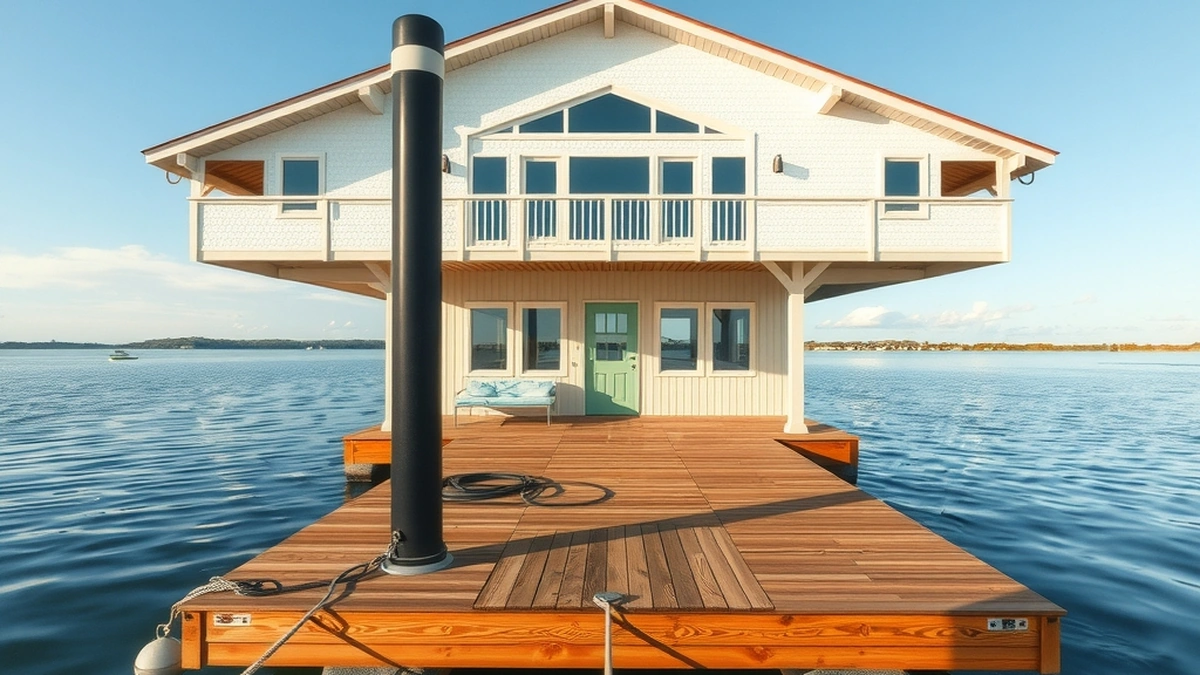
Floating dock problems usually stem from loose hardware, waterlogged floats, uneven weight distribution, or rotting decking, and most can be addressed with routine inspection and timely repairs.
- Most common issue
- Loose or corroded hardware
- Typical repair range
- $500–$3,000
- Full replacement range
- $15,000–$60,000
- Recommended inspection frequency
- Twice per year
Some links on this page are affiliate links.If you buy through them we may earn a commission at no extra cost to you. We do not accept payment for rankings. Read the full disclosure.
Floating dock problems usually trace back to a few predictable causes: loose or corroded hardware, waterlogged floats, uneven weight distribution, rotting decking, and damaged cleats or bumpers. Left unchecked, these issues can make the dock unsafe to walk on and put your boat at risk during docking. This guide covers the most frequent problems, how to spot them early, and what repair or replacement typically costs.
1. Loose or Corroded Hardware
Bolts, brackets, and cleats work loose over time because of wave action, boat wakes, and temperature changes. Saltwater accelerates corrosion, while freshwater docks still face rust on untreated steel. A loose cleat can fail under load, and a corroded bracket can separate the dock frame from its floats.
Check every connection point at least twice per year. Tighten bolts to manufacturer specifications and replace any hardware showing pitting or flaking. Use marine-grade stainless steel or hot-dipped galvanized fasteners rather than standard hardware-store bolts. If you are unsure about load ratings or anchor points, reviewing boat lift installation best practices can help you understand how structural connections should be specified.
2. Waterlogged Floats
Floats provide the buoyancy that keeps the dock surface above water. When a float takes on water, that section of the dock sits lower, creating a tripping hazard and uneven stress on the frame. Common causes include punctures from debris, cracked float shells, and failed seals around access ports.
Press on each float section during low-wind conditions. A firm, consistent feel indicates healthy buoyancy. Soft spots or visible sagging suggest water intrusion. Minor punctures can sometimes be sealed with marine-grade epoxy, but a float that is more than 25 percent waterlogged usually needs replacement. Replacing one float on a small residential dock often costs between $500 and $1,500, depending on float size and labor.
3. Uneven Settling and Tilting
A floating dock should sit level across its full length. Tilting usually means weight is not distributed evenly, one side has lost buoyancy, or the anchoring system has shifted. Bottom conditions also matter; soft sediment can allow anchors to drag, while rocky shorelines can hold one side more firmly than the other.
Measure the dock surface with a level. If one end sits more than two inches out of plane, redistribute heavy items such as coolers, storage boxes, or benches. Inspect anchor lines and pilings for slack or damage. Persistent tilting after rebalancing often points to a failing float or frame issue that needs professional assessment.
4. Rotting Decking and Frame Components
Wood decking exposed to constant moisture cycles can rot from the top down, especially at fastener holes and board ends. Composite decking resists rot but can still suffer from mold, mildew, and surface degradation. Underlying framing, if not pressure-treated or properly sealed, can weaken without visible signs from above.
Probe suspect areas with a screwdriver. Soft wood or easy penetration means advanced decay. Replace rotted boards promptly and seal cut ends with a wood preservative. If more than 30 percent of the decking or framing shows deterioration, full replacement is usually more cost-effective than piecemeal repairs. New dock construction generally ranges from $15,000 to $60,000, depending on size, materials, and site conditions.
5. Damaged Cleats, Bumpers, and Edging
Cleats take direct force from mooring lines, and bumpers absorb impact when boats dock. Repeated contact can crack cleat bases, tear bumper material, and loosen edge trim. A failed cleat is not just an inconvenience; it can allow the boat to drift and collide with the dock or neighboring vessels.
Inspect cleats for cracked bases and loose mounting bolts. Replace bumpers that are torn, compressed, or missing sections. Match replacement hardware to the dock’s weight class and typical boat size. A PWC lift typically costs $1,500 to $5,000, so protecting docking hardware is cheaper than repairing a boat or lift damaged by a broken cleat.
6. Electrical and Lighting Hazards
Many floating docks include lighting, power outlets, or lift controls. Water intrusion into junction boxes, frayed cords, and corroded connectors create shock risks and can damage connected equipment. Ground fault protection is essential for any dockside power.
Test GFCI outlets monthly and inspect all cords for cuts or rodent damage. Keep cords elevated and out of standing water. If a breaker trips repeatedly or you notice discoloration around an outlet, shut off power and contact a marine electrician. Do not attempt electrical repairs on a live dock system.
7. When to Repair Versus Replace
Not every problem justifies a new dock. Isolated hardware replacement, single float repairs, and deck board swaps are sensible repairs. Widespread frame rot, multiple failing floats, or a dock that repeatedly shifts out of position often costs more to fix than to replace.
Use this rough framework:
- Under $1,000 in repairs and the structure is under 10 years old: repair is usually worthwhile.
- $1,000 to $3,000 in repairs on a dock over 10 years old: evaluate carefully; replacement may offer better long-term value.
- Over $3,000 in repairs or recurring structural issues: replacement is typically the better choice.
Installation labor for dock work typically runs $1,000 to $3,000, though complex sites can exceed that range. If you are comparing a dock to a boat lift for watercraft storage, a cradle lift for a 4,000-pound boat generally costs $5,000 to $12,000, while an elevator lift for a 10,000-pound boat runs $12,000 to $25,000. Hydraulic lifts range from $15,000 to $35,000. These figures are estimates and vary by region, dealer, and site requirements.
Seasonal Maintenance Checklist
- Spring: Inspect hardware, test float buoyancy, clean decking, and verify electrical systems.
- Summer: Check cleat tightness monthly during heavy use; rinse off salt or algae buildup.
- Fall: Remove debris, inspect anchor lines, and prepare dock for lower water levels.
- Winter: In freezing climates, consider a bubbler or de-icer to prevent ice damage, and remove portable accessories.
A floating dock is a working structure, not a set-it-and-forget-it installation. Routine inspection catches small problems before they become safety hazards or expensive replacements. If you are weighing repair costs against a new lift or dock, the boat lift versus boat dock comparison can help clarify which structure fits your waterfront needs.
Next, compare how much does boat lift cost, boat lift installation, boat lift repair before you commit.
Frequently asked questions
What are the most common floating dock problems?
Common issues include loose or corroded hardware, waterlogged floats, uneven settling, rotting decking, and damaged cleats or bumpers from regular boat contact.
How often should I inspect a floating dock?
Inspect the dock at least twice per year, ideally before and after the peak boating season, and after any major storm or freeze event.
Can I fix a waterlogged float myself?
Small float repairs are possible with marine-grade sealant and replacement foam, but severely waterlogged floats usually require professional replacement to restore safe buoyancy.
What causes a floating dock to tilt?
Tilting usually results from uneven weight distribution, one or more failing floats, loose anchoring hardware, or shifting bottom conditions beneath the dock.
How much does dock construction cost?
New dock construction typically ranges from $15,000 to $60,000 depending on size, materials, water depth, and site conditions.
Should I repair or replace a problem dock?
Repair makes sense for isolated hardware or decking issues, while widespread float failure, rotting framing, or repeated structural movement often justifies full replacement.
Sources
Some links are affiliate links.If you buy through them we may earn a commission at no extra cost to you. We do not accept payment for rankings. Read the full disclosure.