Elevator Lift vs PWC Lift
An elevator boat lift and a PWC lift compared on capacity, cost and site fit, and why most waterfront properties end up needing both.
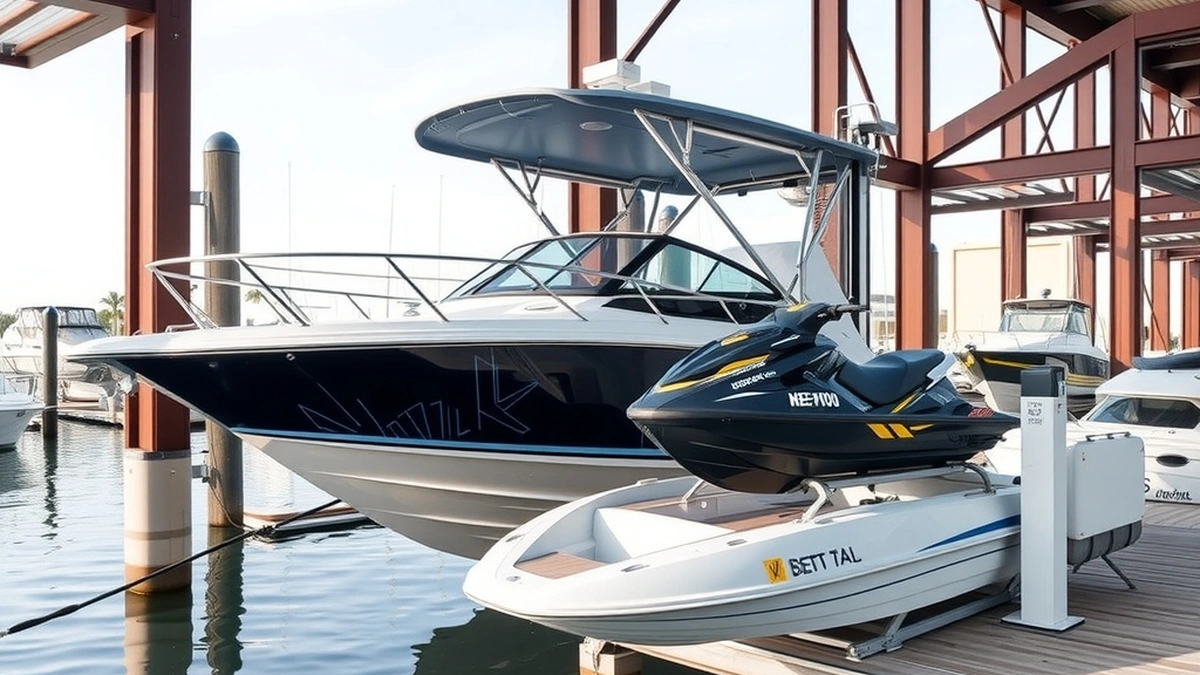
An elevator lift is a 10,000 lb platform for a boat and costs $12,000 to $25,000. A PWC lift handles a personal watercraft at $1,500 to $5,000. They are not substitutes; the capacity gap means a property with both craft needs two machines.
- Elevator lift
- $12,000 - $25,000
- PWC lift
- $1,500 - $5,000
- Elevator capacity
- 10,000 lb class
- PWC capacity
- 1,000 - 1,500 lb
- Installation
- $1,000 - $3,000
Some links on this page are affiliate links.If you buy through them we may earn a commission at no extra cost to you. We do not accept payment for rankings. Read the full disclosure.
An elevator lift and a PWC lift are not alternatives. One is a 10,000 lb platform for a boat at $12,000 to $25,000, and the other is a 1,000 to 1,500 lb machine for a personal watercraft at $1,500 to $5,000. The comparison matters when a property has both craft and a budget to allocate.
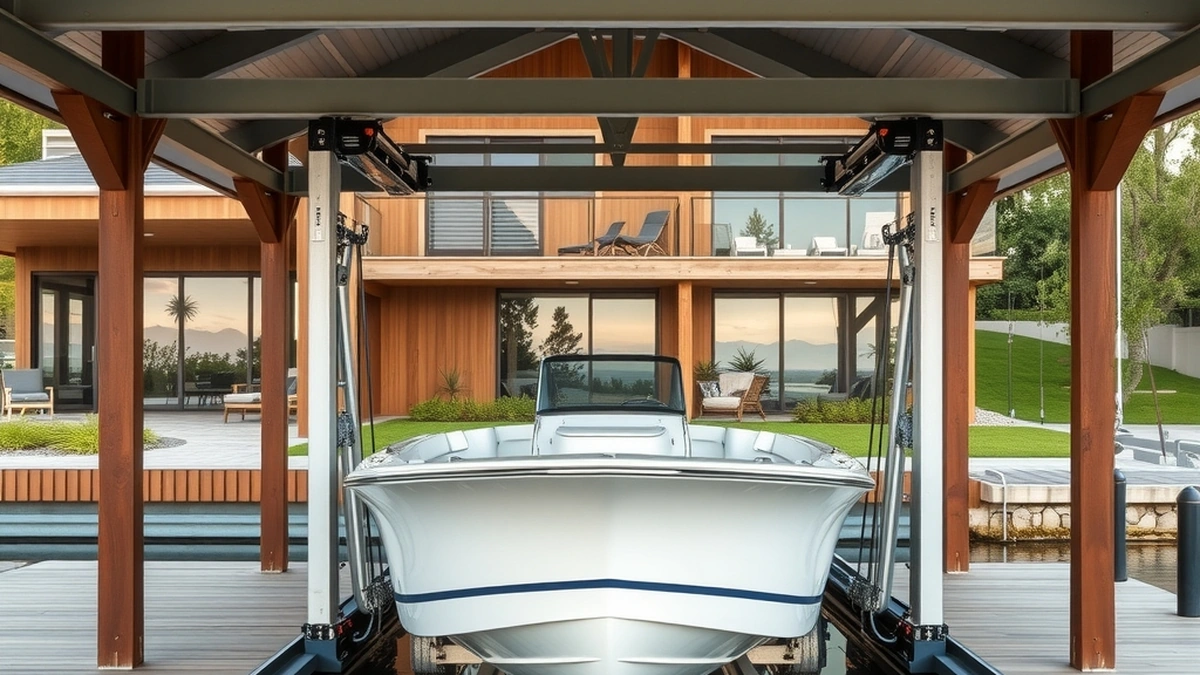
An elevator boat lift is a guided platform that raises a hull vertically and holds it clear of the water. A PWC lift is a smaller lift, often a floating or dock-mounted cradle, sized for a personal watercraft. Capacity, not brand or style, separates them.
The Capacity Gap Is the Whole Story
The elevator lift’s canonical class is 10,000 lb. A PWC lift’s range is 1,000 to 1,500 lb. That is roughly a factor of seven, and it means a PWC lift cannot be stretched to a boat no matter what the marketing says.
A 1,500 lb PWC with fuel and a rider is already near the top of the smaller class. A 2,000 lb inflatable with an outboard, fuel and two people is beyond it. Putting either on a lift rated below the loaded weight is the failure mode that drops equipment into the water.
Cost Compared
The table uses the canonical ranges with installation added at $1,000 to $3,000.
| Measure | Elevator lift | PWC lift |
|---|---|---|
| Equipment | $12,000 - $25,000 | $1,500 - $5,000 |
| Installation | $1,000 - $3,000 | $1,000 - $3,000 |
| Installed total | $13,000 - $28,000 | $2,500 - $8,000 |
| Capacity | 10,000 lb class | 1,000 - 1,500 lb |
| Cost per lb at midpoint | $18,500 / 10,000 = $1.85 | $3,250 / 1,250 = $2.60 |
The per-pound figure is instructive. The PWC lift costs more per pound of capacity because the fixed costs, including installation, are spread over a much smaller machine. That is normal for small equipment and not a reason to avoid it.
Footprint and Berth Space
The elevator lift needs a berth wide enough for the platform plus clearance, and deep enough for the platform to descend. That is typically a full boat slip.
A PWC lift needs a fraction of that: a small side section of dock, a floating platform, or a drive-on cradle at the edge of the slip. On a narrow lot, that difference decides what fits.
Two PWC lifts can often sit where one boat lift would, which is why a family with two skis usually buys two small units rather than one large one.
Where Each Belongs
The elevator lift belongs on a berth with adequate depth at low water, a dock that can carry the load, and a boat heavy enough to need a platform rather than a cradle. Our guide to elevator lift cost covers the site requirements in detail.
A PWC lift belongs at the shallow edge, on a floating dock, or on a section of the dock where a full platform would not fit. It also suits a property where the ski is an occasional toy rather than the main vessel.
A property with a boat and a ski usually ends up with one of each, and the budget conversation is about which one to buy first. Buy the lift for the craft that sits in the water most.
Maintenance Compared
Both need annual inspection and both suffer in saltwater if they are not rinsed. The elevator lift has more to inspect: cables, sheaves, guides, the drive and the platform structure.
A PWC lift has fewer components, so maintenance is cheaper in absolute terms, but the components it does have, such as a small winch or a floating cradle, wear in the same environment.
| Task | Elevator lift | PWC lift |
|---|---|---|
| Annual inspection | Full mechanical check | Winch, cradle, fasteners |
| Cable or strap replacement | Periodic | Periodic, smaller parts |
| Corrosion control | Frame and platform | Frame and fittings |
| Rinse after saltwater use | Yes | Yes |
Choosing in Five Steps
- List every craft that will use the dock, with loaded weights.
- Measure depth at low water at each candidate location.
- Allocate the main berth to the heaviest craft.
- Price the lift class above each loaded weight, not at it.
- Check permit requirements for each structure separately.
Step five matters because a second lift can trigger a review that the first one did not, particularly if it adds overwater coverage.
The Comparison Usually Ends in Both
The honest answer to “elevator lift vs PWC lift” is that the question is mis-framed. They solve different problems at different scales, and a waterfront property with a boat and a ski needs both.
If only one is in the budget this year, buy the lift for the craft that lives in the water. A ski that goes on a trailer does not need a lift; a boat that stays in the water does. Our guides to PWC lift cost and jet ski lift cost cover the smaller side, while pwc lift vs cradle lift compares the small-lift options.
Whatever is chosen, the rule is the same: the lift must be rated above the loaded weight, installed with a load test, and never operated past its plate. A PWC lift holding a boat is not a budget solution; it is an accident waiting for a calm day.
Frequently asked questions
Can a PWC lift handle a small boat?
No. PWC lifts are rated around 1,000 to 1,500 lb, which is below almost any boat with fuel, gear and occupants, so the two classes are not interchangeable.
How much does each cost?
An elevator lift is $12,000 to $25,000 for a 10,000 lb unit, and a PWC lift is $1,500 to $5,000, with installation at $1,000 to $3,000 on either.
Do I need a permit for a PWC lift?
Rules vary. A small lift on an existing permitted dock often needs nothing beyond electrical approval, but a new structure or a floating lift may need a waterfront permit.
Which is easier to install?
A PWC lift is a small, often one-person job on an existing dock. An elevator lift needs a crew, alignment and a load test because of its size and capacity.
Can both share one dock?
Yes, and it is common. The elevator lift occupies the main berth while a PWC lift sits on a small side section or a floating platform.
Which needs more water depth?
The elevator platform needs enough depth at low water for the hull to float on. A PWC lift needs less, which is why shallow edges often suit the smaller machine.
Sources
Some links are affiliate links.If you buy through them we may earn a commission at no extra cost to you. We do not accept payment for rankings. Read the full disclosure.