Corrosion: Repair Options for Boat Lift Owners
A practical guide to identifying and repairing corrosion on boat lifts, docks, and marine hardware with cost estimates and prevention tips.
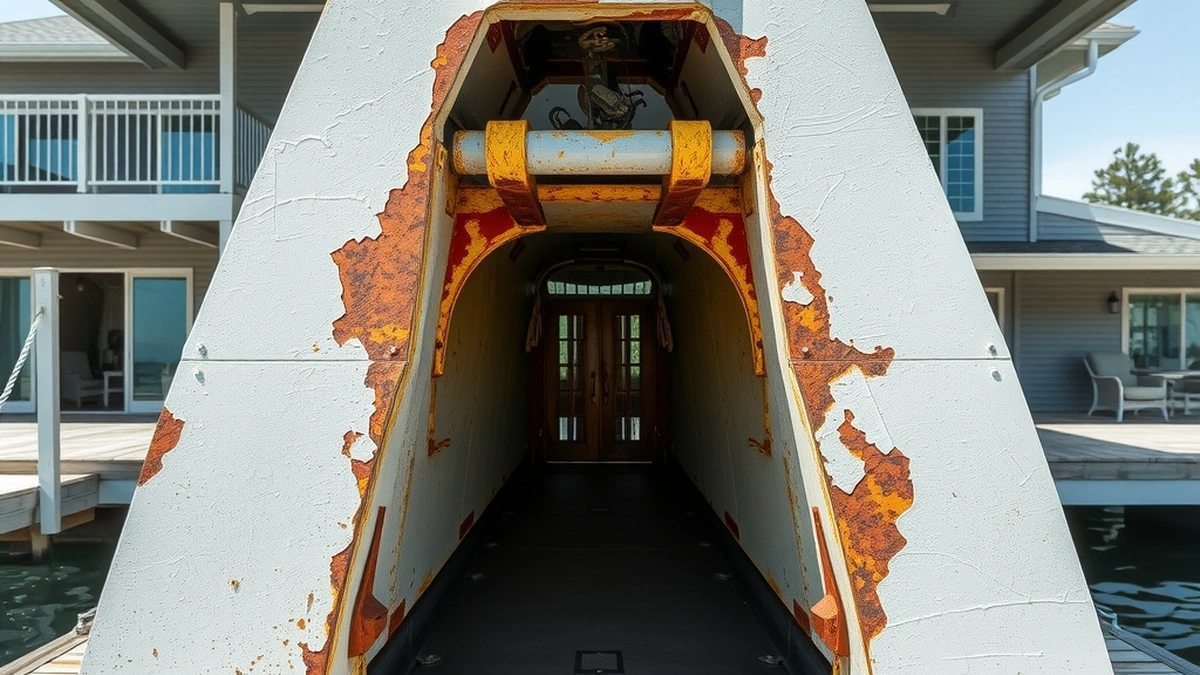
Surface corrosion can be sanded and coated; structural corrosion usually requires part replacement. Expect minor repairs from $150 to $600 and major structural work from $1,000 to $3,000 or more.
- Common repair scope
- Surface cleaning, coating, part replacement
- Minor repair estimate
- $150 - $600
- Major structural repair estimate
- $1,000 - $3,000+
- Typical lift replacement
- $5,000 - $35,000
Some links on this page are affiliate links.If you buy through them we may earn a commission at no extra cost to you. We do not accept payment for rankings. Read the full disclosure.
Corrosion repair options depend on where the damage appears and how deep it goes. Surface rust on a lift cradle or frame can often be cleaned and coated. Structural corrosion in beams, welds, or cables usually means replacement because repaired metal may not restore the original load rating. This guide covers how to assess corrosion, what repairs are realistic, and what they typically cost.
Types of Corrosion on Boat Lifts
Boat lifts sit in a harsh environment. Water, oxygen, and salt combine to attack steel, aluminum, and galvanized parts. The most common forms are surface rust, crevice corrosion, and galvanic corrosion.
Surface rust appears as orange or reddish flaking on paint or bare metal. It is usually cosmetic at first but can spread underneath coatings if ignored. Crevice corrosion hides under bolts, welds, and overlapping plates where moisture collects and oxygen cannot reach. Galvanic corrosion happens when two different metals touch in water, such as a stainless steel bolt in an aluminum frame, causing one metal to deteriorate faster than the other.
Identifying the type matters because surface rust can be treated in place, while crevice and galvanic corrosion often require disassembly and part replacement.
Inspect Before You Repair
Start with a visual inspection of the entire lift. Look for bubbling paint, white powder on aluminum, rust streaks, and loose fasteners. Check welds closely because cracks often start at the edge of a weld where corrosion has thinned the metal. Run your hand over beams to feel for pitting or soft spots.
If you find damage, determine whether it is cosmetic or structural. Surface rust limited to the outer layer of a beam is cosmetic. Pitting that creates holes, flaking that reveals thin metal, or corrosion around a weld is structural. Structural issues reduce the safe capacity of the lift. A 4,000 lb cradle lift with corroded crossbeams may not safely hold a 3,500 lb boat even if the frame looks intact from a distance.
Use a screwdriver or pick to test suspicious areas. If metal flakes away easily or the tool penetrates the surface, the part should be replaced rather than repaired.
Surface Corrosion Repair Steps
Surface corrosion can often be stopped without replacing parts. The process is straightforward but requires thorough preparation.
- Remove loose rust and old coating with a wire brush, sandpaper, or grinder. Bare metal should be visible before priming.
- Clean the area with a degreaser or marine cleaner to remove salt and oil.
- Apply a rust-inhibitive primer designed for marine use.
- Topcoat with marine-grade paint or a protective coating matched to the original finish.
Estimate costs for a DIY surface repair on a mid-size lift:
- Wire brush and sandpaper: $20 to $40
- Marine primer and paint: $50 to $120
- Safety gear and cleaning supplies: $30 to $60
Total DIY estimate: $100 to $220. Professional labor adds $150 to $400 depending on lift size and accessibility, bringing a professional surface repair to roughly $250 to $600.
This approach only works when the underlying metal is still sound. If sanding reveals thin or pitted metal, coating over it will not restore strength.
Structural Corrosion and Part Replacement
When corrosion compromises structural members, replacement is the safer option. Common parts that fail include cradle beams, bunk brackets, cables, pulleys, and fasteners.
Replacing a single cradle beam on a 4,000 lb lift might cost $300 to $800 for the part plus $200 to $500 in labor. Replacing multiple beams, the frame, or the drive mechanism can quickly approach the cost of a new lift. For context, a new 4,000 lb cradle lift typically ranges from $5,000 to $12,000, while a 10,000 lb elevator lift ranges from $12,000 to $25,000. Hydraulic lifts range from $15,000 to $35,000. If repair estimates exceed 40 to 50 percent of the replacement cost, replacement is usually the better value.
Load math matters here. A boat weighing 4,200 pounds with fuel, gear, and water may require a lift rated for at least 5,000 pounds. Corroded components reduce the safety margin. Do not assume a repaired beam carries the same rating as a new one unless the manufacturer confirms it in writing.
Cables are especially critical. A corroded cable with broken strands can fail under load. Replace lift cables every few years as preventive maintenance, or immediately if you see corrosion, kinks, or broken wires. A new cable set often costs $150 to $400 depending on lift capacity and length.
When to Repair Versus Replace the Whole Lift
Repair makes sense when corrosion is isolated to surface areas or a few replaceable parts. Replace the lift when:
- The main frame has extensive pitting or thinning
- Multiple welds show corrosion cracks
- Repair costs approach half the price of a new lift
- The lift is near the end of its expected service life
For example, if a 4,000 lb cradle lift needs $4,000 in structural repairs and a new unit costs $7,000, replacement is logical. Installation typically adds $1,000 to $3,000 for either a new lift or a major reinstatement, so include that in the comparison.
If your dock itself is also deteriorating, consider whether lift repair fits a broader project. Dock construction ranges from $15,000 to $60,000 depending on size, materials, and site conditions. Coordinating lift replacement with dock work can reduce mobilization costs.
Prevention After Repair
After repairing corrosion, take steps to slow its return. Rinse the lift with fresh water after saltwater exposure, especially on cables and fasteners. Touch up scratches in paint promptly before rust starts. Inspect sacrificial anodes if your lift uses them, and replace them when they are half consumed.
Keep dissimilar metals separated with insulating washers or coatings where practical. For example, stainless hardware in contact with aluminum can accelerate galvanic corrosion. A plastic or nylon washer between the metals breaks the electrical path.
Regular inspection is the cheapest repair strategy. Checking beams, welds, and cables twice per season catches surface rust before it becomes structural. For more on routine upkeep, see our boat lift maintenance guide.
Cost Context and Related Projects
Corrosion repair costs vary widely by lift type, location, and whether you hire a professional. A PWC lift replacement runs $1,500 to $5,000, so even modest structural repairs on a small lift may justify buying new. A 4,000 lb cradle lift costs $5,000 to $12,000, and installation adds $1,000 to $3,000. Larger elevator and hydraulic systems cost significantly more, making targeted repairs more attractive on those units.
If you are weighing repair against a new purchase, our boat lift cost overview and best boat lift guide can help compare options. For lift-specific service needs, our boat lift repair page covers common failure points beyond corrosion.
Repairing corrosion is about safety as much as appearance. Surface rust can be cleaned and coated. Structural corrosion usually means replacing the affected part, and when the frame itself is compromised, a new lift is often the more reliable investment.
Next, compare how much does boat lift cost, boat lift installation, boat lift repair before you commit.
Frequently asked questions
What causes corrosion on boat lifts?
Saltwater, moisture, and dissimilar metals create electrochemical reactions that break down steel and aluminum components over time.
Can surface rust be repaired?
Yes. Light surface rust can be sanded, cleaned, primed, and coated to stop further spread if caught early.
When should a lift part be replaced instead of repaired?
Replace parts with pitting, thinning metal, or compromised welds because repairs may not restore safe load capacity.
How much does minor corrosion repair cost?
Minor surface repairs typically run between $150 and $600 depending on labor, materials, and lift accessibility.
Does corrosion affect lift weight capacity?
Yes. Corroded beams and cables lose strength and may no longer safely support the rated capacity of the lift.
How often should I inspect for corrosion?
Inspect metal components, welds, and fasteners at least twice per season, or monthly in saltwater environments.
Sources
Some links are affiliate links.If you buy through them we may earn a commission at no extra cost to you. We do not accept payment for rankings. Read the full disclosure.